
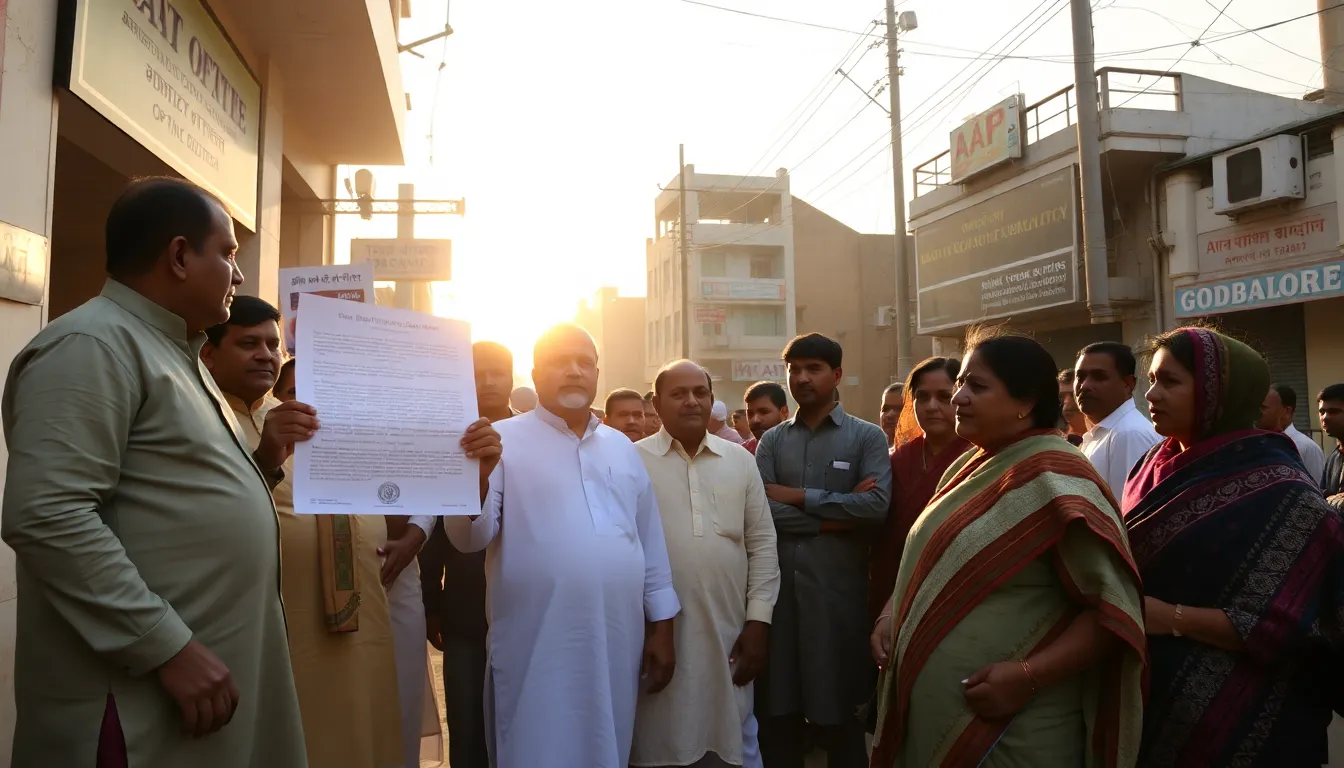
The recent demand by the Aam Aadmi Party (AAP) for the removal of Minister Bachu Khabad in Patan has drawn significant attention from residents and officials alike. This call is rooted in allegations of corruption related to the misuse of funds under the Mahatma Gandhi National Rural Employment Guarantee Act (MGNREGA), a critical scheme for rural employment and infrastructure development across Gujarat. The issue touches the core of public trust and governance in Patan district, affecting thousands of villagers who depend on these government programs for their livelihoods.
What You Need Before You Start Understanding the Allegations
Before delving into the details of the process and implications of demanding a minister’s removal, it is essential to understand the context and documentation involved:
- Official Memorandum: AAP submitted a detailed memorandum to the Patan District Collector on Monday, outlining allegations backed by purported evidence of fraudulent bills submitted by Minister Bachu Khabad and his family.
- MGNREGA Records: The allegations involve the misuse of funds from the ₹86,000 crore budget allocated nationally for MGNREGA in the current fiscal year, which aims to provide rural employment and develop infrastructure such as check dams, roads, and ponds.
- Local Government Reports: Data on project approvals and fund disbursements from Patan’s local Panchayat offices and the District Rural Development Agency (DRDA) are critical to verify claims.
- Legal Framework: Understanding the relevant state laws, anti-corruption acts, and administrative procedures for ministerial accountability in Gujarat is necessary for citizens and activists pursuing such demands.
Step-by-Step Process to Demand Ministerial Removal in Patan
- Gather Evidence: Collect credible documents and reports that substantiate claims of corruption or malpractice. This includes bills, audit reports, and witness statements from affected villages within Patan district.
- Draft a Formal Memorandum: Prepare a clear and concise memorandum detailing the allegations, affected areas (specific villages in Patan), and requests for corrective action, including ministerial removal.
- Submit to District Collector: Present the memorandum to the Patan District Collector’s office, the administrative authority responsible for local governance oversight.
- Request Investigation: Demand the formation of a special impartial committee to conduct a thorough investigation across all relevant districts, not limited to Patan.
- Engage Media and Public Support: Mobilize local support through public meetings, press releases, and social media to increase pressure on the state government and raise awareness.
- Follow Up with State Authorities: Petition the Gujarat Chief Minister and the Anti-Corruption Bureau (ACB) for prompt action, referencing similar cases and ongoing development projects like those discussed in recent water conservation meetings in Patan.
Important Details on Fees, Timeline, and Validity of Complaints
The process of submitting complaints and seeking ministerial accountability involves minimal direct fees but requires adherence to official protocols:
- Submission Fees: No official fee is required to submit a memorandum or complaint to the District Collector’s office.
- Processing Time: According to Gujarat government norms, the District Collector’s office must acknowledge receipt within 7 days and initiate preliminary inquiry within 30 days.
- Investigation Timeline: A special committee’s investigation can take between 3 to 6 months, depending on the complexity and scope of allegations.
- Validity of Complaints: Complaints must be supported by verifiable evidence to be considered valid; anonymous or unsubstantiated claims are typically dismissed.
Common Questions Answered About the Removal Demand
- Who can demand the removal of a minister? Any registered political party, group of citizens, or public representatives can submit formal demands backed by evidence to the District Collector and state authorities.
- What powers does the District Collector have? The Collector can initiate investigations and recommend action but cannot directly remove a minister; this requires intervention by the state government and Cabinet.
- What happens if the allegations are proven? If credible evidence confirms corruption, the government may suspend or remove the minister, and legal proceedings by the Anti-Corruption Bureau or other agencies may follow.
Tips and Common Mistakes to Avoid When Filing Complaints
- Avoid vague accusations: Ensure all claims are specific, with dates, locations, and documented proof.
- Maintain official communication: Submit all documents through proper channels, keeping copies and receipts.
- Don’t rely solely on media reports: Verify facts independently before making allegations public.
- Engage local representatives: Involve Patan’s MP and Vav MLA who recently met Union Minister Nitin Gadkari to highlight the issue effectively.
- Stay informed about ongoing developments: Track government initiatives such as the upcoming development projects in Patan to understand the broader governance context.
The allegations against Minister Bachu Khabad underscore a critical challenge in Gujarat’s rural governance: ensuring that funds allocated under schemes like MGNREGA directly benefit the intended recipients without diversion through corrupt practices. Patan district, with its significant rural population, stands at the frontline of this battle for transparency and accountability.
Local residents and activists should take note of the procedural requirements and legal frameworks involved if they wish to participate effectively in governance oversight. The role of the District Collector’s office, the Anti-Corruption Bureau, and state authorities is pivotal in addressing such grievances.
This issue also connects with broader governance themes in Gujarat, including water conservation efforts recently discussed in Patan, highlighting the importance of integrity in all development-related schemes.
Bottom Line: The demand for Minister Bachu Khabad’s removal in Patan exemplifies the urgent need for transparent governance in rural development schemes; residents and stakeholders must actively engage with official procedures to ensure accountability.
For those impacted or interested, submitting documented complaints to the Patan District Collector’s office and following up with state agencies is the immediate actionable step.