
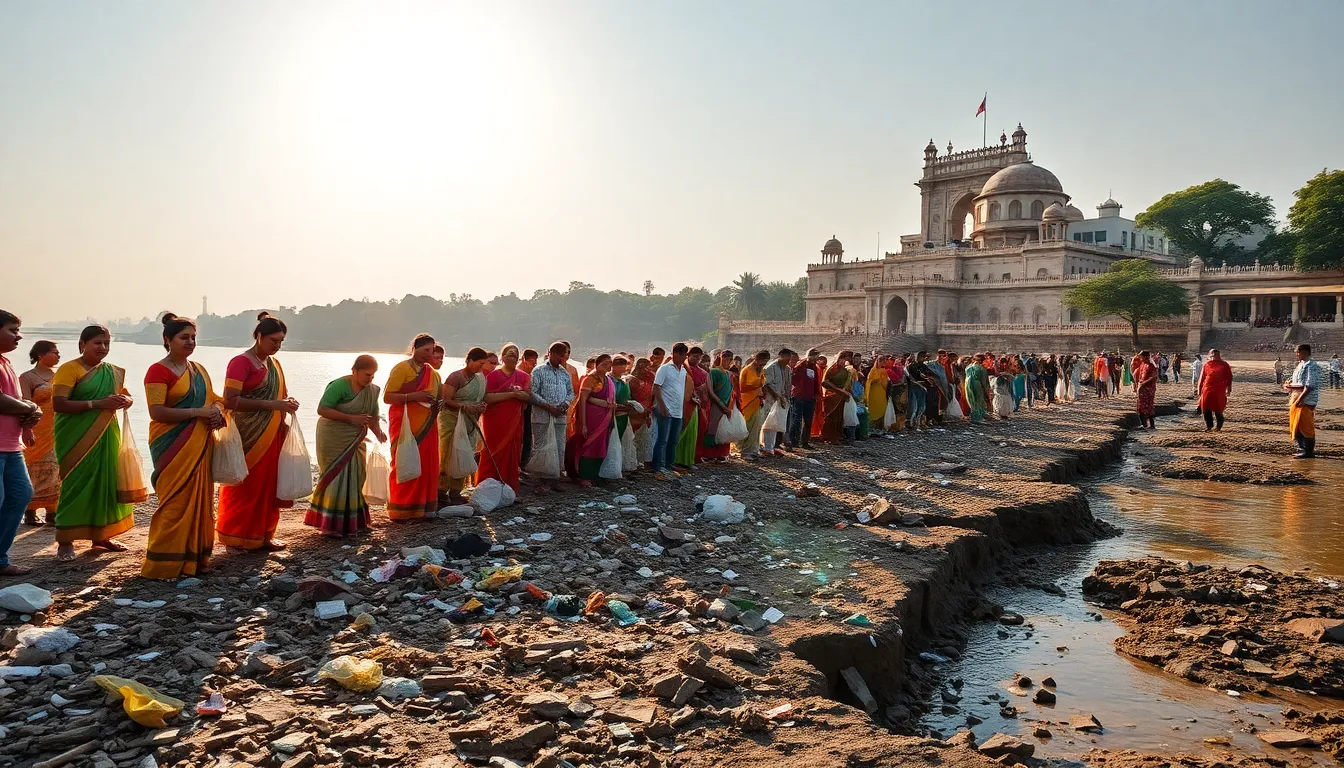
Ahmedabad, 17 May 2025 — What does the recent Sabarmati River clean-up involve and how will it impact the city? The Ahmedabad Municipal Corporation (AMC), together with the Sabarmati Riverfront Development Corporation Ltd (SRFDCL), has initiated a major clean-up operation by temporarily draining the Sabarmati River from 10 May until 5 June. This strategic action aims to facilitate extensive maintenance work on the Vasna Barrage and remove accumulated pollution ahead of the monsoon season.
Details of the Sabarmati River Maintenance and Clean-Up Policy
The current operation is governed by directives from the AMC’s Environment and Infrastructure Departments, following coordination with the Gujarat Pollution Control Board (GPCB). The key provisions include:
- Temporary Draining: The river stretch between Subhash Bridge and Vasna Barrage has been drained starting 10 May to expose the riverbed for cleaning and repairs.
- Vasna Barrage Repairs: Maintenance of all 30 gates of the barrage, including mechanical servicing and strengthening works, plus construction of an upstream earthen ramp to manage water flow during monsoon.
- Phased Clean-Up: Conducted in segments to address areas with residual water such as near Atal Bridge and Subhash Bridge, where infrastructure projects limit full drainage.
- Waste Removal: Systematic collection and disposal of solid waste, sludge, and contaminated material to reduce biochemical oxygen demand (BOD) levels.
- Volunteer Engagement: Mobilisation of roughly 8,998 volunteers from over 80 NGOs, social organisations, and AMC staff for coordinated manual cleaning efforts.
- Monitoring and Reporting: Real-time updates by the AMC Environment Department with oversight from SRFDCL and GPCB to ensure compliance with environmental standards.
Who Is Directly Affected by the Clean-Up Operation
The clean-up impacts multiple stakeholder groups in Ahmedabad and surrounding districts:
- Local Residents: Citizens living near the riverbanks in Ahmedabad’s districts such as Sabarmati, Vasna, and Maninagar may experience temporary changes in river access and water availability.
- Fishing Communities: Fisherfolk dependent on the Sabarmati for livelihood will face disruption due to the lowered water levels during the operation.
- Urban Commuters: Areas around Atal Bridge and Subhash Bridge remain partially waterlogged; traffic advisories are in place to manage safety during maintenance.
- Environmental Groups and Volunteers: More than 80 NGOs, including local bodies such as the Sabarmati Riverfront Environment Trust, are actively participating.
- Government Departments: AMC Environment, Public Works, and Health Departments are coordinating the operation, supported by the Gujarat Pollution Control Board.
Reasons Behind the Government Initiating This River Clean-Up
The Sabarmati River has long faced significant pollution challenges. Official data from the GPCB shows the river’s biochemical oxygen demand (BOD) levels averaging 10-15 mg/L in urban stretches—well above the 3 mg/L standard for clean water bodies. This contamination arises primarily from untreated sewage, industrial effluents, and plastic waste accumulation.
The AMC and SRFDCL emphasize the following motivations:
- Monsoon Preparedness: Ensuring the Vasna Barrage functions optimally to regulate floodwaters and prevent urban flooding during heavy rains.
- Environmental Restoration: Improving water quality and river ecosystem health to benefit biodiversity and urban amenity.
- Public Health: Reducing the risk of waterborne diseases linked to stagnant sewage and waste in the river.
- Urban Planning: Maintaining the Sabarmati Riverfront as a key recreational and aesthetic asset for Ahmedabad’s development.
Stakeholder Perspectives on the Clean-Up Effort
While the initiative has received broad support, several points have emerged from stakeholders:
- Government Officials: Mayor Pratibha Jain highlighted the operation as “a landmark step towards sustainable urban water management.” SRFDCL Chairman I P Gautam noted the importance of multi-agency cooperation to maintain river health.
- Environmentalists: Some activists have called for longer-term measures addressing pollution sources upstream in districts like Gandhinagar and Kheda to prevent recurring contamination.
- Local Communities: Residents near riverbanks have expressed cautious optimism but seek assurances on post-clean-up waste management and ongoing monitoring.
- Urban Planners: Advocates urge integration of this clean-up with broader city policies such as the recent AMC app for property assessments to promote sustainable development alongside environmental protection.
Practical Implications of the Clean-Up for Ahmedabad Residents
The ongoing Sabarmati clean-up has tangible effects and opportunities for citizens:
- Stay Informed: Residents near the riverfront should monitor AMC advisories for updates on river access and traffic changes around Atal and Subhash Bridges.
- Participate Locally: Community members interested in volunteering can contact AMC’s Environment Department or NGOs like the Sabarmati Riverfront Environment Trust.
- Support Pollution Reduction: Dispose of waste responsibly and avoid dumping into drains to help sustain river cleanliness post-operation.
- Utilize Clean Water Facilities: AMC has enhanced water quality monitoring; residents should report contamination via official channels.
- Engage in Health Awareness: Participate in initiatives such as the health awareness campaigns to mitigate risks linked to waterborne diseases during monsoon.
Statistics and Progress Update as of 17 May 2025
- Waste Collected: 76 tonnes of solid waste including plastics, textiles, and sludge have been removed.
- Volunteer Participation: 8,998 volunteers engaged on 15 May; numbers expected to grow.
- Areas Covered: Clean-up has progressed from Gandhi Ashram area towards Vasna Barrage.
- Water Quality: Preliminary tests show slight decreases in BOD levels in cleared sections.
Officials expect the operation to conclude on 5 June, timed with World Environment Day, to maximize public engagement and environmental impact.
Bottom Line: The Sabarmati River clean-up is a critical step in restoring Ahmedabad’s key waterway ahead of monsoon flooding and health risks. Residents should stay informed, support pollution prevention, and participate in community efforts to maintain river health year-round.