
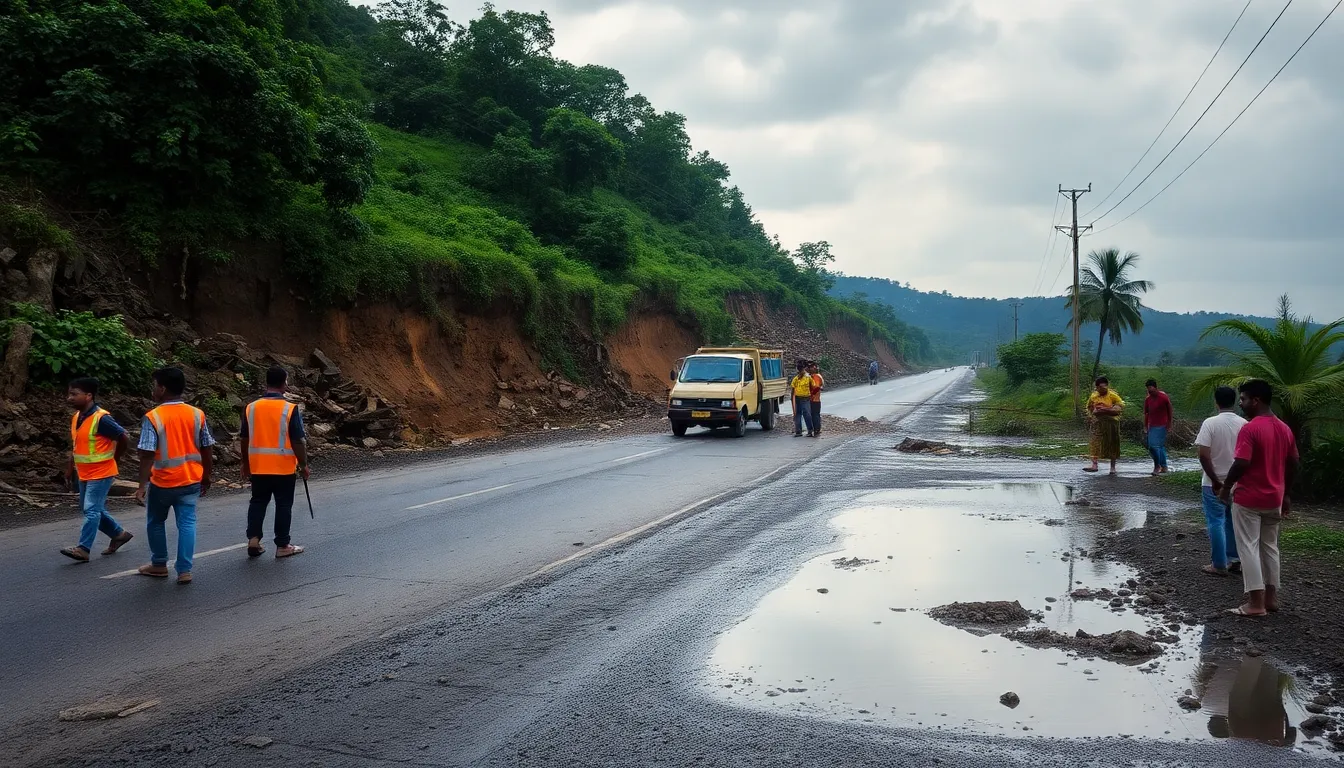
On July 10, 2024, the Amba Ghata-Danta road in Banaskantha district was officially reopened after being temporarily blocked by a significant landslide caused by heavy monsoon rains. This reopening restores a vital transportation link for residents, traders, and commuters in northern Gujarat, ensuring continuity in travel and economic activities. The road closure, which lasted approximately 48 hours, disrupted connectivity between several villages and towns, highlighting the importance of swift government response during the monsoon season.
5 Key Details About the Road Reopening and Repair Efforts
The landslide occurred following unprecedented rainfall in Banaskantha district, where official meteorological data recorded 226 mm (8.90 inches) of rain within 24 hours ending July 8, 2024. This intense precipitation, the first heavy monsoon downpour this season, resulted in soil erosion and debris accumulation on a crucial stretch of the Amba Ghata-Danta road.
- The Banaskantha State Roads and Buildings (SRB) Department immediately mobilized repair teams on the morning of July 9, 2024.
- Heavy machinery and manual labor were deployed to clear approximately 300 cubic meters of earth and stone debris blocking the road.
- Temporary retaining walls and drainage improvements were installed to prevent immediate recurrence.
- The road was inspected and certified safe for vehicular traffic by July 10, 2024, at 5 PM.
- Authorities have scheduled ongoing monitoring during the monsoon season, with periodic maintenance planned through September 2024.
The SRB Department operates under the Gujarat Public Works Department (PWD), which issued a directive on July 7, 2024, emphasizing rapid response to monsoon-induced infrastructure disruptions. The department has allocated an emergency repair fund of ₹15 lakh for Banaskantha district this monsoon, part of a larger ₹10 crore statewide contingency budget.
4 Groups Affected and How They Are Impacted
The Amba Ghata-Danta road serves as a crucial transportation artery in northern Banaskantha, impacting multiple stakeholders:
- Local Villagers: Residents of Danta taluka and nearby villages rely on this road for daily commute, access to schools, healthcare centers, and markets. The landslide forced detours adding 15-20 kilometers to travel, increasing travel time and costs.
- Agricultural Traders: Banaskantha’s economy depends heavily on agriculture, especially dairy and crop trade. Disruption delayed transportation of perishable goods, risking financial losses for farmers and traders.
- Emergency Services: Ambulances and fire services faced delays reaching remote hamlets, highlighting the critical need for road accessibility during emergencies.
- Transport Operators: Bus and goods vehicle operators reported revenue loss during the closure due to forced route diversions and cancellations.
The reopening has relieved these groups, but the event underscores the vulnerability of infrastructure to extreme weather events.
3 Reasons Behind Government’s Swift Action
The Government of Gujarat’s rapid response was driven by several factors:
- Monsoon Preparedness Policy: Following experiences of past monsoons causing extensive damage, Gujarat’s PWD developed a monsoon contingency framework in 2022. This includes pre-positioning of repair crews, emergency funds, and real-time weather monitoring systems.
- Economic Importance: Banaskantha is a key district for Gujarat’s agricultural output. Ensuring road accessibility supports uninterrupted supply chains, vital for local and state economies.
- Public Safety Concerns: Landslides pose risks to human life and property. The government prioritized clearing the road to restore safe travel and emergency access.
The PWD’s directive issued in the July 2024 Gazette (Notification No. PWD/Monsoon/2024/07) outlines the protocols for such emergencies, mandating district-level coordination with revenue and disaster management departments.
4 Perspectives From Local Stakeholders and Experts
Local Residents: Many villagers expressed gratitude for the quick repairs but voiced concerns over recurring landslide risks. Ramesh Patel, a farmer from Danta village, said, “While the road is open, we hope the government strengthens the hillside to prevent future blockages.”
Banaskantha District Collector: Collector Anjali Mehta highlighted the importance of inter-departmental coordination, stating, “Our teams worked around the clock to ensure minimal disruption. We are implementing long-term erosion control measures.”
Environmental Experts: Dr. Kiran Desai, a geologist at Gujarat University, noted, “The landslide was triggered by heavy rainfall and deforestation on slopes. Sustainable land management practices are essential to reduce future risks.”
Transport Union Leaders: They welcomed the reopening but urged the government to improve alternate routes and early warning systems to enhance resilience.
6 Practical Steps for Residents and Travelers
Given the monsoon season’s challenges, residents and commuters are advised to follow these guidelines:
- Stay updated on weather alerts via the Gujarat State Disaster Management Authority website (gsdma.gujarat.gov.in).
- Avoid unnecessary travel on vulnerable routes like Amba Ghata-Danta road during heavy rains.
- Report any signs of soil erosion, cracks, or minor landslides to the Banaskantha Public Works Department helpline at 02744-123456.
- Use alternate routes suggested by local authorities; for instance, the Danta-Sanali-Hadad road is currently under repair but may serve as a backup (details here).
- Farmers and traders should plan transport schedules considering weather forecasts to avoid losses.
- Follow safety advisories issued by district administration and local police.
For further assistance or to report emergencies, residents can contact the Banaskantha District Collectorate at Collector Office, Banaskantha, Palanpur, Gujarat – 385001.
The reopening of the Amba Ghata-Danta road demonstrates effective governance and community resilience. However, the event also calls attention to the need for sustainable infrastructure and proactive disaster management in Gujarat’s monsoon-prone regions.
For continuous updates on road conditions and repair works across Gujarat, readers can refer to related articles such as Repair Work Begins on Silasana-Chhindiwadi Road After Erosion and Naroda-Kathwada Road Reopened After Public Outcry.