
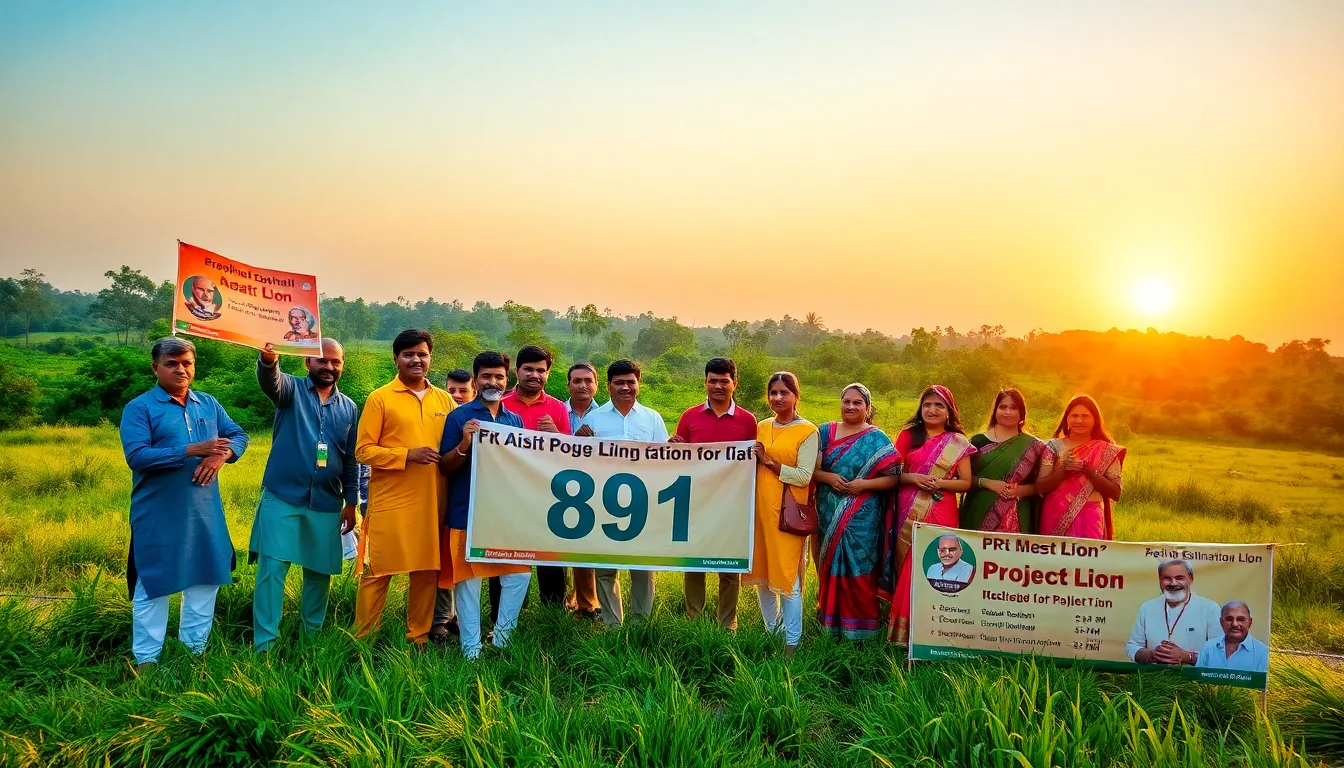
The Asiatic lion population in Gujarat has surged to 891 as confirmed during the 16th lion population estimation exercise held in May 2024. Chief Minister Bhupendra Patel announced the figures, highlighting a breakdown of 196 adult males, 330 adult females, and 365 cubs. This significant milestone underscores Gujarat’s leadership in Asiatic lion conservation, with efforts spanning 11 districts over approximately 35,000 square kilometers of forest and grassland habitats.
3 Facts About the 16th Lion Population Estimation
The lion population estimation is a decennial exercise conducted by the Gujarat Forest Department in collaboration with the Ministry of Environment, Forest and Climate Change. It employs advanced scientific methods such as direct beat verification and block counting to ensure accuracy. The 2024 count uniquely integrated digital tools like the e-GujForest app, allowing real-time data entry by 3,854 participants including forest guards, local village leaders, and wildlife experts. The census covered key lion habitats in Gir National Park, Gir Sanctuary, and surrounding forest divisions across Junagadh, Amreli, Bhavnagar, and other districts.
5 Key Dates and Schedule for Lion Census Activities
- Pre-census training sessions for forest staff and volunteers: February 15-28, 2024
- Deployment of camera traps and GPS collaring: March 1-31, 2024
- Field surveys and direct beat counts: April 1-20, 2024
- Data compilation and analysis phase: April 21-May 10, 2024
- Official announcement by Chief Minister Bhupendra Patel: May 15, 2024
These structured phases ensured comprehensive coverage and minimized counting errors.
4 Steps to Participate in Future Lion Population Counts
- Register with the Gujarat Forest Department or local wildlife NGOs through the official e-GujForest portal.
- Attend mandatory training workshops on wildlife monitoring techniques, usually held at district forest offices in Junagadh and Amreli.
- Engage in field activities such as camera trap installation, habitat patrols, and direct beat counts during census periods.
- Submit verified data via mobile applications or through designated data entry centers located in district headquarters.
Participation is open to local community members, students, and wildlife enthusiasts, promoting inclusive conservation.
6 Highlights and Conservation Initiatives Supporting the Lion Population
- Project Lion, launched by Prime Minister Narendra Modi in 2020, focuses on habitat restoration, scientific research, and community involvement.
- Use of GPS collars on 50 lions has enhanced understanding of their territorial ranges and movement patterns.
- Camera traps deployed across Gir and adjacent forests have recorded over 1,200 individual sightings, aiding individual identification.
- Enhanced anti-poaching measures, including increased patrolling and surveillance by forest staff.
- Community outreach programs educating 15,000 villagers on coexistence and compensation schemes for livestock loss.
The combined effect of these initiatives has resulted in a steady population rise from 327 lions in 2001 to the current 891, making Gujarat the sole home to the endangered Asiatic lion globally.
4 Reasons Why Supporting Lion Conservation Matters
- Biodiversity Preservation: Asiatic lions are apex predators critical to ecological balance in Gir and surrounding sanctuaries.
- Economic Benefits: Wildlife tourism centered on lions contributes significantly to local economies in Gir, Junagadh, and Amreli districts.
- Scientific Research: Monitoring lions helps improve conservation strategies for other endangered species like the Indian leopard.
- Community Empowerment: Involving local populations fosters sustainable coexistence and reduces human-wildlife conflict.
For more on the population trends, readers can visit the detailed report Asiatic Lion Population in Gujarat Surges to 891.
Bottom Line: The 2024 lion census confirms Gujarat’s exemplary success in Asiatic lion conservation, raising the population to 891; citizens and wildlife enthusiasts are encouraged to participate in upcoming census activities to sustain this momentum.