
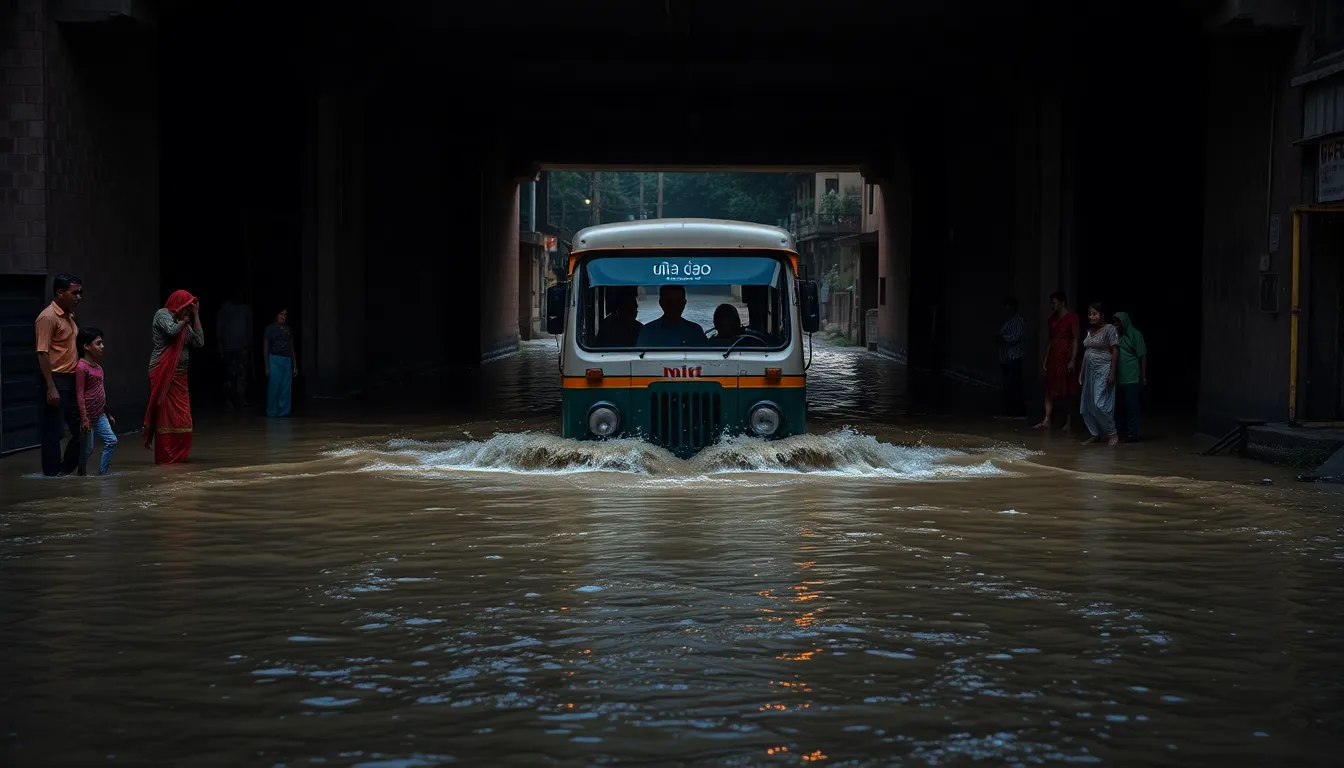
₹0 crore spent, yet Bharuch underpasses flood annually during monsoon, disrupting daily life and transport. The underpasses constructed over a decade ago along the Ankleshwar-Rajpipla railway broad gauge line in Bharuch district face persistent flooding issues during heavy rainfall, causing significant hardship for residents and commuters alike.
5 Key Facts About the Bharuch Underpass Flooding
The underpasses were built approximately 12 years ago when the railway line was converted from narrow to broad gauge, aimed at improving connectivity across Bharuch district. However, the infrastructure design failed to incorporate adequate drainage solutions, leading to frequent waterlogging.
- The underpasses stretch between Ankleshwar and Rajpipla, covering multiple villages and towns in Bharuch district.
- During monsoon, water often accumulates to knee-deep levels, notably between July and September.
- Local CC roads leading to the underpasses, maintained by the railway department, have degraded over the years with no systematic repairs.
- Residents report that every underpass on this route floods, making it nearly impossible for two-wheelers and small vehicles to cross safely.
- Despite repeated complaints to the Western Railway Zone authorities headquartered in Vadodara, remedial action remains pending.
3 Ways Bharuch Flooding Impacts Local Communities and Economy
The flooding disrupts daily commutes, affecting workers, students, and transport operators. For example, luxury mini bus drivers transporting staff to Ankleshwar’s industrial zones face delays navigating knee-deep water. This compromises punctuality and productivity in Gujarat’s vibrant manufacturing sector.
The safety concerns are acute: slippery roads and submerged underpasses increase accident risks, particularly for motorcyclists common in rural areas. Emergency services also face hurdles reaching flood-affected zones promptly.
Moreover, the water stagnation contributes to public health issues, including mosquito breeding and waterborne diseases in Bharuch’s villages. The lack of proper drainage infrastructure exacerbates these challenges, impacting quality of life.
4 Background: Bharuch Railway Underpass Development and Oversight
The broad gauge conversion project was part of a larger initiative by Indian Railways and Gujarat’s Public Works Department to modernize transport infrastructure. The Western Railway Zone undertook the track conversion between 2010 and 2012, aiming to enhance connectivity between Ankleshwar, Rajpipla, and surrounding regions.
However, the topographical surveys and hydrological assessments appear insufficient. Bharuch’s terrain includes low-lying areas prone to waterlogging. The underpasses were built without integrated stormwater drainage systems or pumps, leaving them vulnerable.
Local village councils (Gram Panchayats) in areas such as Amod, Jhagadia, and Valia have repeatedly petitioned the Bharuch District Collector and the Western Railway Divisional Engineer for infrastructure upgrades without substantial progress.
6 Statistics Highlighting the Severity of Bharuch Underpass Flooding
- Over 10 underpasses along the Ankleshwar-Rajpipla rail corridor suffer flooding during monsoon annually.
- Each flooding event lasts on average 2-3 days, based on resident interviews and local media reports.
- More than 30,000 commuters daily use these underpasses to reach workplaces, schools, and markets.
- Road maintenance budgets allocated by the railway in Bharuch district have reportedly been below ₹5 lakh annually, insufficient for major repairs.
- Since 2012, no dedicated drainage infrastructure project has been launched by the Railway or Public Works Departments for these underpasses.
5 Future Outlook: What Can Be Done to Resolve Bharuch Underpass Flooding?
With monsoon seasons predicted to remain intense due to climate variability, the flooding issue will likely worsen unless addressed urgently. Experts recommend comprehensive engineering solutions including:
- Installation of effective stormwater drainage and pumping systems in all underpasses.
- Regular maintenance and repair of CC roads leading to and from underpasses.
- Engagement of local Panchayats and Bharuch District Rural Development Agency to monitor flood levels and coordinate relief efforts.
- Allocation of dedicated funds by the Gujarat State Government and Indian Railways for infrastructure upgrades.
- Real-time water level monitoring using IoT sensors to alert commuters and authorities.
Similar flooding problems have been reported in nearby districts like Dantiwada and Sankheda, where efforts led by local administrations have started improving drainage (Heavy Rain Causes Flooding in Dantiwada, Gujarat, Heavy Rain Causes Flooding in Sankheda). Bharuch authorities can learn from these models.
Next Steps for Bharuch Residents and Authorities:
- Residents should continue documenting flooding incidents and submit detailed reports to the Bharuch District Collector’s office and Western Railway authorities.
- Local Panchayats must coordinate with the Public Works Department to demand urgent repairs and drainage improvements.
- Railway and State Government agencies should prioritize budget allocation and technical audits to implement sustainable flood mitigation measures before the next monsoon.
The persistent flooding of Bharuch’s railway underpasses exemplifies the consequences of infrastructure planning that overlooks local geography and maintenance. Addressing these issues with expert-driven solutions is crucial to ensure safe, reliable transport and improve the livelihoods of thousands in this economically vital region of Gujarat.