
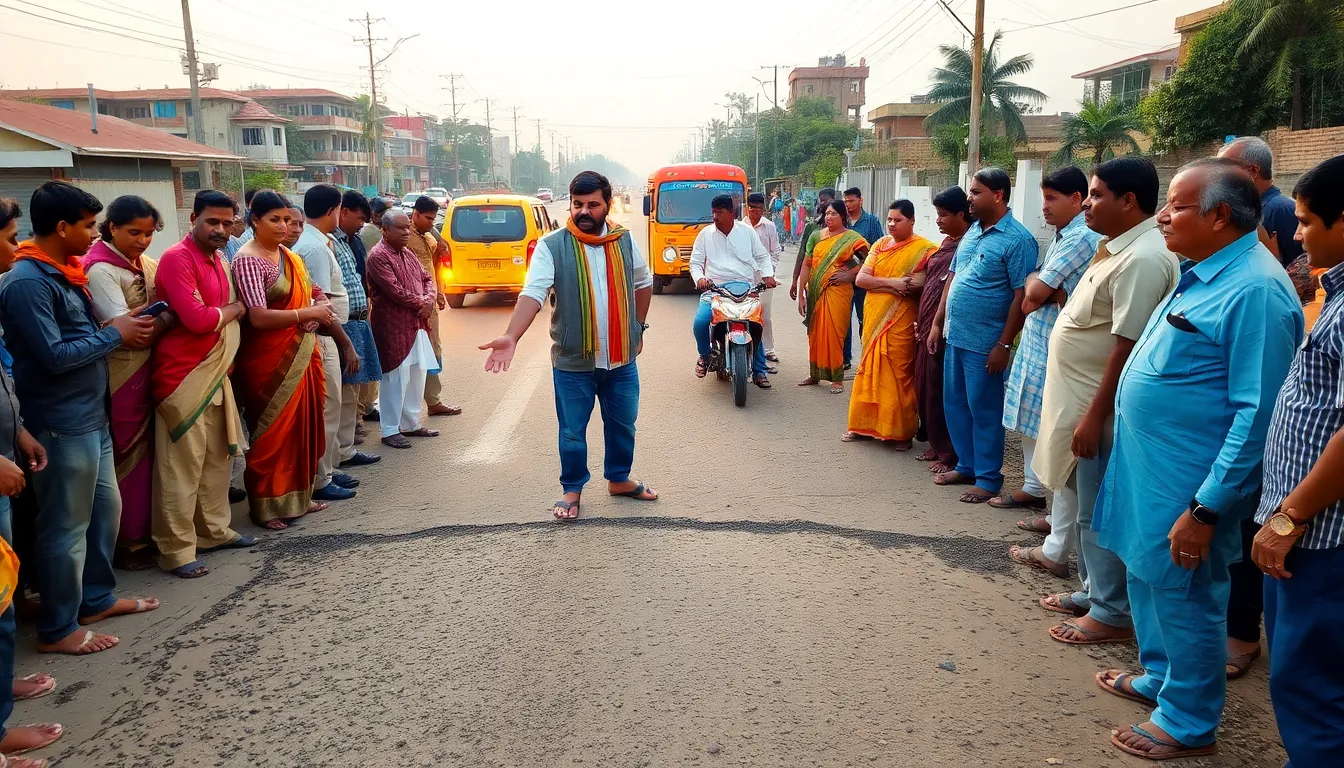
Why has the quality of road construction near Somnath Township in Deesa become a major concern recently? Residents and local officials have raised serious doubts about the substandard asphalt work completed in early 2024. Allegations of poor workmanship and use of low-quality materials have brought the issue into the spotlight.
Understand the Road Construction Quality Issues
The road construction near Somnath Township, Deesa, was part of a municipal infrastructure improvement project initiated by the Deesa Municipality under the Gujarat Urban Development Programme 2023-24. The project, officially sanctioned by the Deesa Municipal Corporation and funded through the Gujarat Municipal Infrastructure Development Fund, began in January 2024 with an expected completion date of March 2024.
The contract was awarded to a local construction firm, Rajasthan-based Shivam Construction, through a municipal tender process. According to official project documents obtained from the Deesa Municipality office, the contract specified a minimum asphalt thickness of 75 mm for the main township roads to ensure durability and resistance to monsoon wear.
However, following complaints by local corporator Motibhai Prajapati in February 2024, an inspection by the Deesa Public Works Department (PWD) on March 5, 2024, found that the asphalt thickness was often under 20 mm—significantly below standards. The PWD report also noted that aggregate quality and bitumen content were below prescribed specifications, raising concerns about the longevity and safety of the roads.
Identify Who Is Affected and How
The immediate impact of the subpar road work affects residents and daily commuters in Somnath Township and adjoining areas of Deesa taluka, Banaskantha district. With a population of approximately 40,000 in the township according to the 2011 Census, these roads serve as primary routes for private vehicles, public buses, and commercial transport.
Local businesses relying on efficient transport have expressed concerns over potential losses due to increased vehicle wear and delays caused by deteriorating road conditions. School buses and emergency vehicles are also at risk, as thinner roads are more prone to potholes and waterlogging during the June-September monsoon.
Moreover, the incident has triggered apprehensions about other ongoing road projects throughout Deesa city. Several neighborhoods have reported similar issues, including cracked surfaces and early signs of erosion. Residents fear that recurring repairs will increase municipal expenditure and inconvenience citizens.
Explain Why the Government Made This Change
The road improvement project was launched as part of the Deesa Municipal Corporation’s 2023-24 budget allocation to enhance urban infrastructure, funded through the Gujarat State Government’s Urban Development Scheme. The initiative aimed to upgrade aging roads, improve traffic flow, and boost economic activity in Deesa, a key commercial hub in Banaskantha district.
Deesa’s strategic location near the Rajasthan border facilitates significant inter-state trade, necessitating durable transportation infrastructure. The municipality intended to deploy asphalt roads with standard thickness and quality to withstand heavy vehicle loads and monsoon rains.
However, budget constraints and the pressure to complete projects quickly may have led to compromises in contractor selection and quality control. The tender process, though legally compliant, lacked stringent post-contract monitoring initially, allowing substandard work to go unnoticed until public complaints surfaced.
Present What Critics and Stakeholders Say
Local corporator Motibhai Prajapati has been vocal about the issue, stating in a March 2024 press conference that the new road “is as thin as paper,” implying that the construction will not last the monsoon season. He accused the contractor and municipal officials of negligence and demanded an immediate audit of all road projects in Deesa.
The Deesa Municipal President, Mr. Rameshbhai Patel, responded by assuring residents that an independent quality assessment committee would be formed. He emphasized that any contractor found violating quality standards would face penalties and that corrective work would be undertaken at no additional cost to taxpayers.
Environmental activists and resident welfare groups have also joined the discourse, linking poor road quality to increased pollution and traffic hazards. They have urged the Gujarat State Public Works Department and Banaskantha District Collector to enhance oversight mechanisms for urban infrastructure projects.
Provide Practical Takeaways for Residents
Residents and commuters in Deesa, especially near Somnath Township, should take the following steps:
- Report any visible road damages or irregularities to the Deesa Municipal Corporation via their official helpline at +91 2768 123456 or through the municipal website desamunicipality.gujarat.gov.in.
- Avoid using damaged road sections during heavy rains to prevent accidents and vehicle damage.
- Participate in local ward meetings where infrastructure issues are discussed to hold officials accountable.
- Stay informed about ongoing infrastructure projects and quality audits by following official announcements from the Banaskantha District Collectorate.
- Encourage transparency by supporting citizen groups monitoring urban development projects.
Furthermore, the municipality has committed to re-inspecting all roads constructed in the 2023-24 financial year and engaging third-party quality assurance agencies. Residents can expect updates on remedial work and project audits in municipal newsletters and local media.
For more information on related civic issues, readers can refer to Concerns Raised Over Road Quality in Deesa’s Somnath Township and Concerns Rise Over Health Risks From Garbage Piles Near Primary School in Deesa.