
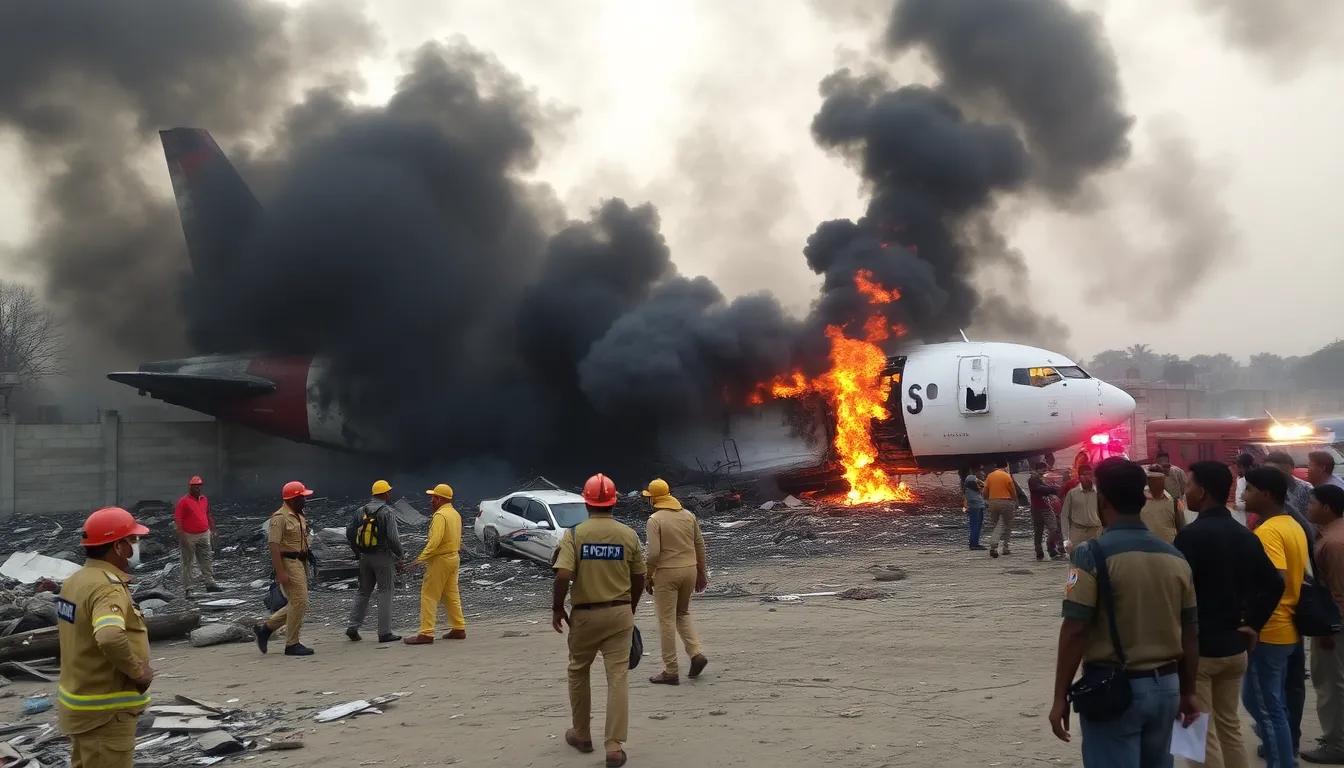
On June 12, a tragic plane crash occurred shortly after takeoff from Ahmedabad airport. An Air India flight, carrying 242 passengers, faced a catastrophic failure, leading to an explosion and subsequent fire. Authorities acted quickly to manage the situation. The State Disaster Response Force (SDRF) and the National Disaster Response Force (NDRF) arrived promptly at the crash site to provide rescue operations.
Deputy Commandant of the Gujarat Police, Shital Kumar Gujjar, reported receiving information about the crash around 2 PM. A rescue team was immediately formed and dispatched to the scene. The State Emergency Operation Center and the Joint Command and Control Team took immediate action.
Upon arrival, the teams found the area engulfed in flames, with debris scattered everywhere. Over a lakh liters of fuel had leaked from the aircraft, complicating the rescue efforts. The teams had to break down a wall to allow fire tenders access to the wreckage. They worked tirelessly to rescue students and civilians trapped in nearby buildings, such as hostels and mess halls.
Local residents also joined the efforts, and various teams coordinated their actions to ensure a swift and effective response. After controlling the fire, the rescue operations continued. Assistance was provided by the Central Industrial Security Force (CISF) and the local fire department.
Unfortunately, several bodies were recovered from the wreckage. These were transferred to the nearest hospital for identification and further investigation. The Gujarat government praised the quick and efficient actions of all teams involved in the rescue operation. This tragic incident highlights the importance of preparedness and coordination during emergencies.
As investigations into the cause of the crash begin, families of the victims are left in grief. The authorities have promised to support the families through this difficult time. A thorough investigation will be conducted to determine what went wrong and how such incidents can be prevented in the future.
In the wake of the crash, the Vadodara fire brigade was also mobilised to assist with rescue efforts. Twenty-five fire tenders and over 200 personnel were dispatched to Ahmedabad to provide additional support. The efforts of all emergency services have been commendable during this crisis.
The quick response of the SDRF, NDRF, and local agencies has been crucial in managing the situation and ensuring that as many lives as possible were saved. The entire operation reflects the readiness and bravery of the emergency response teams, who risk their lives to protect others. This incident serves as a reminder of the importance of safety protocols and emergency preparedness in aviation and other sectors.