
What was the outcome of the gram panchayat vote counting in Banaskantha district? The counting process, which began early morning on May 14, 2024, ended successfully with high voter participation and peaceful conduct, reflecting robust democratic engagement in the district.
What Happened During the Banaskantha Gram Panchayat Vote Counting?
On May 14, 2024, counting of votes for 322 gram panchayats across 14 talukas in Banaskantha district commenced simultaneously at 14 designated taluka-level counting centers. The process was conducted under the supervision of the Banaskantha District Election Officer, Mr. Rakesh Patel, and aided by a team of returning officers and government officials. Counting began with postal ballots, followed by ward member votes, and concluded with the counting of sarpanch votes.
Security was a paramount concern given the large crowds and enthusiasm. Police forces from Banaskantha district headquarters in Palanpur, along with additional reinforcements from neighboring districts, maintained strict order. The Deputy Superintendent of Police, Ms. Seema Rathod, confirmed that no untoward incidents were reported during the counting.
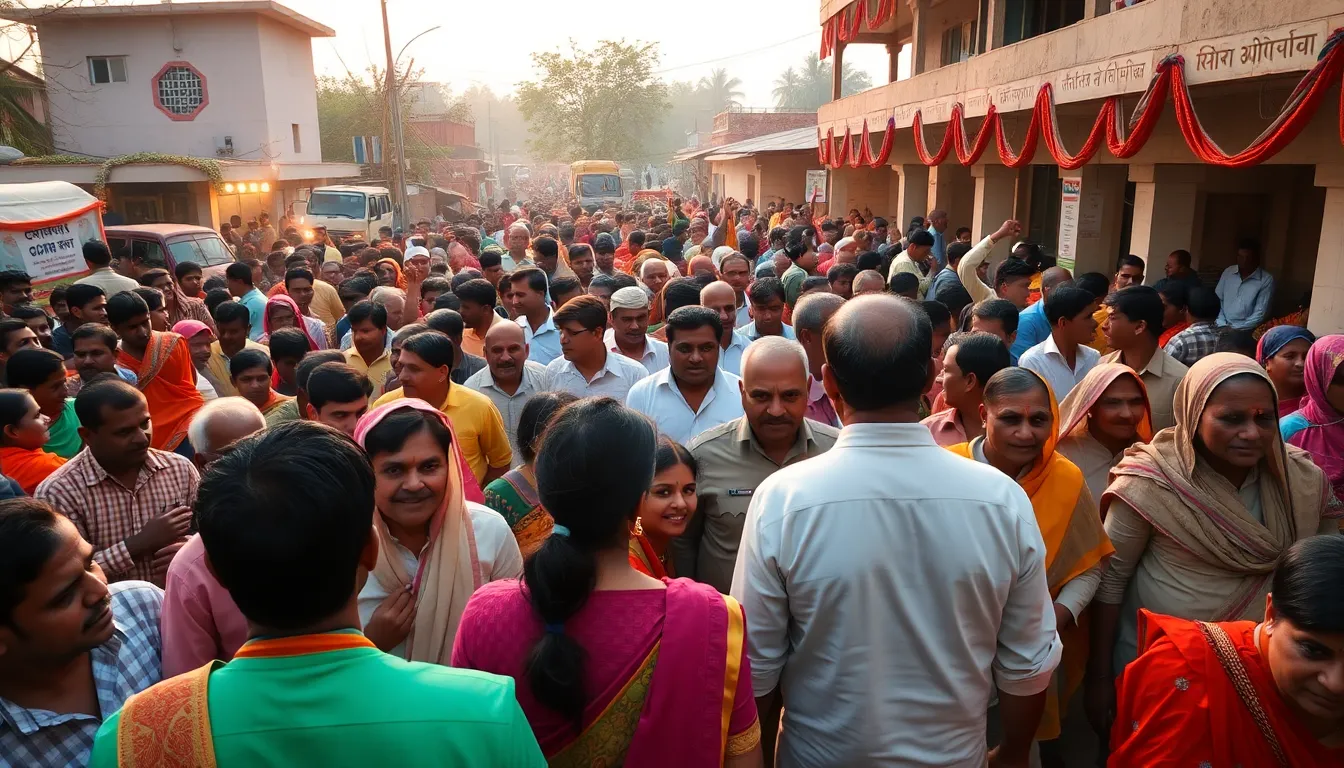
Villagers from remote areas travelled early to the taluka centers, many gathering at Palanpur, Danta, Deesa, and Tharad to witness results firsthand. The excitement was palpable as supporters cheered victorious candidates, who were often welcomed with garlands and local celebrations. However, the large crowds led to significant traffic congestion, prompting the police to enforce temporary road closures and diversions.
The counting process lasted throughout the day, concluding by evening with almost all results declared. District Collector Mr. Harshad Desai expressed satisfaction with the smooth conduct, emphasizing the transparent and fair nature of the election process.
Why Does the Banaskantha Gram Panchayat Election Matter for Gujarat?
Gram panchayats form the foundation of local self-government in Gujarat, and Banaskantha’s elections are critical given its size and population. The district has over 3.1 million residents as per the 2011 census, spread across rural settlements where gram panchayats play a key role in governance, development, and welfare schemes.
These elections empower villagers by directly electing their sarpanch and ward members, who oversee local infrastructure projects, water supply management, sanitation, and implementation of state and central government schemes such as the Mahatma Gandhi National Rural Employment Guarantee Act (MGNREGA) and the Swachh Bharat Mission. Effective leadership at this level can significantly influence rural development outcomes.
Banaskantha’s election results also provide indicators for political trends within Gujarat, especially as they precede upcoming state assembly elections. The high voter turnout and engagement demonstrate strong democratic participation, essential for sustaining Gujarat’s local governance quality.
What Is the Background and Context of These Elections?
Banaskantha district is administratively divided into 14 talukas, including Palanpur, Deesa, Danta, and Vav. The recent elections were held for 322 gram panchayats, encompassing both general elections and by-elections for seats vacated due to resignation or disqualification.
According to the Banaskantha District Panchayat Office, the elections were organized as per the guidelines of the Gujarat State Election Commission, which scheduled polls on April 28, 2024. The election process included voter awareness campaigns coordinated by local NGOs and government bodies to maximize participation.
In 2023, a new gram panchayat was formed in Amirpura taluka, reflecting ongoing administrative adjustments to accommodate growing populations and improve governance. This new panchayat was also part of the election cycle, with its first representatives elected in this round.
For comparison, neighboring Anand district also held gram panchayat elections recently, with counting beginning on May 10, 2024, reflecting a broader pattern of local governance renewal across Gujarat.
What Are the Key Numbers and Data from the Banaskantha Elections?
- Number of Voting Booths: 794 booths across 14 talukas
- Gram Panchayats Contested: 322 panchayats
- Total Electors: 599,279 registered voters
- Voter Turnout: 500,401 voters cast ballots, representing an 83.50% turnout
- By-Election Participation: In 19 by-election panchayats, turnout was 63.24% with 29,199 votes from 43,012 electors
- Security Personnel Deployed: Approximately 400 police officers and personnel
- Counting Centers: 14 taluka-level centers equipped with electronic vote counting infrastructure
These figures indicate a notably high engagement rate compared to previous cycles, where turnout hovered around 70-75%. The increase is attributed to enhanced voter awareness initiatives and local enthusiasm for leadership renewal. The by-election turnout, while lower, still reflects considerable interest in local governance.
What Comes Next After the Banaskantha Gram Panchayat Results?
Following declaration of the results, the newly elected sarpanch and ward members will assume office from June 1, 2024. They will begin work on local development plans, including priority projects such as rural road improvements, water resource management, and sanitation upgrades.
The Banaskantha District Panchayat will coordinate training sessions for elected representatives to familiarize them with governance protocols, budgeting, and digital tools introduced by the Gujarat government for transparency and efficiency.
In addition, the district administration plans to monitor the implementation of welfare schemes in villages with newly elected leadership to assess their effectiveness. This will include coordination with the Gujarat Rural Development Department and the Panchayati Raj Ministry.
For residents interested in following local governance updates or participating in upcoming gram sabha meetings, information will be available through the Banaskantha District Panchayat website and local taluka offices.
For related developments, readers can also refer to the Counting Begins for Anand District Gram Panchayat Elections and Elections Scheduled for 614 Gram Panchayat and 405 Sarpanch Seats in Banaskantha.
Official Resources for Voters and Citizens
For official information regarding gram panchayat elections in Banaskantha, citizens can contact the Banaskantha District Election Office at +91-278-2451234 or visit the Gujarat State Election Commission website at https://sec.gujarat.gov.in. The helpline for voter assistance is 1950, operational during election periods.