
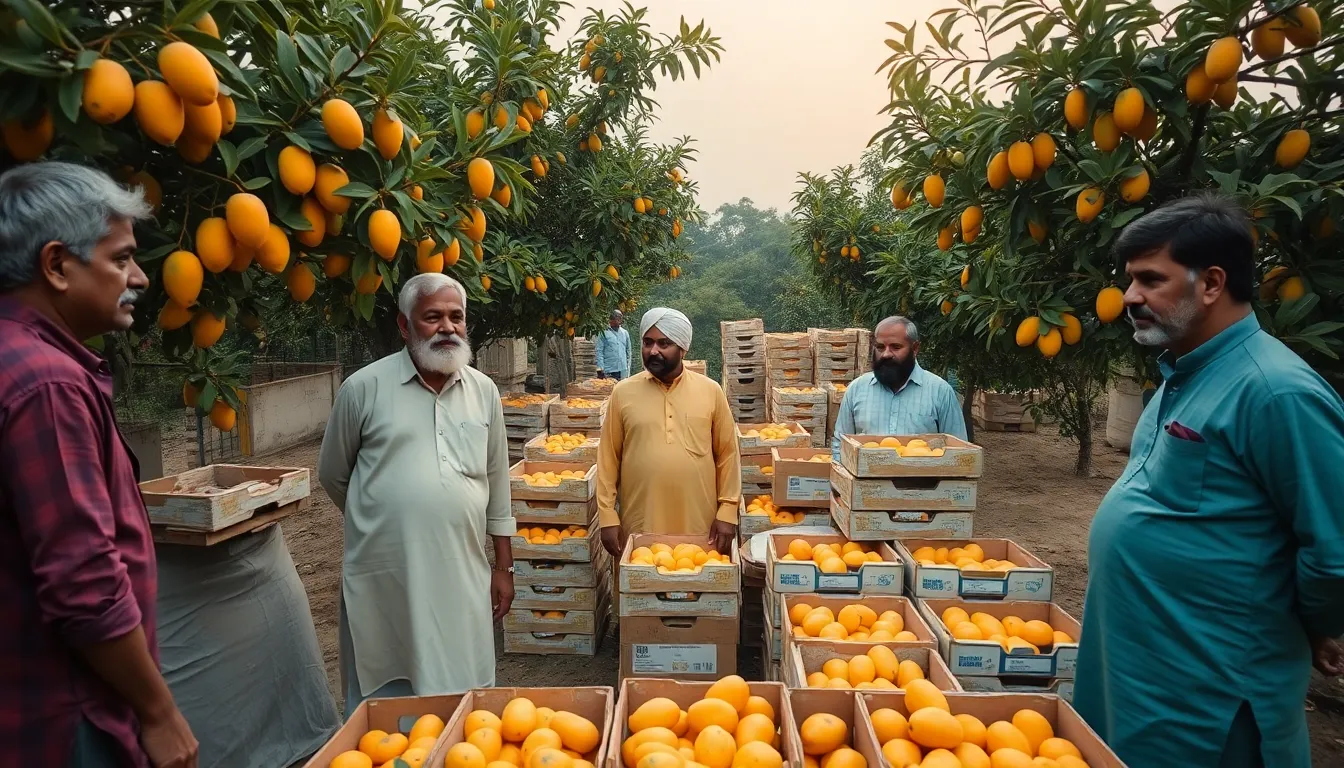
The Gir mango season of 2025 has ended on a disappointing note for farmers and traders in the Gir Somnath district. The Talala marketing yard, the main auction centre for Kesar mangoes, recorded the lowest volume and prices in over two decades. The official closure of the season on June 8, 2025, confirmed the adverse impact of unseasonal rains and weather fluctuations on this iconic fruit’s production and income generation.
What the Season’s Results Mean for Gir Mango Farmers
This year, the total sales volume at Talala marketing yard stood at 449,450 boxes of Kesar mangoes, each box weighing 10 kg, which is the lowest since the 2001-02 season when 431,430 boxes were sold. The average price also dropped sharply to ₹560 per 10 kg box compared to ₹750 in 2001-02. As a result, the total revenue generated during the 2025 season is estimated between ₹24 to ₹26 crore, considerably less than previous years. This decline has directly affected the income of thousands of mango farmers in Gir Somnath and surrounding talukas like Una and Kodinar.
Reasons Behind the Poor 2025 Mango Season
The primary cause of this year’s poor mango season is attributed to unseasonal and heavy rains during the flowering and fruit-setting stages. According to the Gujarat State Department of Horticulture, the Gir region received 30% more rainfall than the average between March and May 2025. These weather conditions led to flower drop and fruit rot, reducing the yield drastically. Additionally, rising temperatures and humidity increased vulnerability to pest infestations, further damaging the crop. Farmers reported that the mangoes harvested were smaller and had lower sugar content, affecting quality and market demand.
The Talala marketing yard chairman, Mr. Rajesh Patel, stated, “This is the weakest season in 23 years. We had hoped for a better recovery this year, but the weather was unpredictable and has hit farmers hard.” The Gujarat State Horticulture Department has acknowledged the situation and announced plans to provide support to affected farmers through subsidies and technical assistance in the coming season.
Impact on Local Economy and Farming Communities
The Kesar mango is a vital source of livelihood for over 5,000 farmers in Gir Somnath district. Many small and marginal farmers rely on mango income for household expenses and loan repayments. The drop in mango prices and volume has led to financial strain on farming families, with some unable to recover their cultivation costs. Traders and commission agents at the Talala yard have also faced losses due to lower sales turnover.
Local agricultural labourers, who depend on mango harvesting work from April to June, experienced reduced employment opportunities. This downturn compounds existing rural distress in the district, where agriculture remains the economic backbone.
Importance of Kesar Mango and Geographical Indication Status
The Kesar mango is renowned for its unique sweet taste, vibrant orange pulp, and aromatic flavour. It is cultivated exclusively in the Gir region, including Talala, Gir Gadhada, and Una talukas. First grown in 1931, the fruit received Geographical Indication (GI) status in 2011 under the Geographical Indications of Goods (Registration and Protection) Act, 1999. This GI recognition legally protects the mango’s origin and quality, helping farmers market their produce at premium prices nationally and internationally.
The decline this year not only affects immediate sales but also poses risks to the reputation and market confidence of the Kesar mango brand. Experts from the Gujarat Agro Industries Corporation have stressed the need for better weather-resilient cultivation practices and investment in cold storage and processing units to mitigate future losses.
Government and Institutional Support for Future Seasons
The Gujarat State Horticulture Department, in coordination with the Ministry of Agriculture and Farmers Welfare, has announced several initiatives to support mango farmers post the disappointing 2025 season:
- Provision of crop insurance claim settlements to farmers affected by weather damage, facilitated through the Pradhan Mantri Fasal Bima Yojana (PMFBY).
- Technical training programs on advanced pest management, irrigation, and weather-resistant farming in Gir Somnath, conducted by the Krishi Vigyan Kendra (KVK) in Talala.
- Subsidies for installing micro-irrigation systems and cold storage facilities to reduce post-harvest losses.
- Promotion of value-added mango products such as pulp, pickles, and juices to increase farmer income beyond raw fruit sales.
Farmers are encouraged to register with the Talala Agricultural Produce Market Committee (APMC) to access these benefits and stay informed about upcoming government schemes.
Statistics Summary of 2025 Gir Mango Season at Talala Yard
- Total boxes sold: 449,450 (10 kg each)
- Average price per box: ₹560
- Total revenue: ₹24-26 crore
- Comparison to 2001-02 season: Lowest volume recorded in 23 years
- Rainfall increase between March-May 2025: 30% above average
For detailed coverage on this season, readers can also see Disappointing Year for Gir Mango Season in Gujarat and Poor Mango Season in Talala: Historic Low Yield Reported.
Next Steps for Farmers and Stakeholders:
- Register with the Talala APMC to access government schemes and insurance claims.
- Attend local training sessions by KVK Talala on improved horticulture practices.
- Explore options to diversify income through mango processing and value-added products.
With the monsoon season beginning, farmers also look forward with hope, as indicated in Gujarat Farmers Celebrate Start of Monsoon Season. Stable rainfall and better weather management will be critical to restoring the productivity and reputation of the Gir Kesar mango in 2026.