
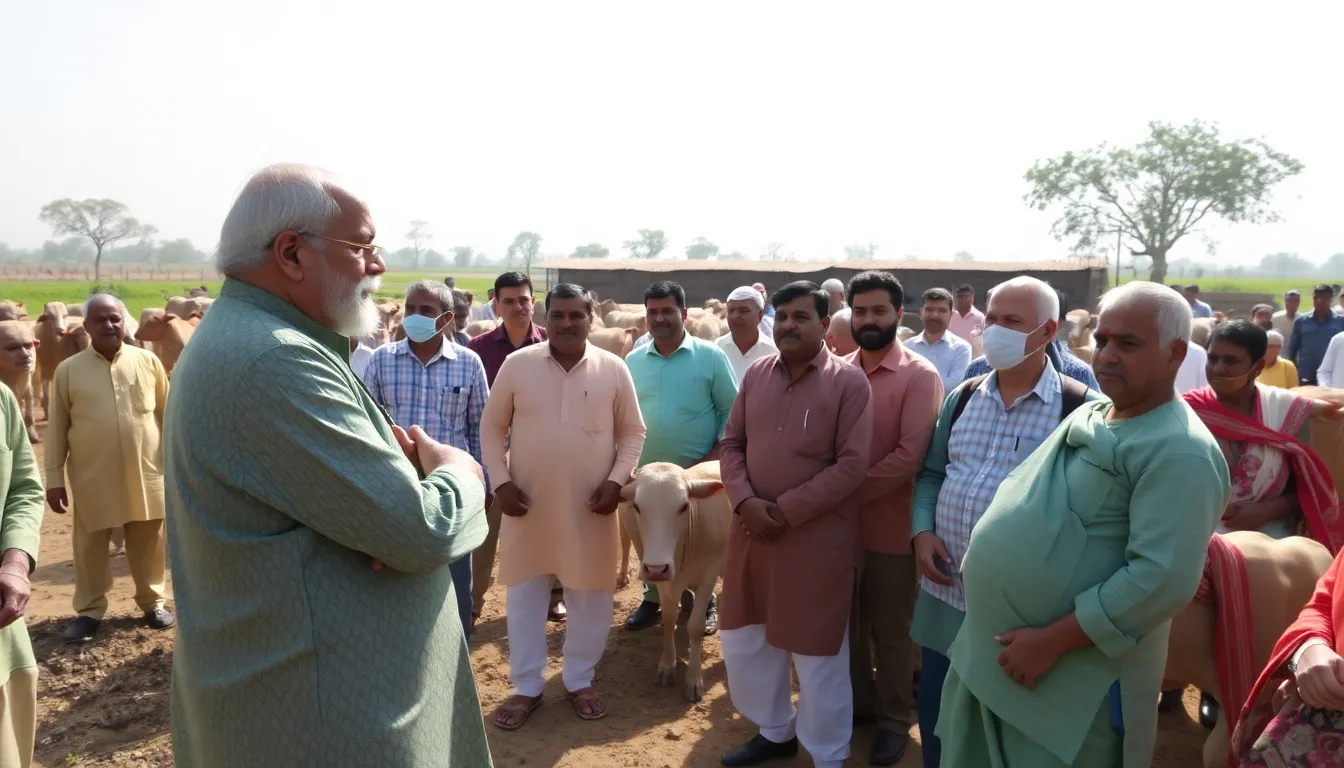
Governor Acharya Devvrat’s recent visit to the Dwarka Gaushala on March 15, 2024, marks a notable acceleration in Gujarat’s natural farming movement. His address to local farmers emphasized a clear policy shift encouraging the adoption of natural farming techniques over chemical-dependent agriculture. This initiative directly benefits over one million farmers in Gujarat who have begun transitioning to sustainable practices, particularly in districts such as Dwarka, Jamnagar, and Rajkot. The policy reinforces Gujarat’s commitment to improving soil health, farmer livelihoods, and environmental sustainability.
Understand the Policy Provisions
The Governor highlighted the principles underpinning the National Mission for Natural Farming (NMNF), launched by the Ministry of Agriculture and Farmers Welfare, Government of India. The mission, operational since 2019, promotes zero-budget natural farming (ZBNF) methods that reduce or eliminate synthetic chemical inputs. Key provisions include:
- Utilization of cow-based inputs such as cow dung and urine for preparing bio-fertilizers and pesticides.
- Encouragement of crop diversification and multi-cropping to enhance biodiversity and soil fertility.
- Training programs and capacity building for farmers through state agricultural universities and Krishi Vigyan Kendras (KVKs) across Gujarat.
- Financial incentives and subsidies for farmers adopting natural farming, coordinated by the Gujarat State Department of Agriculture and Farmers Welfare.
- Establishment and support of gaushalas (cow shelters) for sustainable cow conservation, integrating cow welfare with agricultural practices.
The Governor stressed that natural farming methods safeguard the earth’s ecological balance while improving crop resilience and yield quality.
Identify Who Is Affected and How
Farmers across Gujarat, especially in the Saurashtra region—comprising districts like Junagadh, Porbandar, and Gir Somnath—are the primary beneficiaries. According to Gujarat Agriculture Department data, over 1.2 million farmers have adopted some form of natural farming as of 2023, marking a 35% increase from 2020. Small and marginal farmers, who constitute nearly 85% of Gujarat’s farming population, stand to gain from reduced input costs and healthier soils.
Gaushala committees and cow welfare organizations in Dwarka and Jamnagar districts receive direct support under this initiative. The integration of cow conservation with farming practices creates new employment opportunities and supports rural economies.
Conversely, suppliers of chemical fertilizers and pesticides may see a gradual reduction in demand, prompting a shift in the agro-input market within Gujarat.
Explain Why the Government Made This Change
Gujarat’s move towards natural farming aligns with national priorities to promote sustainable agriculture, reduce farmers’ input costs, and improve public health. The Governor pointed to the environmental hazards caused by chemical fertilizers and pesticides—such as soil degradation, water contamination, and health risks to farmers and consumers.
Natural farming helps restore soil organic matter, increases water retention, and decreases greenhouse gas emissions. Prime Minister Narendra Modi’s endorsement of the National Mission for Natural Farming aims to make India a global leader in sustainable agriculture, a vision actively supported by Gujarat’s government institutions.
Additionally, Gujarat’s coastal regions face challenges such as salinity intrusion and erratic rainfall patterns. Natural farming methods increase resilience to these climate change impacts, ensuring long-term agricultural productivity.
Report What Critics and Stakeholders Say
While many farmers and agricultural experts applaud the Governor’s advocacy, some stakeholders remain cautious. Critics highlight concerns regarding the short-term yield reductions during transition phases and the need for more comprehensive training and financial support for farmers.
Dr. R. K. Patel, an agronomist at the Anand Agricultural University, notes that “Natural farming requires patience and adaptation; government support must include extension services and market linkages to ensure farmer incomes are protected.”
However, farmer leaders from Dwarka and Ahmedabad express optimism. Mr. Harishbhai Desai, a natural farming practitioner from Dwarka district, shared that “The Governor’s involvement boosts farmer confidence and motivates communities to adopt eco-friendly methods.”
Local NGOs and gaushala committees have also welcomed the emphasis on cow welfare, linking it to sustainable agriculture and rural livelihoods.
Provide Practical Takeaways
Farmers in Gujarat interested in transitioning to natural farming should consider these steps:
- Contact the Gujarat State Department of Agriculture and Farmers Welfare or local Krishi Vigyan Kendras for training sessions on natural farming techniques.
- Visit nearby gaushalas such as the Shri Dwarka Gaushala to understand cow-based input preparation, including Panchagavya and Jeevamrut.
- Apply for government subsidies and support schemes under the National Mission for Natural Farming through the official portal or district agriculture offices.
- Join farmer producer organizations (FPOs) that promote organic produce marketing and knowledge sharing.
- Monitor soil health regularly using services provided by agricultural universities such as Navsari Agricultural University and Junagadh Agricultural University.
For local officials and policymakers, the Governor’s address underscores the need to enhance extension services and integrate cow conservation with ecological farming initiatives.
Those interested may also refer to previous events such as the Natural Farming Conference Held by Shri Dwarka Gaushala Committee and collaborations highlighted in Governor Discusses Natural Farming and Cooperation with Amit Shah.
Official Resources for More Information
Readers seeking detailed guidance should contact the Gujarat State Department of Agriculture and Farmers Welfare located in Gandhinagar. The department’s helpline at 079-232-12345 provides assistance regarding natural farming schemes. Official updates and application procedures are available on the website https://agri.gujarat.gov.in. Additionally, district agricultural offices in Dwarka, Jamnagar, and Ahmedabad offer local support.