
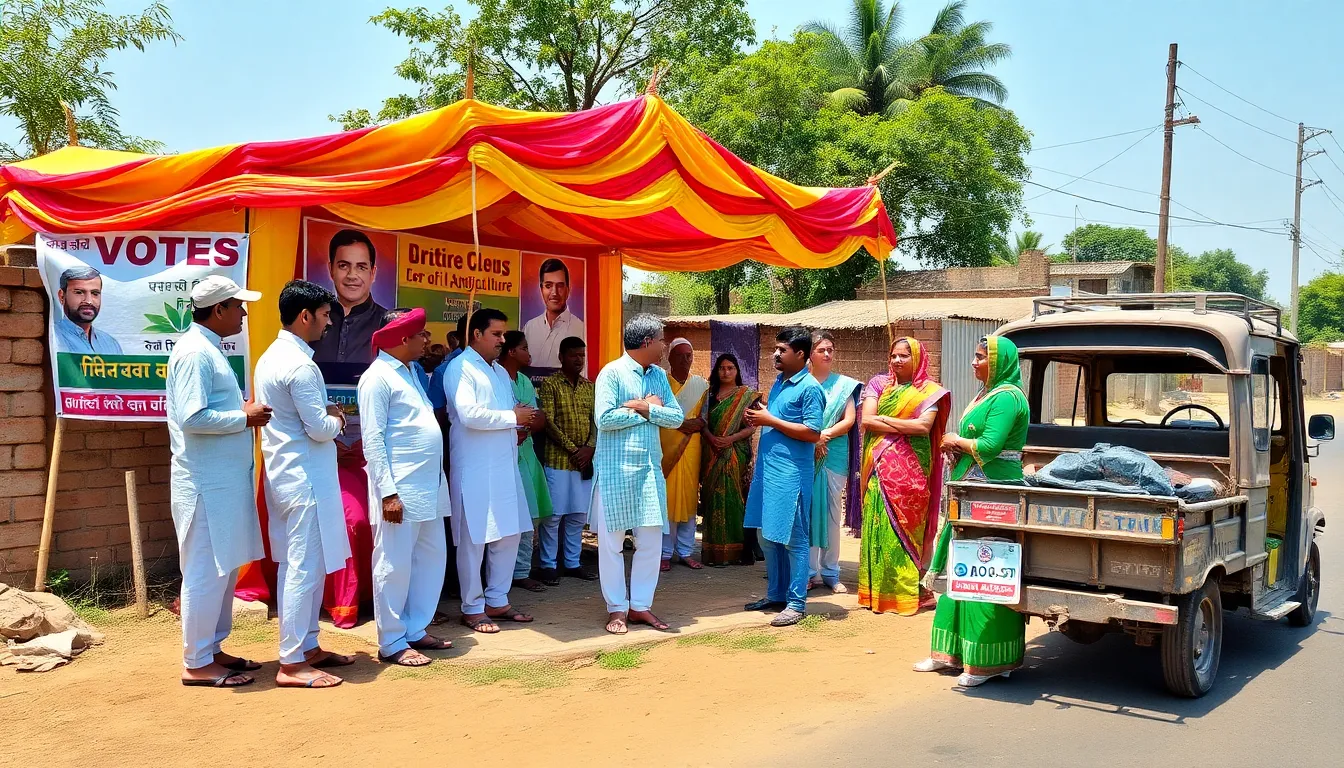
8,326 Gram Panchayats across Gujarat will go to polls on June 22, 2023, as officially announced by the Gujarat State Election Commission. This comprehensive election exercise marks a critical juncture in rural governance, with voting scheduled for June 22 and counting set for June 25. State Election Commissioner S. MurliKrishna made the announcement during a press briefing in Gandhinagar, underscoring the scale and importance of the upcoming elections.
Understand the Election Schedule and Provisions
The official notification for the elections will be released on June 2, 2023, initiating the formal electoral process. Candidates aspiring to contest must submit their nomination papers by June 9. The verification process for these nominations is slated for June 10, while the deadline for withdrawal of candidature is June 11. These deadlines ensure a streamlined and transparent election procedure across all 33 districts of Gujarat.
The elections will cover all Gram Panchayats, the foundational units of rural self-governance, including by-elections for 3,638 Gram Panchayats where vacancies have arisen. The model code of conduct will come into effect with the announcement, guiding the conduct of political parties and candidates to maintain fair play.
The Gujarat State Election Commission, vested with constitutional authority under the Gujarat Panchayats Act, 1993, supervises and administers these elections. This body ensures compliance with electoral laws and fair conduct of the democratic process.
Identify Who Is Impacted and How
The elections directly affect the rural population of Gujarat, particularly the inhabitants of villages governed by Gram Panchayats. With over 8,000 Panchayats involved, millions of villagers across districts like Patan, Banaskantha, Vadodara, and Rajkot will participate as voters. For instance, districts such as Patan have been specifically highlighted in recent reports for their scheduled elections on June 22 (Patan District Set for Gram Panchayat Elections on June 22).
Candidates include local leaders, farmers, and community members seeking to represent their villages. The elected Sarpanch and ward members will be responsible for local development activities, managing government schemes, and addressing grassroots issues such as water supply, sanitation, and infrastructure.
The election also impacts various government departments and institutions involved in rural development, who rely on Panchayats to implement and monitor welfare programs efficiently.
Explain Why the Government Scheduled These Elections
The Gujarat government aims to strengthen grassroots democracy by holding timely elections to Gram Panchayats, which are critical for local self-governance. Delays in elections can disrupt development activities and weaken accountability mechanisms. With the State Election Commission initiating this election cycle, the government ensures uninterrupted democratic processes and increased public participation.
Moreover, the elections facilitate decentralization, empowering villages to make decisions best suited to their unique needs. This decentralization is aligned with the constitutional mandate under the 73rd Amendment, which institutionalizes Panchayati Raj bodies as the third tier of government.
Timely elections also enable the smooth implementation of various state and central schemes like the Mahatma Gandhi National Rural Employment Guarantee Act (MGNREGA), Swachh Bharat Mission, and Pradhan Mantri Awas Yojana, which depend on active local governance for success.
Summarize What Critics and Stakeholders Say
While the elections are broadly welcomed as vital for democracy, some stakeholders have raised concerns. Critics point to challenges such as candidate selection influenced by caste and local power dynamics, which may affect fair representation. There are calls for greater awareness campaigns to educate voters on their rights and the importance of choosing candidates on merit rather than identity.
Some activists and civil society groups have requested enhanced transparency in the nomination and campaigning processes, urging the State Election Commission to ensure strict adherence to the model code of conduct. Efforts to curb electoral malpractices like vote-buying and intimidation are also being monitored closely.
On the other hand, successful past elections, such as Rinaba Pushparajsinh Jhala’s victory in Vadodara, demonstrate the opportunity for new leadership to emerge, inspiring confidence among rural voters.
Guide Voters and Candidates on Next Steps
For candidates interested in contesting the Gram Panchayat elections, follow these steps:
- Obtain and submit nomination papers at the local Panchayat office by June 9, 2023.
- Attend the verification process on June 10 to confirm eligibility.
- Decide and finalize withdrawal of nomination by June 11 if needed.
- Begin campaign activities in compliance with the model code of conduct effective from June 2.
Voters should:
- Check voter lists at local Gram Panchayat offices or online portals to confirm registration.
- Stay informed about candidates and their manifestos.
- Participate in the polling process on June 22 by visiting designated polling stations with valid voter ID.
- Follow election updates and results announced on June 25.
Districts such as Banaskantha have scheduled elections for 614 Gram Panchayat and 405 Sarpanch seats, highlighting the scale of participation required (Banaskantha Election Details).
Bottom Line
The June 22, 2023 Gram Panchayat elections in Gujarat represent a decisive moment for strengthening rural democracy and governance. Voters and candidates across all districts must engage actively to ensure transparent, fair outcomes that will shape the development trajectory of thousands of villages. Stay informed, verify your voter status, and take part in this grassroots democratic process.