
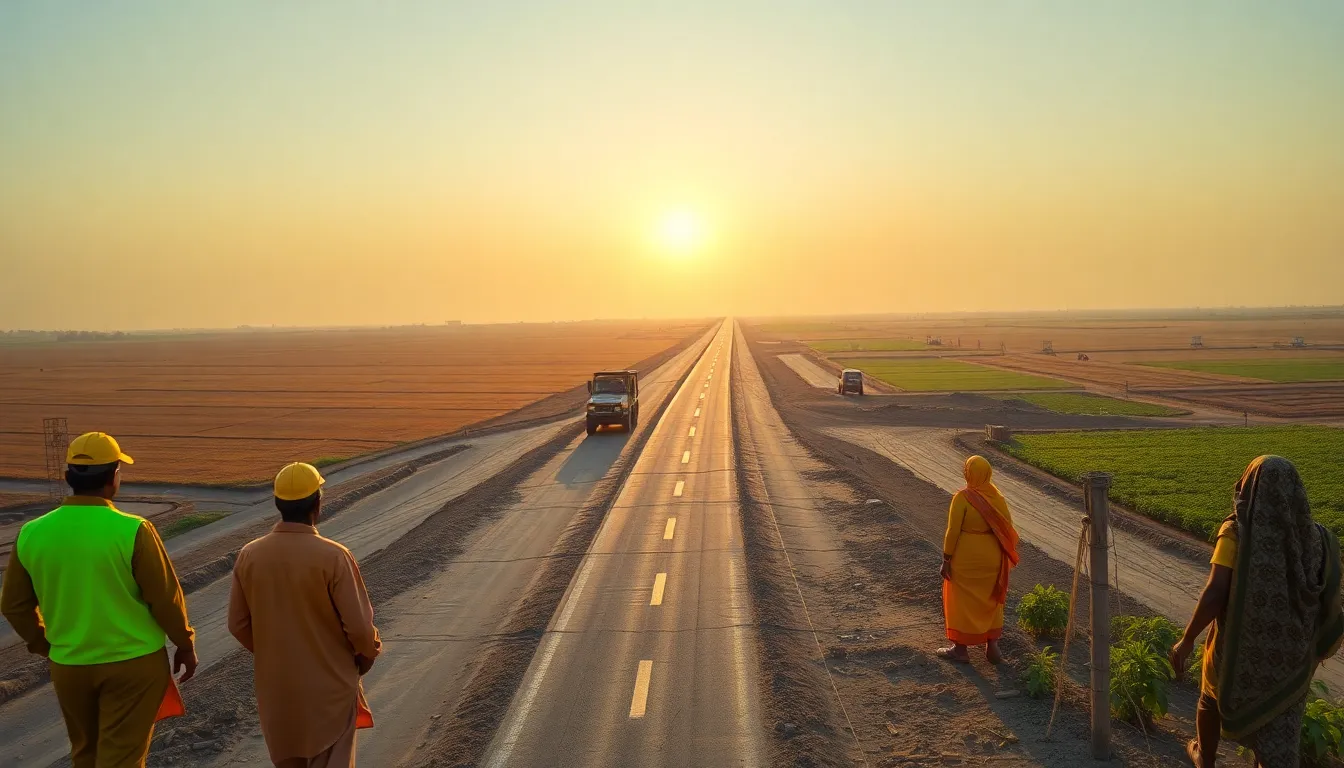
The Gujarat government, under the leadership of Chief Minister Bhupendra Patel, has launched an ambitious infrastructure initiative to build two new greenfield expressways aimed at enhancing connectivity, reducing travel time, and boosting economic growth. These expressways, the Ahmedabad-Dwarka-Somnath-Porbandar Expressway and the Disa-Pipavav Namo Shakti Expressway, will be constructed on greenfield alignments, carefully planned to avoid existing urban settlements and minimize disruption. The projects are poised to transform transportation across multiple districts in Gujarat, catalysing regional development and improving access to key industrial, cultural, and religious destinations.
Project Details: Scope, Cost, and Timeline
The two expressways represent a substantial addition to Gujarat’s road infrastructure with combined lengths exceeding 1,100 kilometers. The Ahmedabad-Dwarka-Somnath-Porbandar Expressway will cover approximately 680 kilometers, connecting the state’s major port city of Porbandar with Ahmedabad, via the religious hubs of Dwarka and Somnath. This project is estimated to cost ₹57,120 crore. Meanwhile, the Disa-Pipavav Namo Shakti Expressway will run approximately 430 kilometers from Disa in Banaskantha district to Pipavav Port in Amreli district, with an estimated investment of ₹39,120 crore.
Both expressways are designed as access-controlled, high-speed corridors with multiple lanes to support heavy traffic volumes and improve safety. The Gujarat State Road Development Corporation (GSRDC), the nodal agency responsible for execution, has initiated the Detailed Project Report (DPR) phase. The government aims to complete DPRs within 12 months, with tenders for construction expected to be floated by mid-2025. Construction timelines for each expressway are anticipated to be around 3 to 4 years, targeting completion by 2028-29.
Areas and Districts Covered
The Ahmedabad-Dwarka-Somnath-Porbandar Expressway will traverse several key districts:
- Ahmedabad: Starting point, major economic hub
- Botad: Agricultural and trading centre
- Junagadh: Gateway to Somnath and Gir National Park
- Devbhumi Dwarka: Religious tourism hotspot
- Porbandar: Coastal city, historical birthplace of Mahatma Gandhi
The Disa-Pipavav Expressway will connect northern and southern Gujarat, passing through:
- Banaskantha: Agricultural district, Disa is a key town
- Mehsana: Industrial and agricultural centre
- Rajkot: Major urban and industrial district
- Amreli: Coastal district with Pipavav Port
By linking these districts, the expressways will improve regional integration, facilitate movement of goods from ports to hinterlands, and enhance access to emerging industrial zones such as the Dholera Special Investment Region.
How It Will Benefit Citizens
The new expressways are expected to deliver wide-ranging benefits for Gujarat’s residents, businesses, and visitors:
- Reduced Travel Time and Traffic Congestion: Access-controlled design will minimize bottlenecks and enable smoother journeys, with travel times between key cities expected to reduce by up to 40%.
- Boost to Economic Activities: Enhanced connectivity to ports like Pipavav and Porbandar will facilitate faster freight movement, benefiting industries including textiles, manufacturing, and agriculture.
- Promotion of Tourism: The Ahmedabad-Dwarka-Somnath-Porbandar corridor connects major religious and cultural sites, potentially increasing pilgrim and leisure tourism. Proximity to attractions like the Statue of Unity and Gir National Park will also support visitor growth.
- Safety and Environmental Benefits: Modern engineering standards will improve road safety. Greenfield alignment reduces urban encroachment and environmental disturbance, with social and environmental impact assessments integral to project planning.
- Job Creation: Construction and subsequent economic growth will generate employment opportunities across districts, particularly in construction, logistics, and ancillary services.
What residents should do: Landowners and local communities in affected districts such as Banaskantha, Botad, and Amreli should register their landholdings and engage with local government offices to stay informed about land acquisition and compensation procedures once the DPR finalizes the alignment.
Current Status and Next Milestones
The Gujarat State Road Development Corporation (GSRDC) issued a public request for proposals (RFP) to consulting firms for preparing the Detailed Project Reports in early 2024. The DPR preparation includes:
- Road and structural design
- Service road planning
- Environmental and social impact assessments
- Safety audits
- Land acquisition strategy and compensation frameworks
Following DPR completion expected by March 2025, GSRDC will invite tenders from construction contractors, with selection targeted by late 2025. The government is evaluating partnerships with experienced national infrastructure firms and international consultants to ensure high standards.
Stakeholder consultations with district administrations of Ahmedabad, Rajkot, and others are ongoing to ensure alignment with regional development plans. Monitoring committees have been established to oversee timely progress and address concerns promptly.
Background: Why This Was Needed
Gujarat’s rapid industrialisation and urbanisation over the past two decades have strained existing transport networks. The state’s strategic location with the longest coastline in India and several major ports like Pipavav and Kandla requires robust infrastructure to sustain growth.
Current highways connecting northern and southern Gujarat often face congestion and longer travel times due to passing through towns and cities. This affects the efficient movement of goods and commuters. The greenfield expressways are designed to bypass urban areas, enabling uninterrupted high-speed travel.
Additionally, Gujarat’s government has been focusing on mega projects such as the Ahmedabad Metro Phase 2 and the Dholera Smart City industrial hub, which demand improved road connectivity. The expressways will complement these projects by linking industrial, port, and urban centres more effectively.
With increasing emphasis on sustainable development, the government is ensuring these projects incorporate modern environmental safeguards and community compensation mechanisms, reflecting lessons learned from earlier infrastructure developments in the region.
Next Steps for Residents and Businesses
- Stay informed on DPR progress through the Gujarat State Road Development Corporation website (gsrdc.gujarat.gov.in) and local district offices.
- Landowners in Banaskantha, Botad, Rajkot, and Amreli should verify land titles and prepare documentation to facilitate smooth compensation processes.
- Businesses and logistics operators should plan future routes and assess how the expressways can optimize supply chains once operational.
- Tourism operators around Dwarka, Somnath, and Porbandar should prepare for increased visitor inflows by upgrading facilities and services.
- Citizens can participate in public consultations organized by GSRDC to provide feedback and raise concerns.
The Gujarat government’s drive to build these two greenfield expressways marks a significant leap forward in the state’s infrastructural landscape. For continuous updates and official announcements, residents and stakeholders are advised to monitor releases from the Gujarat State Road Development Corporation and the Gujarat Public Works Department.