
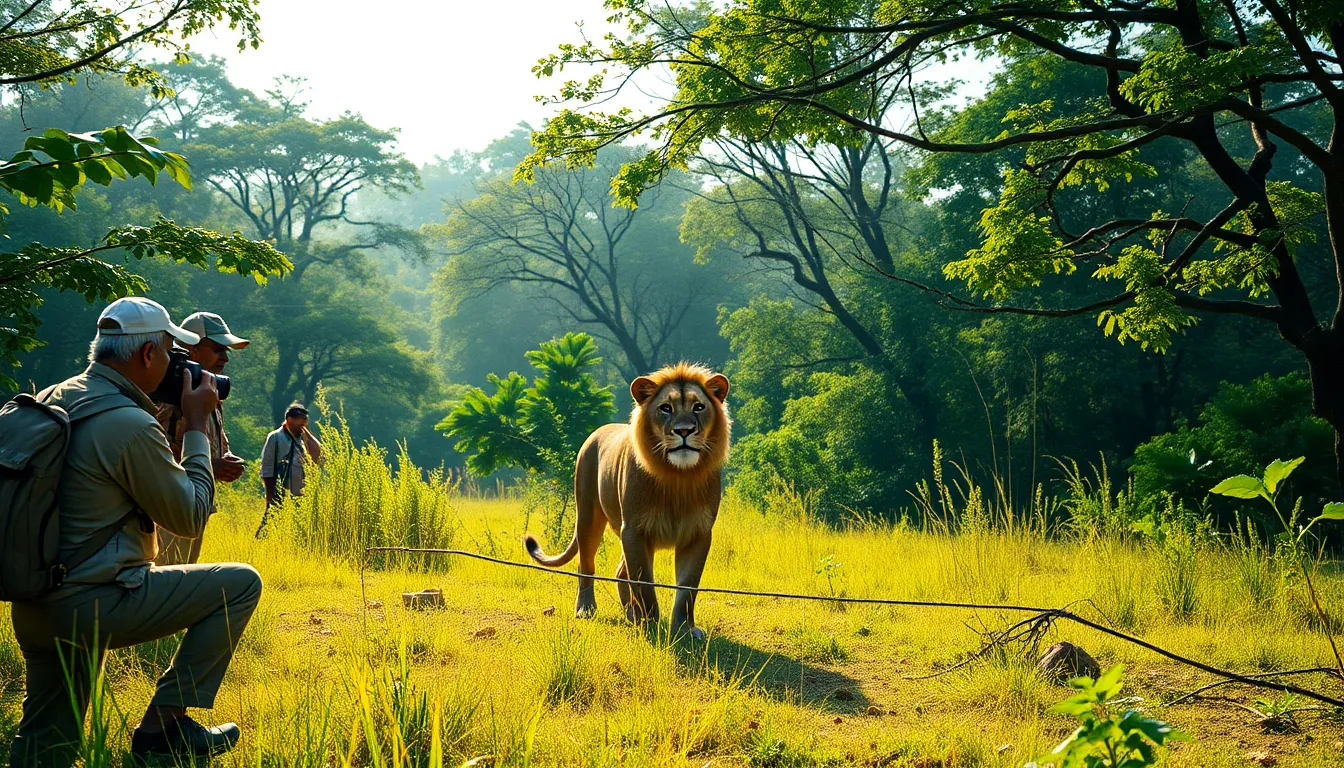
The population of Asiatic lions in Gujarat’s Gir forest has seen a remarkable increase. Chief Minister Bhupendra Patel announced that the latest count shows there are now 891 lions in the state. This number includes 196 males, 330 females, and the rest are cubs and sub-adults. This is a significant rise from the 327 lions recorded in 2001, demonstrating Gujarat’s success in lion conservation.
The lion population census is conducted every five years by the state’s Forest Department. This year, it took place from May 10 to 13, covering 35,000 square kilometres across 58 talukas in 11 districts. The effort involved 3,854 people, including forest workers and local village leaders.
Chief Minister Patel credited Prime Minister Narendra Modi for changing the traditional counting method to a more accurate total count by direct sighting. Modern technology played a crucial role in this process. Digital cameras and camera traps were used to take photographs for individual identification. Some lions were fitted with radio collars to help track their locations. The e-Gujforest app also aided in real-time data entry, improving accuracy with GPS locations and photos.
The Prime Minister announced Project Lion on the 74th Independence Day, aimed at long-term conservation and management of lions. This project covers aspects such as lion habitat management, wildlife health, local community involvement, scientific research, and biodiversity conservation.
The Forest Minister, Mulubhai Bera, and other officials were present to discuss the three-tier counting method and real-time lion tracking used for the census. This collective effort has led to a steady increase in the lion population in the region.
Asiatic lions are unique to India, primarily found in the Gir forest, and represent a significant part of the country’s wildlife heritage. The increase in their population reflects the successful conservation strategies adopted by the Gujarat government.
The last census in 2015 recorded 523 lions, showing a 27% increase over the last five years. The count has consistently risen, with figures of 304 in 1995, 327 in 2001, 359 in 2005, 411 in 2010, and 674 in 2020.
The direct beat verification method ensures nearly 100% accuracy and minimizes standard errors in the census. The use of modern technology, such as high-resolution cameras and GIS software, has allowed for detailed mapping of lion movements and habitat use.
Asiatic lions are classified as the largest wild cats after African lions and are an essential part of the ecosystem. Their population increase is not only a point of pride for Gujarat but also highlights the effectiveness of conservation efforts in India. The government aims to enhance lion habitats further, ensuring a sustainable future for these majestic animals.