
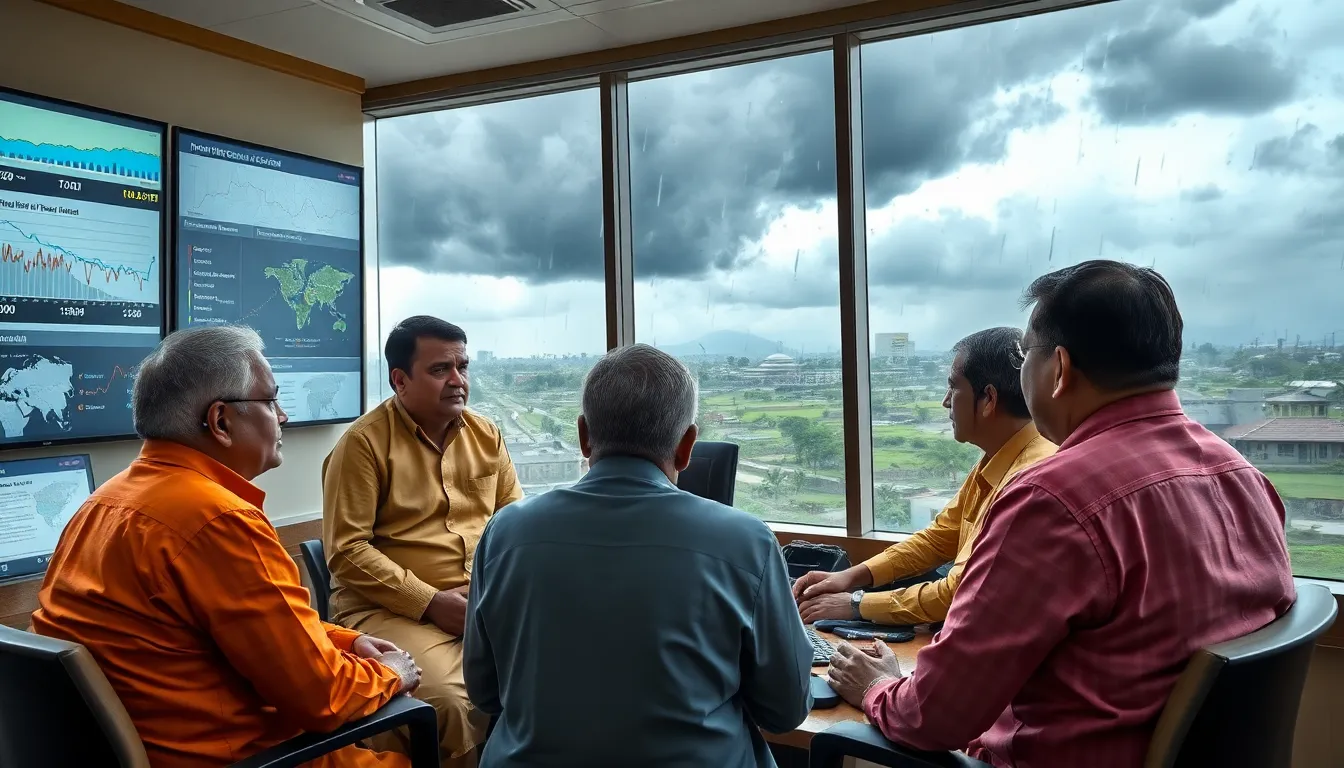
Gandhinagar, June 15, 2024 – In response to the ongoing heavy rainfall impacting Saurashtra and South Gujarat regions, Water Resources Minister Kunvarji Bavaliya conducted a comprehensive review of flood control measures at the State Water Data Center’s Flood Control Cell today. This high-level meeting underscores the Gujarat government’s proactive stance to mitigate flood risks amid increased monsoon intensity.
What Happened: Minister Bavaliya’s Flood Control Review
Minister Kunvarji Bavaliya visited the Flood Control Cell based in Gandhinagar, where he met senior officials including M.D. Patel, Chief Secretary of the Water Resources Department, and Superintendent Engineer B.H. Joshi. The meeting focused on monitoring the current heavy rainfall scenario and reviewing preparedness for potential flood situations. The Flood Control Cell, operational annually from June 1 to October 1, utilizes cutting-edge technologies such as the Reservoir Data Management System to track rainfall and reservoir inflow data in real time.
During the session, Minister Bavaliya emphasized the critical role of timely alerts to district collectors and local administration in Botad, Bhavnagar, Rajkot, and other affected districts. He instructed officials to activate communication channels immediately when upstream or local heavy rainfall is detected, ensuring warnings reach vulnerable communities promptly. The meeting also included a detailed presentation on the Disaster Management Plan 2025, designed to coordinate efforts across multiple departments for enhanced flood response.
The government has established 12 dedicated hotlines and 14 satellite phones to maintain uninterrupted communication throughout the monsoon, ensuring rapid dissemination of information and efficient coordination between Gandhinagar and district-level emergency teams.
Why It Matters for Gujarat: Protecting Lives and Property
Gujarat’s extensive coastline and varied topography make it particularly vulnerable to monsoon-related flooding. The current heavy rainfall alerts for Saurashtra and South Gujarat highlight the risk to agricultural lands, urban areas, and critical infrastructure. Districts like Botad and Bhavnagar, with low-lying river basins, are prone to waterlogging and breach of embankments, which can disrupt livelihoods and cause displacement.
By strengthening flood monitoring and early warning systems, the government aims to reduce casualties and property damage during the monsoon season. Minister Bavaliya’s directives to issue local alerts based on reservoir inflows and rainfall data are crucial for timely evacuations and preventive actions. Citizens in affected districts are urged to stay updated on weather advisories and adhere strictly to safety instructions issued by district authorities.
Background and Context: Gujarat’s Monsoon and Disaster Preparedness
Gujarat typically experiences its monsoon season from June to September, with an average annual rainfall of approximately 800 to 1200 mm, varying significantly across districts. Coastal districts such as Surat and Bharuch often receive higher rainfall, while parts of Saurashtra and Kutch receive less.
Recent years have seen an increase in intense rainfall events, attributed to changing climatic patterns. The state government has accordingly enhanced its flood management infrastructure, including the establishment of the Flood Control Cell and integration of real-time data systems. The Disaster Management Plan 2025 outlines a coordinated framework involving the Water Resources Department, Revenue Department, local municipalities, and disaster response agencies to improve preparedness and response efficiency.
In related developments, the Gujarat Chief Minister recently reviewed flood impacts via video conference, highlighting state-wide efforts to manage this year’s monsoon challenges.
Key Numbers and Data: Current Rainfall and Reservoir Status
- As of June 15, 2024, Saurashtra districts such as Rajkot and Botad recorded rainfall exceeding 150 mm in the past 48 hours, according to the State Water Data Center.
- Reservoirs in Bhavnagar district, including the Ghelo and Kalubhar dams, show inflow increases of 20-25% over their average monsoon levels.
- 12 emergency hotlines and 14 satellite phones are operational statewide for flood communication.
- The Flood Control Cell operates daily from 8 a.m. to 8 p.m. with 24/7 standby support during peak rainfall periods.
- Disaster Management Plan 2025 covers coordination among at least 10 departments including Water Resources, Revenue, Health, and Public Works.
What Comes Next: Continued Vigilance and Community Preparedness
The Gujarat government will maintain heightened surveillance of rainfall and reservoir levels throughout the monsoon season. Officials will continue field visits and maintain regular communication with district collectors, especially in vulnerable areas like Botad, Rajkot, and Bhavnagar.
Local administrations are advised to conduct community awareness programs, stressing flood safety measures such as evacuation routes and emergency contacts. The government may issue further advisories or restrictions on water release from reservoirs to prevent downstream flooding.
Residents in affected districts should monitor official weather updates via the local administration, State Water Data Center bulletins, and verified news sources such as news.gujarat.in. Adhering to warnings and avoiding travel in flood-prone areas during heavy rainfall is critical.
Official Resources for Gujarat Residents
For updated flood alerts and safety guidelines, residents can contact the Gujarat Water Resources Department Flood Control Cell at 079-23221234 or visit the official website gujwater.gov.in. The state government also operates 12 dedicated emergency hotlines accessible through district collector offices.
Community members are encouraged to register for SMS alerts via the State Disaster Management Authority to receive real-time updates during the monsoon season.
By strengthening coordination and communication, Gujarat aims to safeguard its citizens and infrastructure against the challenges posed by heavy monsoon rains in 2024.