
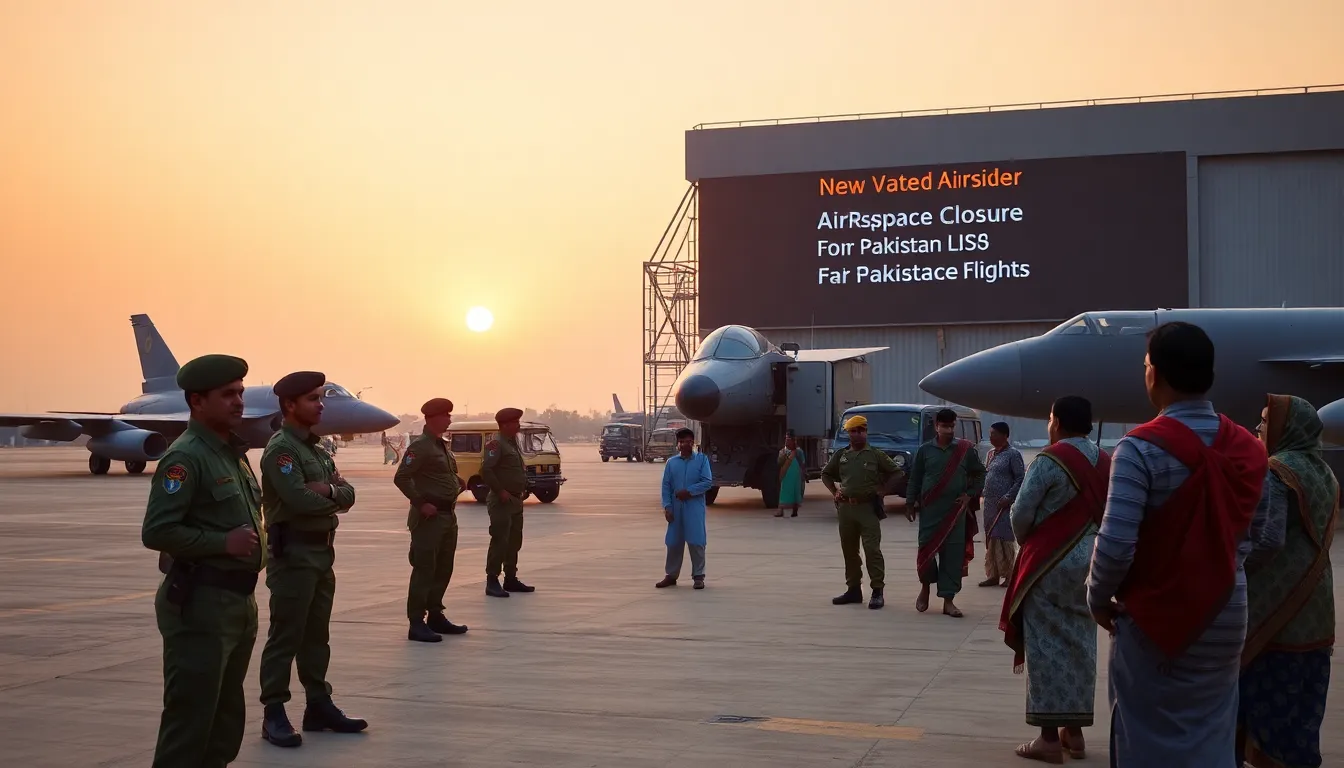
India has extended its airspace closure for Pakistani airlines until July 24, 2025, a strategic move affecting all flights registered in Pakistan, including commercial and military aircraft. This closure, initially imposed on April 30, 2023, was first set to expire on May 24, then extended to June 24 before the latest notification by the Directorate General of Civil Aviation (DGCA) solidified the new deadline.
5 Key Provisions of the Airspace Closure Policy
The policy, formalised through DGCA’s NOTAM A0063/23 issued on June 20, 2023, includes the following specific provisions:
- Complete ban on entry: All Pakistani registered aircraft and those operated by Pakistani airline companies are barred from Indian airspace until July 24, 2025.
- Applicability to military flights: The closure covers not only commercial but also military flights, reflecting heightened security concerns.
- Exceptions and coordination: No exceptions have been publicly announced; transit via Indian airspace for Pakistani carriers remains prohibited.
- Notification and enforcement: Indian Air Traffic Control (ATC) and border security forces have been instructed to enforce the closure rigorously.
- Periodic reviews: The DGCA will review the policy periodically, with potential for further extensions based on security assessments.
3 Districts in Gujarat Most Affected by the Airspace Closure
Gujarat’s geographical proximity to Pakistan and its significant air traffic make it a crucial area impacted by this closure. The following districts are notably affected:
- Kutch: Home to Mandvi and Bhuj airports, Kutch district experiences rerouted flights and increased aviation monitoring.
- Ahmedabad: As Gujarat’s largest city with Sardar Vallabhbhai Patel International Airport, Ahmedabad sees increased air traffic rerouting, affecting flight times and schedules.
- Rajkot: Rajkot Airport also accommodates diverted air traffic, impacting airport operations and regional connectivity.
4 Reasons Behind the Government’s Decision to Extend Closure
The Indian government’s decision stems from escalating security concerns following the April 2023 terrorist attack in Pehlgam, Kashmir, which resulted in the deaths of 26 civilians and security personnel. Key reasons include:
- Counter-terrorism response: The closure is part of India’s broader counter-terrorism strategy to restrict Pakistani entities’ operational capabilities.
- Heightened border tensions: With ongoing military operations such as Operation Sindoor targeting terrorist camps, the closure acts as a deterrent.
- Diplomatic signaling: It serves as a strong diplomatic message to Pakistan amid strained bilateral ties.
- Ensuring airspace security: Preventing Pakistani aircraft from entering Indian airspace reduces risks of smuggling, infiltration, or surveillance.
3 Perspectives from Critics and Stakeholders
Reactions to the extension have been mixed among experts, airlines, and civil society:
- Indian aviation industry: Airlines operating from Gujarat, such as those serving Ahmedabad and Rajkot, report longer flight durations and increased fuel costs due to rerouting around Indian airspace.
- Security analysts: Some analysts support the closure as a necessary security measure, emphasizing the need for vigilance given Pakistan’s involvement in cross-border terrorism.
- Diplomatic voices: Critics argue the closure exacerbates tensions and advocate for renewed dialogue, especially given the economic and people-to-people impact.
5 Practical Takeaways for Gujarat Residents and Travellers
The airspace closure has direct and indirect implications for residents and travellers in Gujarat and beyond:
- Flight planning: Passengers flying from Sardar Vallabhbhai Patel International Airport and other regional airports should anticipate longer travel times and possible delays due to rerouted flights.
- Ticket costs: Airlines may increase fares to offset higher fuel consumption and operational costs linked to extended flight paths.
- Stay updated: Monitor announcements from the DGCA and airport authorities for real-time updates on flight schedules.
- Security awareness: Travelers should cooperate with enhanced security checks implemented at Gujarat airports as part of heightened vigilance.
- Official information: For official notifications and further details, visit the DGCA’s website at dgca.gov.in or contact the Gujarat State Aviation Department at Gandhinagar.
Meanwhile, Gujarat is also under heavy rainfall alerts until July 1, which may further affect travel plans. Residents are advised to stay alert to both weather and security advisories.
In summary, the extension of the airspace closure for Pakistani flights until July 2025 is a clear indication of India’s firm security posture amid ongoing tensions. Gujarat’s airports and travellers must adapt to these changes, and stay informed through official channels to navigate the operational impacts effectively.