
What is the new initiative for the Aravalli Ranges announced by the Indian government, and how will it impact Gujarat? The government has launched an ambitious plan to create a Green Wall along the Aravalli Ranges, aimed at restoring greenery and combating environmental degradation in this vital region. This initiative took effect in June 2024, coinciding with Environment Day, as declared by Prime Minister Narendra Modi.
What Does the Green Wall Policy Actually Say?
The Green Wall initiative is a comprehensive afforestation policy spearheaded by the Ministry of Environment, Forest and Climate Change (MoEFCC) in collaboration with Gujarat’s Forest Department. The policy mandates the planting of indigenous tree species across 150 kilometers of the Aravalli Ranges stretching from Banaskantha to Dahod district. Specifically, this corridor includes forest and wasteland areas in Banaskantha, Sabarkantha, and Panchmahal districts.
The government has allocated ₹150 crore for the first phase, focusing on soil conservation, water retention, and native biodiversity restoration. The policy emphasizes using drought-resistant species such as Neem, Banyan, and Babool, which are native to Gujarat’s dry deciduous forests. Plantations will be monitored by satellite imagery and drones, with the Forest Department conducting bi-annual audits to ensure survival rates exceed 75%.
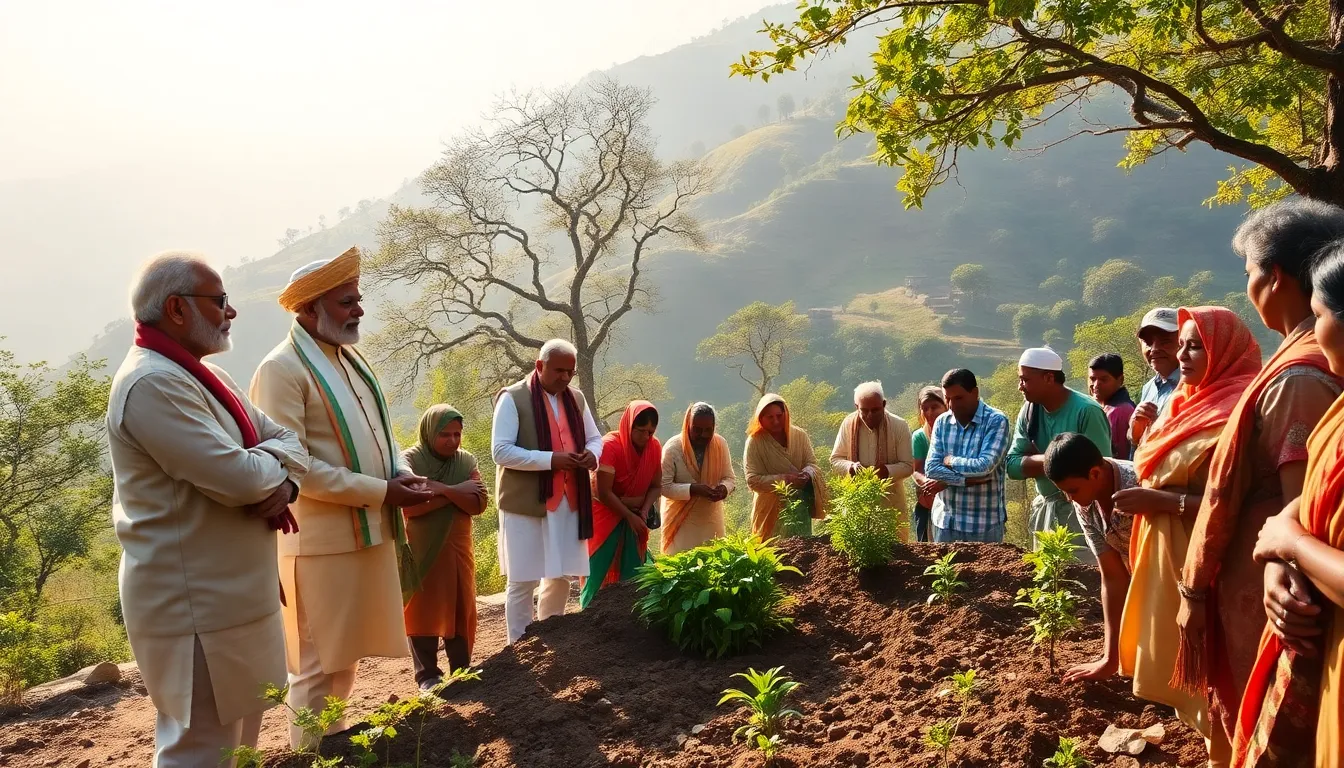
Additionally, the policy integrates community participation through programs like the seed ball campaign, where locals collect and disperse seed balls to promote natural regeneration. This approach combines scientific forestry with traditional ecological knowledge, aiming for sustainable forest management.
Who Is Affected and How?
The primary beneficiaries of the Green Wall are the residents of districts along the Aravalli ranges—Banaskantha, Sabarkantha, Panchmahal, and Dahod—who rely on forest resources and agriculture. Farmers in these semi-arid regions face challenges due to declining rainfall and soil erosion. The Green Wall is expected to improve microclimates, increase groundwater recharge, and reduce desertification.
Local communities, including tribal groups such as the Bhils and Rathwas, will participate actively in the plantation and maintenance drives. The Gujarat Forest Department plans to employ around 2,000 people from these communities, providing livelihood opportunities linked to forest conservation.
Industries operating near the Aravalli ranges, especially in Banaskantha and Sabarkantha districts, will be required to comply with environmental safeguards under the new policy, including reducing emissions and supporting afforestation efforts as part of their Corporate Social Responsibility (CSR) initiatives.
Why Did the Government Make This Change?
The Aravalli Ranges, one of the world’s oldest geological formations, have witnessed substantial ecological decline due to deforestation, mining, and urbanization. Gujarat’s western districts have experienced a 15% decrease in forest cover over the past decade, according to Gujarat Forest Department data from 2023. This loss has led to reduced rainfall, increased soil erosion, and falling groundwater levels.
Prime Minister Narendra Modi highlighted the critical need to restore the Aravalli ecosystem during the Environment Day speech on June 5, 2024. The Green Wall initiative aligns with India’s commitments under the National Action Plan on Climate Change and the United Nations Decade on Ecosystem Restoration (2021-2030).
The government aims to create a resilient ecological buffer that will mitigate climate change impacts, enhance biodiversity, and secure water resources for millions of people in Gujarat and neighboring Rajasthan. Environmental experts have noted that reforesting the Aravalli can help stabilize the region’s temperature and contribute to overall ecological balance.
What Do Critics and Stakeholders Say?
Environmentalists have broadly welcomed the initiative but caution that success depends on long-term management and community engagement. Dr. Meena Patel, an ecologist with the Gujarat Institute of Desert Ecology, emphasized that “planting trees is only the first step; protecting them from grazing, illegal logging, and encroachment is equally essential.” She urged the government to ensure adequate funding for maintenance beyond the initial planting phase.
Local farmers have expressed optimism, expecting improved water availability and soil health. However, some have raised concerns about potential restrictions on land use and mining activities, particularly in regions like Sabarkantha where quarrying is prevalent.
The Banaskantha District Dairy’s ongoing seed ball efforts have been praised as a model for public-private partnership in environmental restoration. Their success in increasing tree cover by an estimated 8% in targeted areas since 2020 demonstrates the potential impact of collaborative approaches.
What Does This Mean for You?
For residents and stakeholders in Gujarat’s Aravalli region, the Green Wall initiative offers tangible benefits and opportunities to contribute:
- Participate in Local Campaigns: Join seed ball collection and dispersal activities organized by the Gujarat Forest Department and NGOs, such as the campaign launched recently in Ambaji (Seedball for Green Wall Campaign in Ambaji).
- Support Sustainable Practices: Farmers should adopt agroforestry methods encouraged by the government to integrate tree planting with crop cultivation, improving yield and soil conservation.
- Stay Informed and Comply: Industries and landowners must adhere to environmental regulations under this policy, collaborating with authorities to ensure sustainable development.
Additionally, the use of technology such as drone seed sowing, recently launched in the Green Pavagadh project, represents innovative ways to accelerate afforestation efforts (Drone Seed Sowing Launches Green Pavagadh Project).
The Green Wall is a critical step towards securing Gujarat’s environmental future. By restoring the Aravalli Ranges’ greenery, the initiative promises to enhance biodiversity, improve livelihoods, and contribute to climate resilience for generations to come.
Next Steps:
- Visit your local Forest Department office to learn about upcoming plantation drives and how to participate.
- Collect native tree seeds and prepare seed balls as per guidelines available on the Gujarat Forest Department website.
- Support and volunteer with local environmental NGOs involved in the Green Wall initiative.