
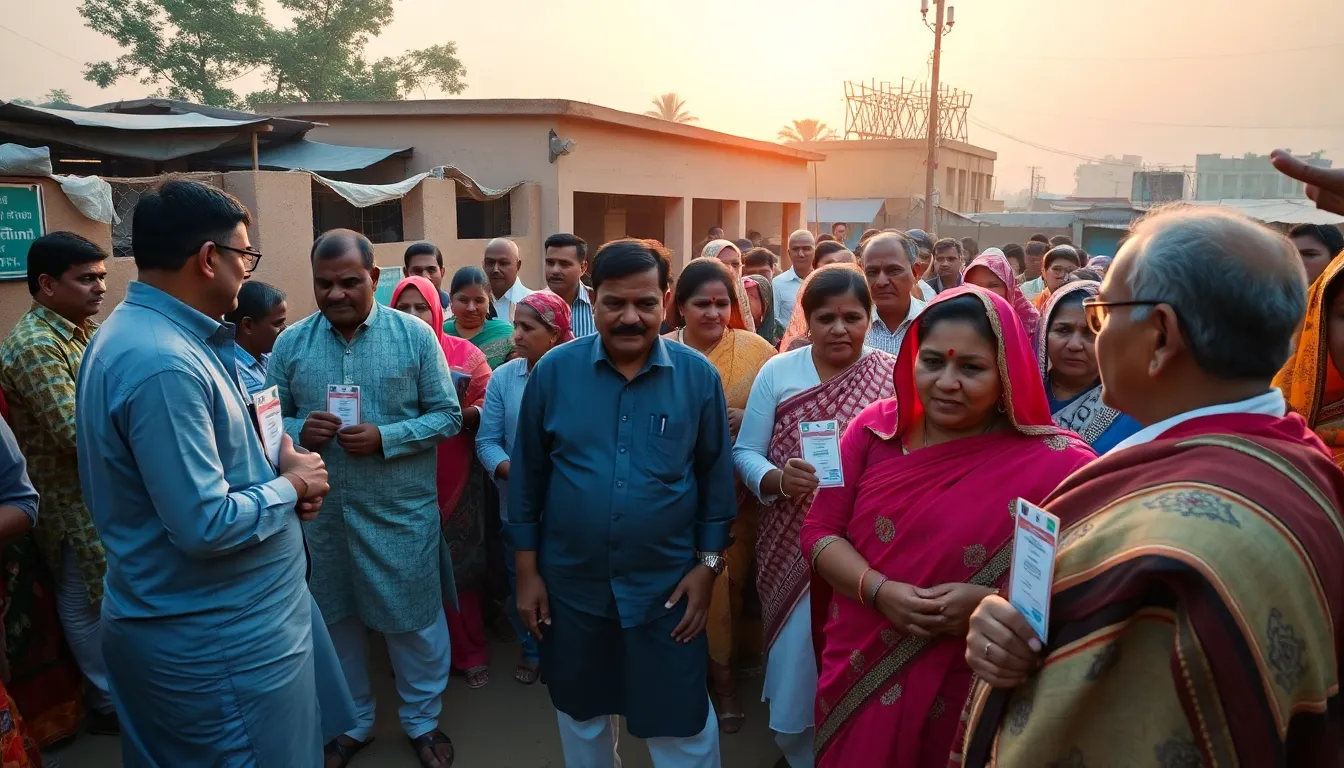
India’s Election Commission is dedicated to ensuring free, fair, and transparent elections. Recently, they announced 18 initiatives aimed at making the electoral process easier for all stakeholders, including voters and political parties. The Chief Election Commissioner, Mr. Gyanesh Kumar, leads these efforts.
To enhance the voting experience, the Commission has decided to create additional polling stations if the number of voters exceeds 1,200 at a single location. This means that voters will have easier access to polling places closer to their homes. Additionally, voter identity cards will now display the voter’s number and constituency more clearly, making it simpler to identify. The Commission is also working with the Registrar General of India to remove deceased voters from the electoral rolls, ensuring that the voter lists are accurate.
In the last three months, the Election Commission has held 4,791 meetings involving over 27,000 representatives from various political parties. These meetings include discussions with the heads of national and state parties, ensuring a collaborative atmosphere during elections. Furthermore, training programs have been set up for booth-level agents from different states to strengthen their capabilities.
The Election Commission has also launched the ECINET dashboard, which includes over 40 applications and websites. This platform will provide a unique number for voter identity cards, helping to eliminate duplicate cards. This new system will support the integrity and transparency of the voter list.
The election process involves multiple stakeholders, including voters, election officials, candidates, and political parties. To ensure inclusivity, presentations have been prepared for all stakeholders outlining the laws and regulations governing the electoral process. Regular updates and guidance are provided to keep everyone informed.
Training is crucial for election officials and staff involved in the electoral process. The Election Commission organizes training programs at IIIDEM in Delhi to enhance the skills of approximately 3,000 booth-level officers. The aim is to train over 100,000 booth-level officers across the country in the coming years. Additionally, police officers from Bihar have also received training at IIIDEM.
Recognising the importance of media in the electoral process, the Election Commission has conducted orientation programs for media officers from all states and Union Territories. This ensures that the media plays a constructive role in the elections.
The Election Commission’s headquarters in New Delhi is enhancing its facilities to better manage elections. This includes introducing biometric attendance systems and an E-Office to streamline operations. The Chief Election Commissioner regularly meets with Chief Electoral Officers from all states to provide directions and guidance.
In summary, the Election Commission’s commitment to improving the electoral process is evident through its various initiatives. By focusing on accessibility and inclusivity, they aim to ensure that every citizen can participate freely and fairly in the democratic process. This approach not only strengthens democracy but also builds trust among the electorate in India.