
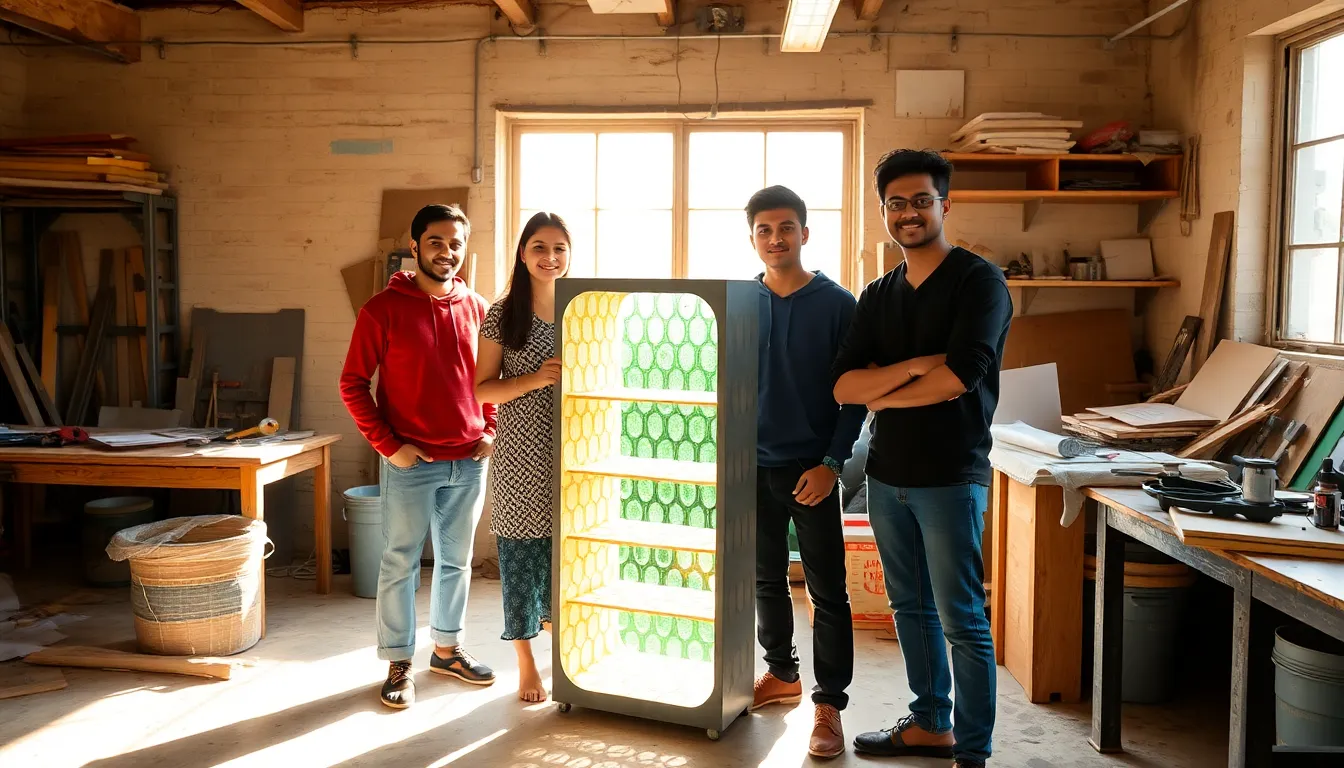
₹1,500 is the estimated cost of the innovative, eco-friendly bookshelf designed and created by National Institute of Design (NID) students in Ahmedabad, showcasing how sustainable design can be affordable and practical. This bookshelf, named Scalequence, was developed using advanced 3D printing technology and agricultural waste, earning the team first place in the prestigious Agrikraft competition.
Explore Project Details and Timeline
The Scalequence bookshelf represents a fusion of nature-inspired design and cutting-edge technology. Measuring 5 feet in length, 4 feet in height, and just 12 mm thick, the bookshelf is lightweight yet sturdy. Its design draws inspiration from fish scales, providing a modular and customizable structure that architects and designers can adapt to varying spatial needs.
The project was completed within an accelerated timeline of seven days, notably shorter than the one-month deadline set by the Crest Company, the organiser of the Agrikraft competition. This competition invited twelve teams from across India to submit nature-based designs utilizing sustainable materials. The Green Monkey team, consisting of NID furniture and interior design students Ashray Sachan, Riddhima Pandey, Kavish Lainswala, and Aryaman Bhargade, leveraged 3D printing technology to fabricate the bookshelf from agricultural waste, transforming biodegradable materials into a durable product.
The total production cost for the bookshelf ranges between ₹1,200 and ₹1,500, making it accessible for individual architects or small firms looking to integrate eco-friendly furniture into their workspaces without incurring high expenses.
Identify Areas and Districts Covered
While the project was conceptualized and executed in Ahmedabad, the design has potential applications throughout Gujarat, including districts with strong agricultural bases such as Anand, Kheda, and Vadodara. These areas generate considerable agricultural waste, which can be repurposed into sustainable materials for furniture production.
NID Ahmedabad, located in the Ahmedabad district, serves as a hub for design innovation with outreach programs and collaborations planned to extend sustainable design practices across the state. The use of locally sourced agricultural residues supports Gujarat’s broader environmental goals and circular economy initiatives promoted by the state government.
Explain How It Will Benefit Citizens
The Scalequence bookshelf offers multiple benefits to Gujarat’s citizens, particularly professionals in architecture and interior design. By utilizing agricultural waste, the product reduces environmental pollution linked to biomass burning, a significant problem in rural Gujarat districts like Patan and Banaskantha.
The affordability and customization made possible by 3D printing empower users to tailor storage solutions to their specific requirements, reducing the need for mass-produced furniture that often lacks sustainability credentials. Furthermore, the project promotes awareness about sustainable materials among design students and professionals, encouraging adoption of greener alternatives.
In addition to environmental benefits, the project supports skill development for youth in Gujarat’s creative industries, aligning with state initiatives to boost employment in emerging technology sectors.
Outline Current Status and Next Milestones
Following their victory in the Agrikraft competition held in March 2024, the Green Monkey team received a ₹30,000 cash prize and internship opportunities with Crest Company, providing professional exposure and avenues for further development.
NID Ahmedabad plans to incorporate the Scalequence design into its curriculum for sustainable furniture design and collaborate with local manufacturers in Ahmedabad and Gandhinagar for pilot production runs. The institute is also exploring partnerships with Gujarat’s Department of Science and Technology to seek funding for scaling up production and testing the bookshelf’s durability in commercial settings.
Future milestones include:
- Launching a limited commercial batch by September 2024.
- Extending material sourcing to other agricultural districts like Surat and Rajkot.
- Hosting workshops for design students in Gujarat to promote 3D printing and sustainable design.
Understand Background: Why This Was Needed
Gujarat faces a significant challenge of managing agricultural waste, often leading to open-field burning that contributes to air pollution. According to the Gujarat Pollution Control Board (GPCB), over 30% of particulate matter pollution in Ahmedabad arises from agricultural residue burning in surrounding districts.
Simultaneously, the furniture and interior design sectors require innovative, affordable, and sustainable products to meet the demands of environmentally conscious consumers. NID Ahmedabad’s project addresses these dual challenges by transforming waste into valuable design objects, enhancing the state’s sustainability profile.
The project aligns with Gujarat’s broader educational reforms and environmental initiatives, such as the push for innovative education and government efforts to reduce pollution through waste management programs.
Bottom Line: The Scalequence bookshelf by NID Ahmedabad students exemplifies how affordable, eco-friendly design using 3D printing and agricultural waste can transform Gujarat’s approach to sustainability; professionals and students alike should explore incorporating such innovations into their work and studies.