
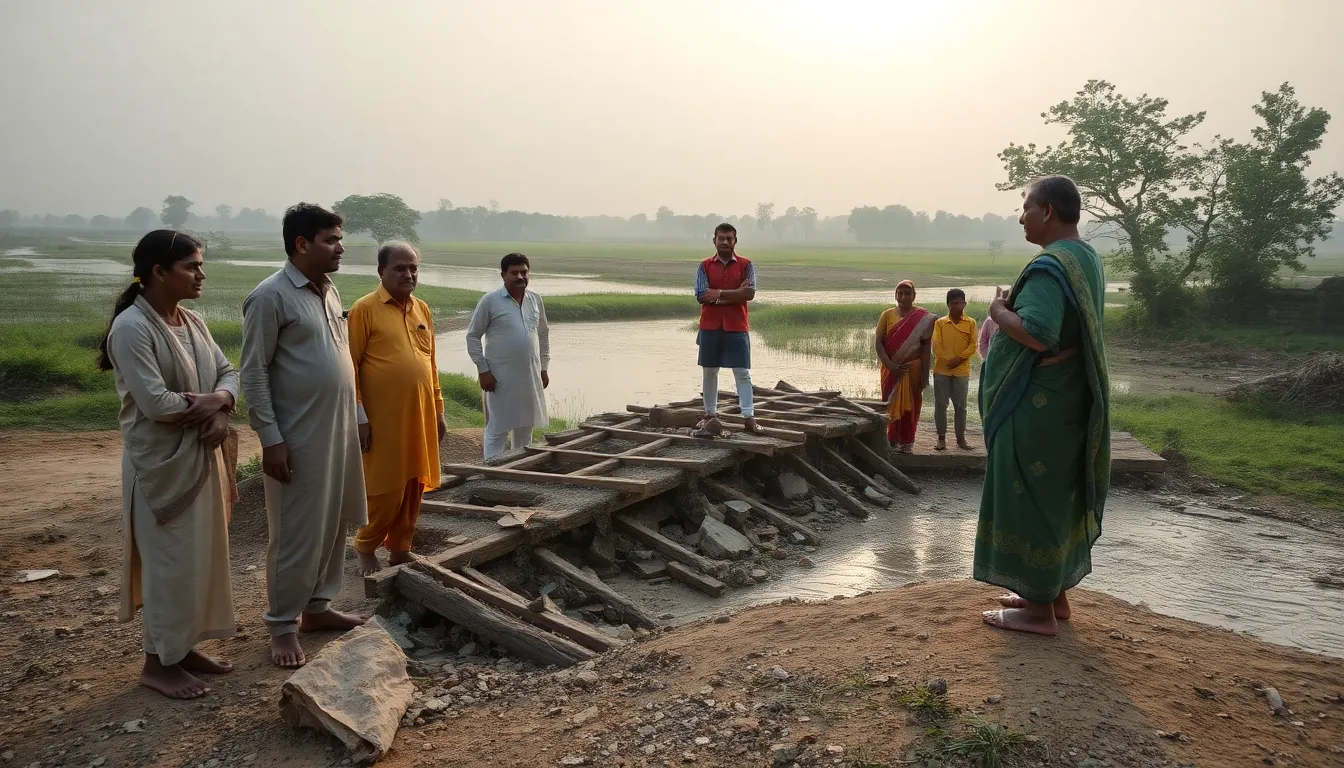
The failure of the Bharaaj River diversion near Pavijetpur in Chhota Udaipur district after recent heavy rainfall has left local communities without crucial connectivity. Originally constructed at a cost of ₹2.39 crore, the diversion was intended to facilitate transportation between Pavijetpur and Bodeli but was washed away during its first significant monsoon event. Despite a subsequent investment to build an all-weather diversion, the structure collapsed again, prompting urgent calls for a more durable solution.
Understand the Diversion Project Details
The Bharaaj River diversion was initiated by the Gujarat Water Resources Department under the state’s rural infrastructure development program. The initial phase, completed in early 2023, aimed to provide a temporary crossing to ease transport disruptions caused by seasonal flooding. Following this, a second project phase doubled the investment to approximately ₹4.78 crore, seeking to establish an all-weather passage. However, according to the district engineering office in Chhota Udaipur, the diversion lacked adequate flood-proofing and structural reinforcements, which contributed to its failure during the heavy rains in late August 2023.
The diversion’s collapse coincided with extreme rainfall episodes reported by the Gujarat State Emergency Operations Centre, which recorded over 250 mm of rain in the region within 24 hours. These conditions also affected nearby infrastructure, such as the Surendranagar Dhollidhaja Dam overflow and pothole damage in Palanpur, highlighting vulnerabilities across local water management and road networks.
Identify Who Is Most Affected
The failure of the Bharaaj River diversion directly impacts residents of Pavijetpur and Bodeli talukas. Approximately 30,000 people rely on this route daily for commuting to work, accessing schools, healthcare, and markets. Farmers transporting agricultural produce face delays and increased costs, while emergency services report longer response times due to detours. Local businesses have expressed concerns over reduced customer access, particularly affecting small-scale enterprises.
District Collector Gargi Jain’s recent site visit emphasized the safety hazard posed by the unstable diversion, leading to its immediate closure. This decision, while necessary, exacerbates transportation difficulties. The closure also affects government operations, including supply chain logistics for essential commodities and scheduled public service deliveries.
Explain Why the Government Acted
The Gujarat government’s decision to invest initially in the Bharaaj diversion and subsequently in a ₹35 crore bridge project stems from longstanding connectivity challenges in Chhota Udaipur district. The previous bridge over the Bharaaj River collapsed on July 28, 2023, severing a vital link between Pavijetpur and Bodeli. This disruption prompted emergency measures, including the diversion construction, to restore access during the monsoon season.
Recognizing the diversion’s inadequacy, the government authorized the construction of a permanent bridge designed to withstand regional weather extremes and hydrological pressures. Local MP Jashubhai Rathwa laid the foundation stone on September 10, 2023, signaling political commitment to resolving the issue. The bridge is slated for completion within 18 months under the Public Works Department’s supervision, with strict quality controls and flood resilience standards based on recent lessons.
Highlight Critics’ and Stakeholders’ Views
Community members and local leaders have raised concerns about potential corruption and mismanagement in the diversion projects. Allegations focus on substandard materials and oversight lapses, as the diversion failed despite substantial public expenditure. A group of residents petitioned the district administration for a thorough audit of the project contracts and procurement processes.
Experts from the Gujarat Infrastructure Development Board have called for enhanced transparency and independent monitoring in future infrastructure projects, particularly in flood-prone areas. Civil society organizations urge the government to adopt more robust engineering standards and community consultation to prevent recurrence. Simultaneously, officials maintain that the diversion’s failure was primarily due to unprecedented rainfall intensity, supported by meteorological data.
Advise What Residents Should Do Next
Until the new bridge is operational, residents and commuters should plan alternate routes to avoid the unsafe diversion. The District Collector’s office has coordinated with the Gujarat State Road Transport Corporation to increase bus services on detour pathways. Additionally, local police have been tasked with monitoring traffic and ensuring safety in affected zones.
Residents are encouraged to stay updated through official channels, including the Chhota Udaipur district website and announcements from the Public Works Department. Reporting any infrastructure damage or hazards promptly can aid authorities in prioritizing repairs.
For farmers and traders, coordinating with local cooperative societies may help arrange bulk transport solutions during this transition period. Furthermore, community engagement with elected representatives, including MP Jashubhai Rathwa and District Collector Gargi Jain, remains vital for voicing concerns and tracking project progress.
Meanwhile, the government has emphasized a commitment to this project’s timely completion and has pledged to incorporate lessons from recent failures into future infrastructure planning across rural Gujarat. This approach aligns with broader state efforts to enhance resilience against monsoon-related disruptions, as seen in other districts like Surendranagar and Banaskantha.
Explore related infrastructure challenges and responses, such as the Surendranagar Dhollidhaja Dam overflow and the Pothole repairs in Palanpur, to understand the broader context of monsoon impact on Gujarat’s transport systems.
Next Steps for Residents:
- Use alternative routes and follow updates from Chhota Udaipur district authorities.
- Report infrastructure issues to local officials promptly via the district administration helpline.
- Engage with elected representatives to monitor bridge construction progress and ensure accountability.