
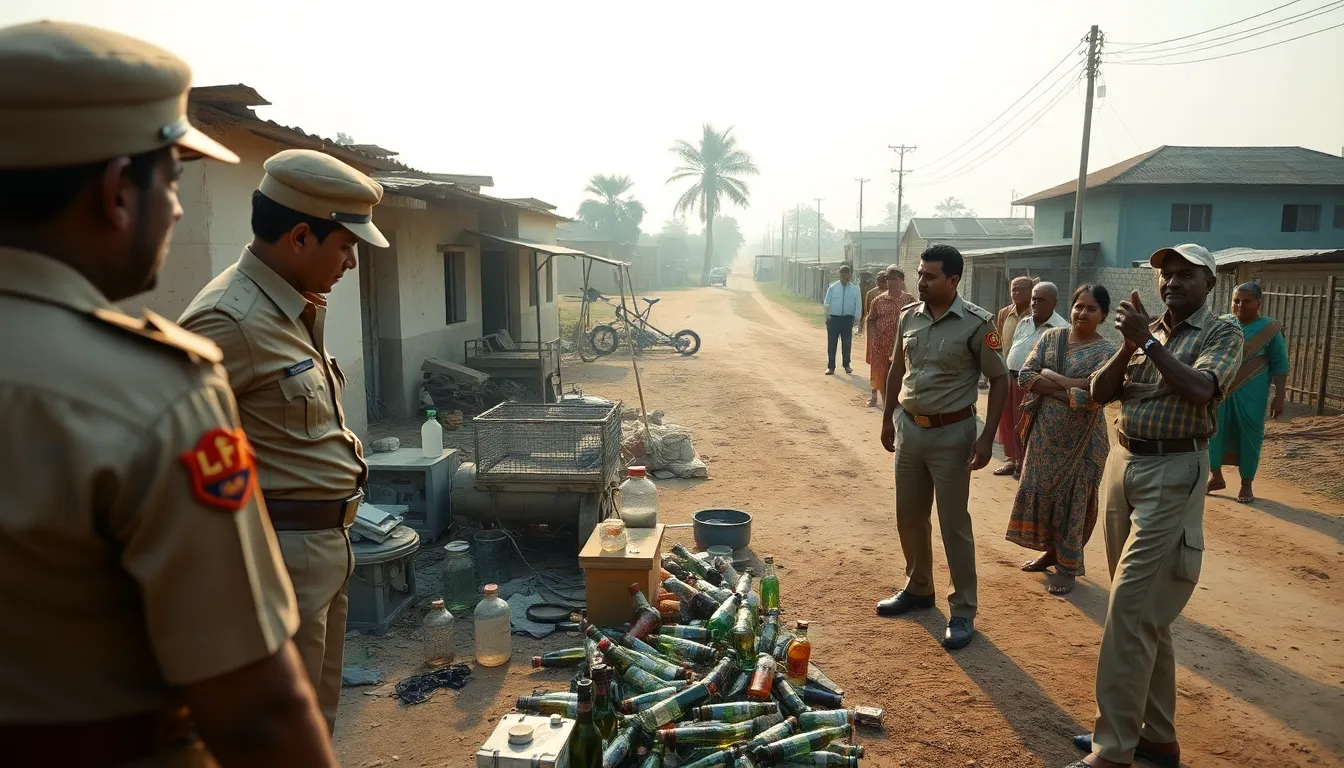
On June 10, 2024, the Jamnagar Local Crime Branch (LCB) conducted a targeted raid in Modha village, successfully uncovering a fake liquor manufacturing unit. The police seized counterfeit liquor bottles and materials valued at ₹7.28 lakh, marking a significant stride in the district’s ongoing efforts to curb illicit liquor production. This raid follows previous crackdowns and demonstrates the district’s intensified vigilance against illegal alcohol trade.
What Does the Anti-Fake Liquor Policy State?
The Gujarat Prohibition Act, 1949, along with the Bombay Prohibition Act as applicable in Jamnagar district, strictly prohibits the manufacture, possession, and sale of counterfeit or unlicensed liquor. The state government enforces zero tolerance towards fake liquor production due to its health risks and links to organized crime. Police operations are empowered under sections 30 and 31 of the Act to seize illegal stock and arrest offenders. According to official sources from the Jamnagar District Police, the recent raids are conducted under these provisions, with intentions to dismantle illicit supply chains.
Furthermore, the Local Crime Branch employs advanced software and surveillance tools recently installed at the new LCB office, inaugurated by District Police Chief Pramsukh Delu in May 2024. This technological upgrade includes mobile data tracking and real-time CCTV control, enabling rapid identification and disruption of fake liquor networks. These measures align with Gujarat Police’s state-wide strategy to combat bootlegging and related crimes.
Who Is Affected by These Enforcement Actions?
The recent crackdown primarily targets bootleggers, counterfeit liquor manufacturers, and distributors operating within Jamnagar district. The six individuals arrested in the Modha village raid are believed to be part of a larger network supplying fake liquor to local markets. Their activities pose significant health hazards to consumers and contribute to criminal financing. Local shopkeepers and consumers also experience impacts, as they face shortages or suspicion around liquor availability.
Law-abiding citizens and licensed liquor vendors benefit from these enforcement actions. Removing fake liquor from circulation reduces incidents of alcohol poisoning and protects legitimate businesses. The district’s wider community enjoys enhanced public safety as police efforts reduce related crimes such as theft and violence often linked with bootlegging.
Why Has the Jamnagar Police Increased Focus on Fake Liquor?
Gujarat’s zero-tolerance policy on alcohol combined with repeated incidents of health emergencies from spurious liquor has prompted authorities to intensify policing. In Jamnagar, previous raids uncovered mini factories producing counterfeit foreign liquor, such as one operation where police seized 800 litres of spirit and goods worth ₹8.23 lakh, arresting three suspects. These ongoing discoveries highlight the persistence of illegal manufacturing despite government bans.
Health concerns are paramount, as fake liquor often contains toxic substances causing deaths and long-term illnesses. Additionally, the black market for liquor funds organized crime, increasing lawlessness. By disrupting these operations, Jamnagar police aim to safeguard public health and restore lawful order. The new LCB office’s advanced capabilities facilitate more effective surveillance and coordination, enabling quicker responses to intelligence.
What Do Stakeholders and Experts Say About These Police Actions?
Senior officials within the Gujarat Police commend the Jamnagar LCB’s proactive approach. Superintendent of Police (SP) Rohit Patel noted in an official briefing, “The integration of modern technology with traditional policing methods has enhanced our ability to combat illicit liquor. Our goal is to dismantle networks, not just seize stock.” Local health experts have also praised the crackdown, emphasizing the role of law enforcement in preventing alcohol-related fatalities.
However, some community members and legal experts caution that sustainable solutions require addressing the socio-economic factors driving bootlegging. They suggest increased public awareness campaigns and rehabilitation programs for addicts. District officials are reportedly considering a multi-pronged approach combining enforcement with education and support.
What Should Residents of Jamnagar Do Following This Development?
Residents are advised to report any suspicious activity related to liquor supply to the Jamnagar LCB or local police stations. The police encourage community cooperation to identify bootleggers and prevent counterfeit liquor circulation. Consumers should only purchase liquor from licensed vendors to avoid health risks.
- Contact the Jamnagar LCB helpline at 0288-1234567 for anonymous tips.
- Report suspicious gatherings or sales of unlabelled liquor bottles.
- Verify liquor sources by checking license certifications displayed at shops.
- Attend community safety meetings organized by local police to stay informed.
- Stay vigilant during festivals, when illicit liquor demand often increases.
These steps help protect individual health and contribute to broader law enforcement successes. Jamnagar’s recent seizure echoes similar actions in other districts such as Sabarkantha, where police seized foreign liquor worth ₹10 lakh, and Dhanera, with seizures exceeding ₹11 lakh. These coordinated efforts across Gujarat reinforce the state’s commitment to eradicating illegal liquor trade.
Official Resources for Further Information
For more information, residents can visit the Gujarat Police official website at police.gujarat.gov.in or contact the Jamnagar District Police Office at 0288-1234567. The Local Crime Branch office in Jamnagar is located near the Collectorate Building, providing direct assistance for crime reporting.
By staying informed and cooperating with authorities, the community can contribute to a safer, healthier Jamnagar district.