
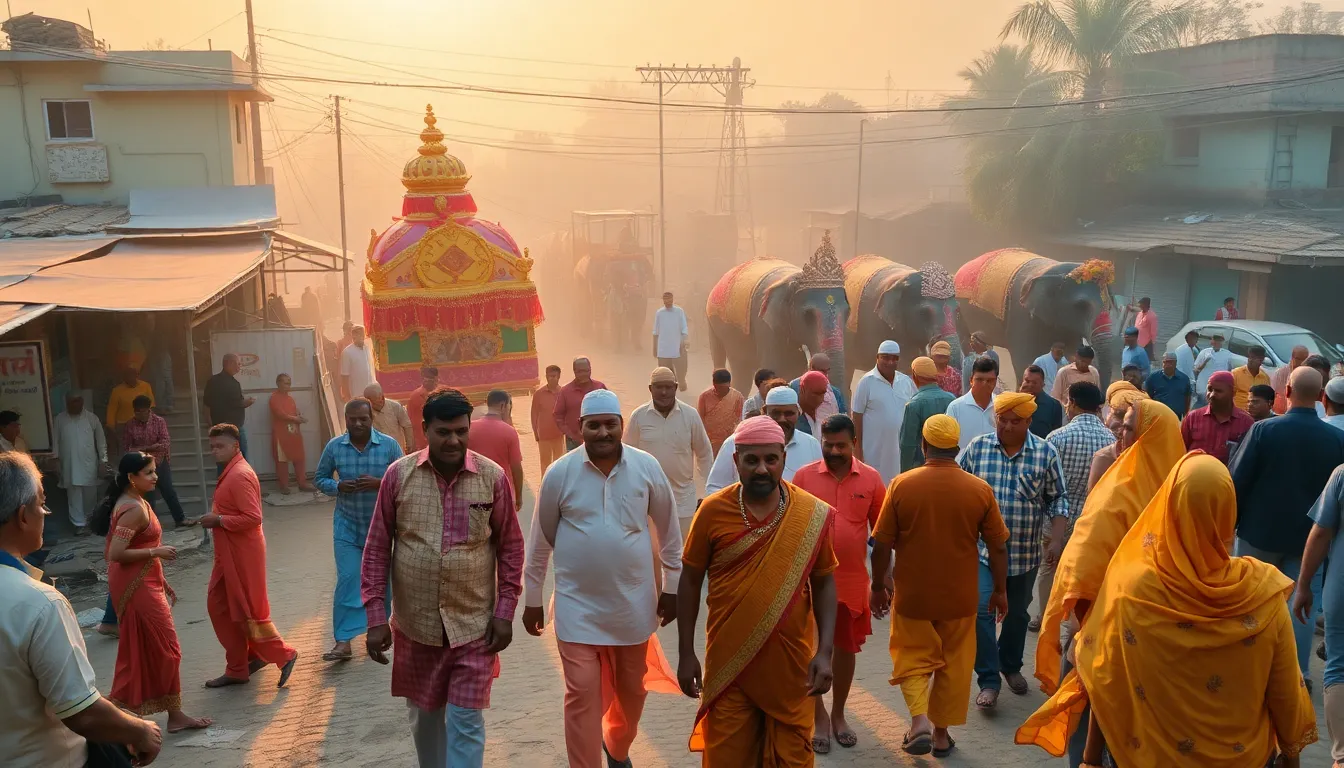
Over 50,000 devotees are expected to participate in Ahmedabad’s 148th Rath Yatra scheduled for June 27, 2024, marking one of the city’s largest cultural and religious gatherings. The Saraspur area, the nerve center for the event’s logistics, is witnessing extensive preparations with massive kitchens being established to serve traditional prasadam. This annual festival, organised by the Shree Jagannath Mandir Trust, has significant cultural and economic impacts on the Ahmedabad district, drawing visitors from across Gujarat and beyond.
What Does the Rath Yatra Preparation Entail?
The Rath Yatra preparations involve multiple coordinated efforts across city departments and religious committees. According to the Shree Jagannath Mandir Trust, approximately 2,000 kilograms of Mohanthal, 3,000 kilograms of Fulkas, and 1,500 kilograms of Aloo Shaak will be cooked to feed devotees and priests attending the event. These meals are prepared in Saraspur’s large community kitchens, designed to serve over 1,000 people simultaneously. This scale of food preparation requires collaboration with Ahmedabad Municipal Corporation’s (AMC) Food Safety department to ensure hygiene standards.
Additionally, the three ornate chariots are stationed inside the temple compound after their ceremonial arrival. The deities, Lord Jagannath, Balabhadra, and Subhadra, have undergone the traditional Netra Mudra (eye-opening) ceremony and are adorned in golden silk attire, a highlight covered by the temple authority’s official release dated June 24, 2024. Ritual worship of 18 elephants, seen as manifestations of Lord Ganesh, was conducted by Mahant Dilipdasji, who is set to receive the prestigious Jagadguru title on June 28, 2024.
Elephants were welcomed with tribal dances and Garba performances in the temple premises, witnessed by dignitaries including Jay Shah, ICC chairman, and MP Parimal Nathwani. The presence of these officials underscores the event’s importance beyond religious circles. The local Bharatiya Janata Party – Saraspur Rakhiwal Ward hosted a Bhajan Sandhya programme attended by Chief Minister Bhupendra Patel, BJP leaders, and thousands of devotees, reinforcing the festival’s cultural prominence.
Who Is Affected and How?
The Rath Yatra impacts multiple stakeholders in Ahmedabad, including:
- Devotees and Pilgrims: Devotees from Ahmedabad’s 48 wards and surrounding districts such as Gandhinagar, Kheda, and Patan are expected to attend. The event provides spiritual engagement and community bonding.
- Local Businesses: Hotels, transport operators, and local vendors in Saraspur and surrounding areas see increased demand, contributing to the local economy. Temporary employment opportunities arise in food preparation, security, and event management sectors.
- Government Bodies: AMC, Ahmedabad Police, and Gujarat Tourism department coordinate traffic management, security, sanitation, and crowd control to ensure smooth proceedings.
- Residents: People living near Saraspur and along the Rath Yatra route experience temporary traffic diversions and increased footfall, requiring advance planning.
Preparations also involve coordination with the Gujarat State Disaster Management Authority to mitigate risks associated with large crowds.
Why Has the Ahmedabad Government Invested Heavily in Rath Yatra Preparations?
The Rath Yatra is a centuries-old cultural festival that strengthens community ties and promotes Ahmedabad as a religious tourism hub. The government’s focus on meticulous planning reflects an intent to preserve heritage while ensuring public safety. The Gujarat Tourism Corporation has highlighted the event in its annual calendar to boost cultural tourism revenue, which is estimated to increase by 15-20% during the festival week.
Moreover, the recognition of Mahant Dilipdasji as Jagadguru underscores the city’s religious significance and brings national attention. Public investment in infrastructure, including sanitation facilities and emergency medical services, aligns with the Gujarat government’s broader policy to promote safe and sustainable festivals, as outlined in the 2023 Gujarat Cultural Preservation Act.
What Do Critics and Stakeholders Say?
While the Rath Yatra is widely celebrated, some local residents and environmental groups have raised concerns regarding noise pollution and waste management. The Saraspur Residents Welfare Association has petitioned AMC to enhance waste segregation and increase green cover around the temple precinct.
On the other hand, religious leaders emphasize the event’s spiritual importance and community harmony. Mahant Dilipdasji, in his public statements, urged for respectful conduct and cooperation from all attendees. BJP leaders, including Chief Minister Bhupendra Patel, have assured that all necessary measures are taken to balance tradition with modern safety standards.
What Does This Mean for Ahmedabad Residents and Visitors?
- Plan Your Travel: Expect road closures on key routes around Saraspur and the Rath Yatra procession path on June 27. Use public transport where possible.
- Participate in Events: Devotees can attend the Bhajan Sandhya and view the chariots at the Jagannath Temple ahead of the procession.
- Health and Safety: Visitors should stay hydrated and adhere to COVID-19 protocols as recommended by AMC Health Department.
- Support Local Economy: Engage with local vendors and artisans participating in festival-related commerce.
- Environmental Responsibility: Follow waste disposal guidelines and use designated areas to maintain cleanliness.
For those interested in related events, Patan’s Grand Rath Yatra Preparations Underway and Grand Mamera Procession Held in West Ahmedabad Ahead of Lord Jagannathji’s 148th Rath Yatra provide detailed local coverage.
Official Resources: For updated information on Rath Yatra arrangements, contact Ahmedabad Municipal Corporation’s Public Relations Office at +91-79-2294-1234 or visit ahmedabadcity.gov.in. The Gujarat Tourism department helpline is available at 1800-233-5555 for visitor assistance.