
What is the significance of Prime Minister Narendra Modi’s upcoming visit to Dahod following the success of Operation Sindoor? The visit marks a pivotal moment for Dahod district as Modi is set to inaugurate major projects worth over ₹1,000 crores, including the launch of 9,000 horsepower engines manufactured locally, signalling a boost to the region’s industrial and economic landscape.
What Happened
On April 25, 2024, a coordination meeting was held at the Bandibar Munna Bhai Ashram School in Limkheda, Dahod district, to prepare for the grand welcome of Prime Minister Narendra Modi. The meeting was chaired by Dahod MP Jaswant Singh Bhabhor, who announced that Modi would inaugurate advanced 9,000 horsepower engines developed at Dahod’s industrial facilities, along with unveiling infrastructure and development projects valued at over ₹1,000 crores.
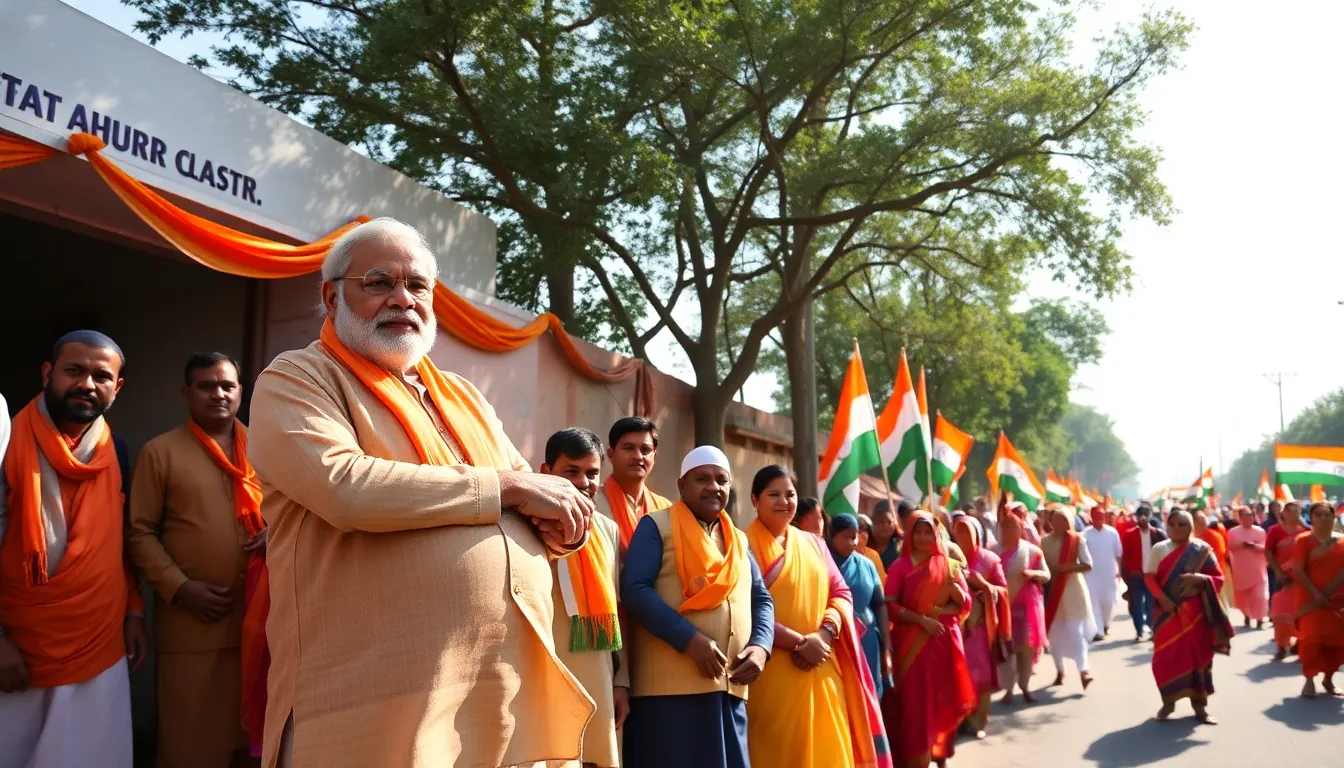
The meeting emphasised mobilisation of over 25,000 party workers and supporters from the Limkheda assembly constituency to ensure a vibrant reception for the Prime Minister. Key attendees included BJP district president Snehal Dahiya and Dahod MLA Shailesh Bhabhor, alongside local party functionaries. Following the meeting, a Tiranga Yatra (flag march) was conducted along Bandibar Ashram School Road, symbolising the BJP’s commitment to national unity and community engagement ahead of Modi’s visit.
Operation Sindoor, a recent successful anti-terrorist campaign targeting militant hideouts in Pakistan-administered areas, remains a key narrative among BJP leaders in Dahod. The operation is being leveraged to galvanise public support and highlight the party’s focus on national security and development.
Why It Matters for Gujarat and Dahod District
Dahod, a tribal-dominated district in eastern Gujarat, has historically faced developmental challenges including limited industrial infrastructure and socio-economic disparities. The inauguration of high-powered engines manufactured locally signifies a critical step towards industrial modernisation and employment generation in the district, potentially transforming Dahod into a manufacturing hub.
The projects worth over ₹1,000 crores encompass improvements in transportation infrastructure, rural electrification, and water management systems, which are expected to enhance the quality of life for residents in Dahod and neighbouring areas such as Limkheda and Shyamalpur. These developments align with Gujarat’s broader strategy to promote balanced regional growth beyond the urban centres of Ahmedabad and Vadodara.
Moreover, the political mobilisation surrounding Modi’s visit reinforces the BJP’s grassroots presence in Dahod, a critical assembly segment for upcoming state and national elections. The party’s strategy combines showcasing tangible development outcomes with a strong national security narrative rooted in Operation Sindoor, aiming to consolidate electoral support.
Background and Context
Dahod district, bordered by Madhya Pradesh, has traditionally been an agrarian economy with significant tribal populations. Over the past decade, the Gujarat government, led by the BJP, has focused on integrating Dahod into the state’s industrial and infrastructure development plans. Key initiatives have included road connectivity improvements, such as the National Highway 59 expansion, and rural electrification drives under schemes like Saubhagya.
Operation Sindoor, launched in early 2024, targeted terrorist bases across the border in Pakistan’s Sindh province, aiming to neutralise threats to national security. The operation’s success has been widely publicised by the BJP as a testament to the government’s defence capabilities and commitment to safeguarding Indian borders.
The current visit follows Modi’s recent grand roadshows in Vadodara and Ahmedabad, where he also celebrated Operation Sindoor’s success. These events form part of a coordinated political and development campaign across Gujarat.
Key Numbers and Data
- ₹1,000+ crore worth of projects to be inaugurated in Dahod district, including transport, energy, and water infrastructure.
- 9,000 horsepower engines produced in Dahod’s industrial units, marking a significant manufacturing achievement for the district.
- Over 25,000 party workers mobilised from Limkheda assembly constituency for Modi’s welcome events.
- Dahod district population: approximately 2.1 million (Census 2011), with over 75% tribal communities.
- Gujarat’s coastline length: 2,340 km, highlighting the state’s strategic economic geography, though Dahod lies inland.
- 23 Indus Valley Civilization sites in Gujarat, indicating the region’s rich historical legacy, with Dahod in proximity to some ancient trade routes.
What Comes Next
The inauguration of these projects is expected to catalyse further development initiatives across Dahod, potentially attracting investment in manufacturing and allied sectors. Enhanced infrastructure will improve connectivity with major Gujarat cities like Ahmedabad and Vadodara, facilitating trade and mobility.
Politically, Modi’s visit and the associated mobilisation efforts may strengthen the BJP’s electoral prospects in Dahod and surrounding tribal constituencies. The combination of development announcements and national security rhetoric is a strategic move to consolidate voter support ahead of the 2024 assembly elections in Gujarat.
Local authorities have also set up a special control room to ensure citizen safety and smooth conduct of events during the Prime Minister’s visit, as detailed in the official announcement. This underscores the district administration’s commitment to orderly civic participation.
Furthermore, the success of Operation Sindoor continues to be a rallying point for BJP’s narrative in Gujarat, as seen in coordinated events including Vadodara and Ahmedabad. These efforts aim to build a unified state-level momentum.
Bottom Line: Prime Minister Modi’s visit to Dahod signifies a strategic blend of local development and national security messaging, promising substantial economic benefits for Dahod’s residents and bolstering BJP’s political strength; residents and stakeholders should prepare for extensive civic engagement and opportunities arising from these initiatives.