
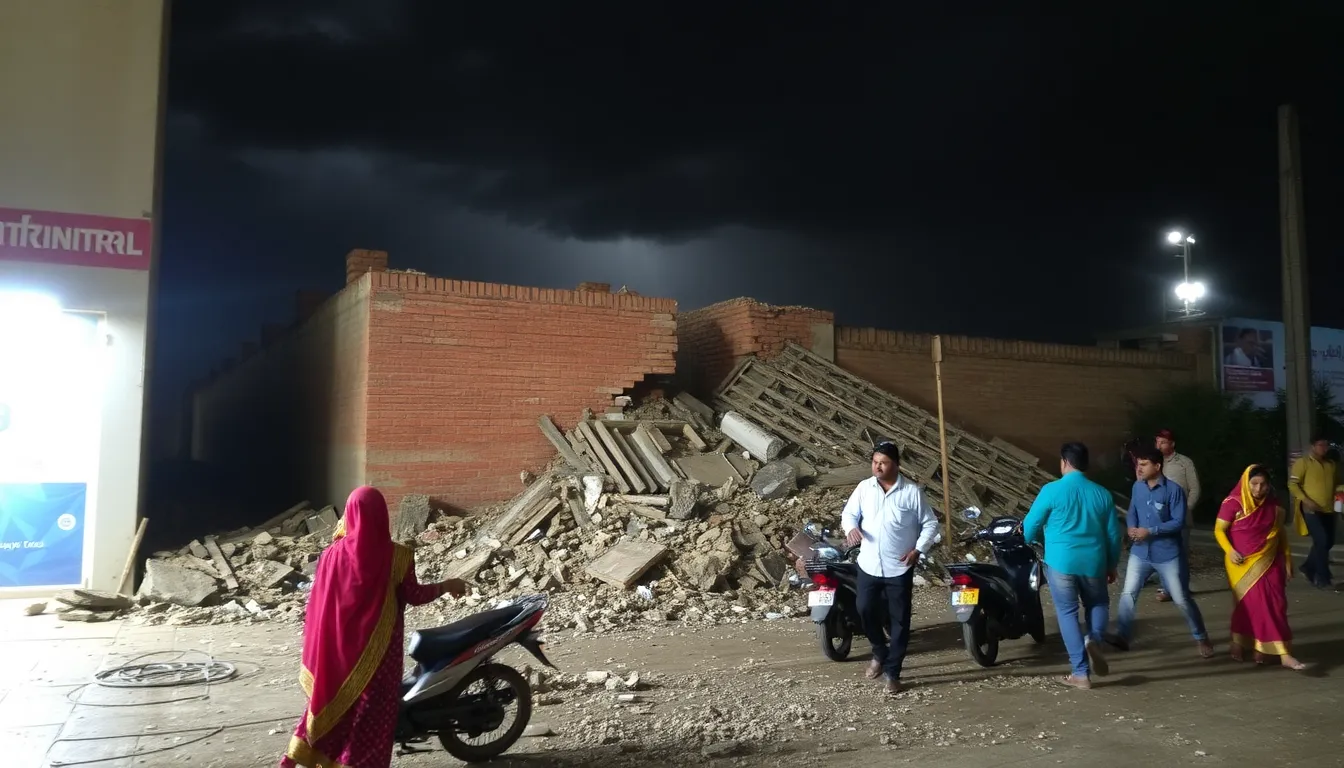
In Palanpur, a protection wall belonging to the railway collapsed last night during heavy rain and lightning. The wall is located near the residential area of Dhundhiyawadi. Fortunately, there were no casualties reported. The storm brought heavy winds along with the rain, causing significant damage. The protection wall, which faced residential houses near the Palanpur railway station, fell down, leading to panic among the residents. Some families reported that their bikes, water tanks, and doors were damaged due to the falling debris. Luckily, as it was nighttime, no one was present behind the wall when it collapsed, which prevented any serious injuries. In response to the incident, the railway department has started repair work to fix the wall and ensure safety for the residents.
Palanpur is a city located in the Banaskantha district in the northern part of Gujarat, India. It is known for its rich history and has been an important area for many years. Previously known as Prahladan Patan, Palanpur was established in 1184 AD by Prahladan, a ruler of the Parmar dynasty. The city later became significant during the British Raj and was surrounded by strong walls with seven gates, of which only the Meera Gate remains today.
The weather in Palanpur can be extreme, with hot summers reaching up to 44 degrees Celsius and cold winters dropping to 4 degrees Celsius. The city receives an average of 513 mm of rainfall annually, which is vital for agriculture in the region. Major crops include wheat, rice, and sugarcane, making agriculture a key part of the local economy.
Palanpur is well-connected by roads and railways. The Palanpur Junction railway station is on the Jaipur-Ahmedabad line and links the city to various major cities including Mumbai, Delhi, and Bengaluru. Recent developments include a proposal to double the railway track between Palanpur and Samakhiyali, which will improve connectivity for the districts of Kutch, Patan, and Banaskantha.
The community is also known for its diamond polishing industry, initiated by Jain families in 1909. Today, many diamond businesses are owned by descendants of Palanpur, contributing significantly to the Indian diamond market. Despite the modern developments, Palanpur retains its cultural heritage, with many temples and historical sites.
This recent incident with the railway wall has raised concerns about the safety of infrastructure during heavy rains. Local authorities are urged to ensure that such essential structures are well-maintained to prevent future accidents. The residents of Palanpur hope for prompt action and repairs to avoid any similar incidents in the future.