
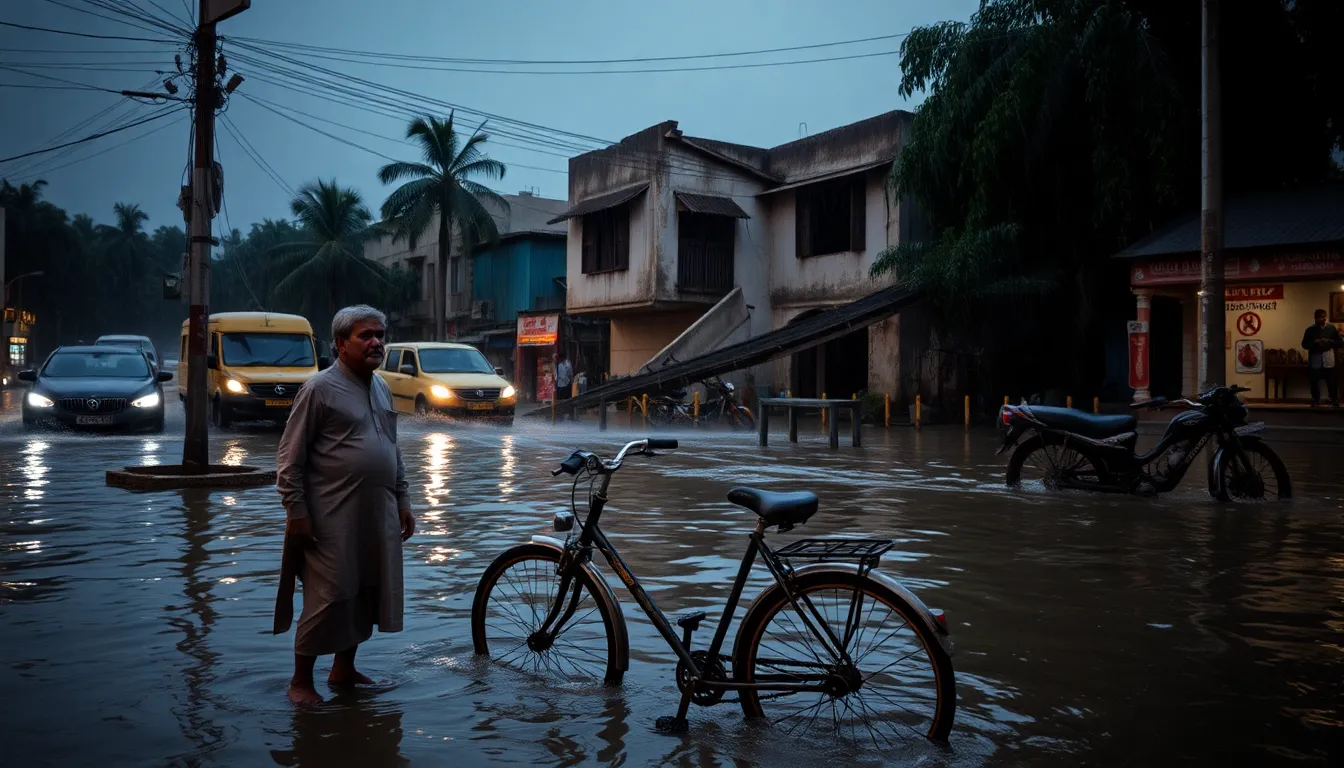
What caused the sudden flooding in Patan City on Wednesday night despite recent municipal efforts to prevent it? The city experienced a heavy rainstorm dropping over 50 mm of rain, which led to significant waterlogging and infrastructural damage, revealing gaps in local flood management.
5 Key Details About the Patan Rain Event
On the night of June 7, 2024, Patan City in northern Gujarat was hit by a heavy rain shower that brought over 55 mm of precipitation in the Saraswati area and approximately 50 mm in the central city region, according to the Patan Meteorological Department. The rain began around 9 PM and lasted intermittently until midnight, accompanied by strong winds gusting up to 45 km/h.
This intense downpour led to flooding in several low-lying urban localities, including the critical first railway crossing on Patan’s main railway line. Due to poor drainage, floodwaters accumulated for several hours, obstructing vehicular movement. Numerous cars and two-wheelers were stranded, forcing commuters to reroute.
Additionally, the heavy winds caused the partial collapse of a dilapidated building in Kharadi Wada, an old sector known for aging infrastructure. A bicycle parked nearby was damaged, but no injuries were reported. The Patan Fire and Emergency Services responded promptly to clear debris and ensure safety.
The Patan Municipality had invested approximately ₹4.5 crore in pre-monsoon drainage cleaning and stormwater channel repairs this year. Despite these measures, the flooding highlighted shortcomings in infrastructure maintenance and urban planning, especially in older parts of the city.
Local political leaders, including the Patan District Congress Committee president, have urged the municipal authorities to conduct comprehensive audits of drainage systems and upgrade flood defenses ahead of the monsoon season to prevent recurrence.
4 Reasons Why This Flooding Impacts Patan and Gujarat
Flooding in Patan is significant for several reasons. First, Patan is a historical city with ancient sites such as the Rani ki Vav stepwell, a UNESCO World Heritage site. Floodwaters threaten such heritage sites if drainage is inadequate.
Second, Patan serves as a key commercial hub in northern Gujarat, connecting to districts like Mehsana and Banaskantha. Flood-related traffic disruption affects trade and daily commuting, impacting the local economy.
Third, the flooding reflects a growing challenge for many Gujarat cities facing increasingly erratic monsoon patterns due to climate change. Similar incidents have been reported recently, such as Dantiwada and Ambaji, where infrastructure could not handle sudden heavy rains.
Finally, the incident raises concerns about preparedness in smaller cities like Patan, which may lack the advanced flood control systems seen in larger urban centers like Ahmedabad or Surat.
3 Historical and Geographical Factors Behind Patan’s Flooding
Patan is located in the northern part of Gujarat, characterized by flat terrain and a semi-arid climate. The city receives an average annual rainfall of about 650 mm, mostly during the monsoon season from June to September. However, sudden heavy rains like the 55 mm event on June 7 can overwhelm the city’s drainage capacity.
Historically, Patan’s urban layout includes many old neighborhoods with narrow streets and limited stormwater infrastructure, dating back to the medieval period when the city was a capital of the Solanki dynasty. While modernization efforts have occurred, many drainage networks remain undersized or poorly maintained.
The monsoon patterns in Gujarat have shifted in recent years, with increased intensity and irregularity noted by the India Meteorological Department’s Gujarat Regional Office. This has resulted in more frequent urban flooding events across the state, particularly in cities with aging infrastructure.
6 Important Numbers and Data on Patan’s Rain and Flooding
- Rainfall: 55.3 mm recorded in Saraswati locality; 50.1 mm in Patan city center (Patan Meteorological Department, June 7, 2024)
- Wind speed: Gusts up to 45 km/h during the storm (Patan Fire Services)
- Municipal spending: ₹4.5 crore on pre-monsoon drainage cleaning and infrastructure upgrades (Patan Municipality 2024 budget report)
- Flood-prone areas: Low-lying sectors of Kharadi Wada, Saraswati, and near the first railway crossing (Patan Urban Planning Office)
- Emergency response: 12 fire and rescue personnel deployed, 3 debris clearance operations conducted (Patan Fire and Emergency Services)
- Comparison: Similar rainfall events in Ambaji and Sankheda caused infrastructure damage recently, highlighting regional vulnerability (Ambaji, Sankheda)
4 Steps for Patan’s Flood Mitigation and Future Outlook
- Comprehensive Drainage Audit: Patan Municipality must conduct a detailed survey of existing stormwater drains, especially in older neighborhoods, to identify blockages and capacity issues.
- Infrastructure Upgrades: Invest in expanding and modernizing drainage channels, including installation of automated pumping stations in flood-prone zones.
- Community Awareness and Preparedness: Launch public campaigns to educate residents about flood risks and emergency response protocols.
- Inter-Agency Coordination: Strengthen coordination between meteorological departments, municipal bodies, and emergency services for timely alerts and responses during extreme weather events.
Given the increasing frequency of intense rain events in Gujarat, Patan’s experience underscores the urgent need for resilient urban planning tailored to monsoon challenges.
Bottom Line: The June 7 heavy rainfall in Patan exposed critical gaps in flood management, prompting calls for urgent infrastructure upgrades and better preparedness to safeguard residents and heritage sites. Residents should stay informed through official Patan Municipality alerts and avoid flood-prone areas during heavy rains.