
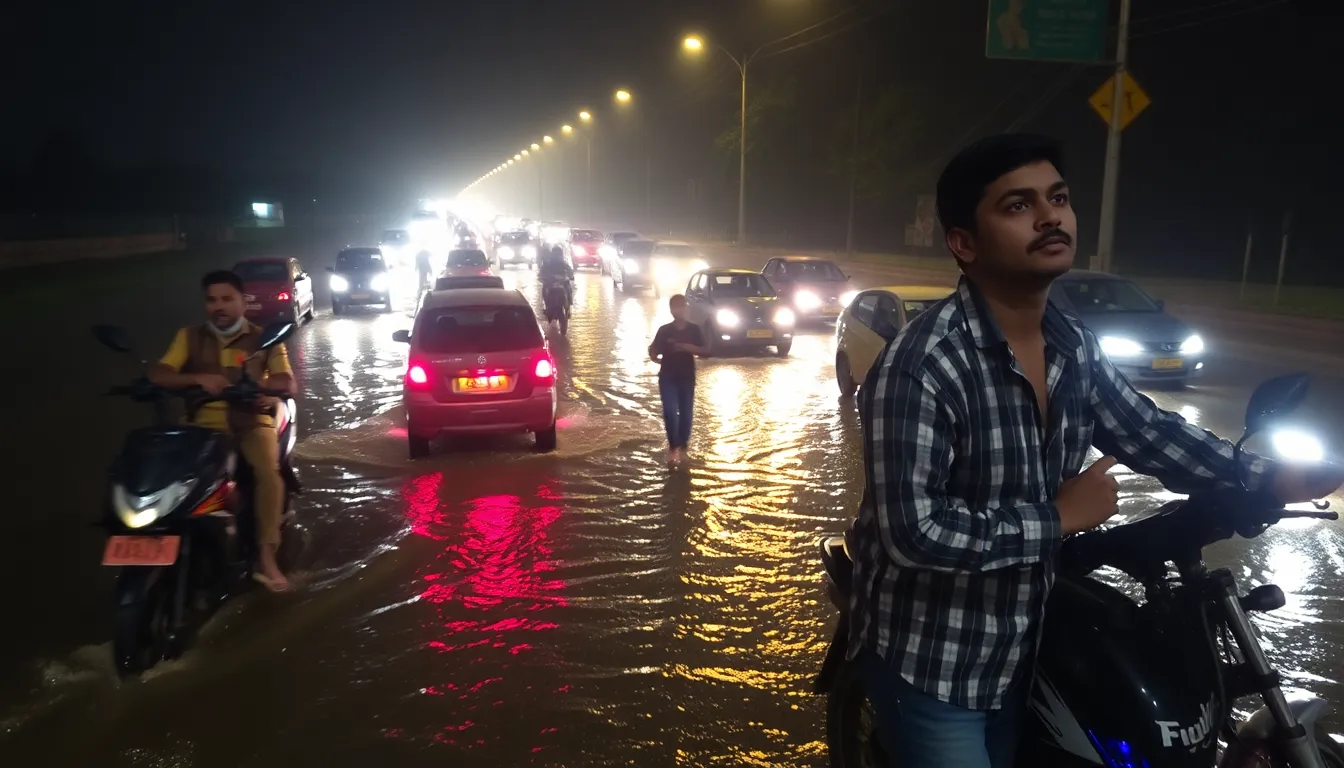
Nearly one inch of unexpected rain in Banaskantha district on the night of June 12 disrupted road traffic and caused widespread distress among residents and farmers. The unseasonal downpour, accompanied by strong gusts of wind, led to extensive waterlogging on key highways and damage to agriculture, highlighting infrastructural gaps and climate vulnerabilities in the region.
What Happened in Banaskantha District
On the night of June 12, Banaskantha district recorded approximately 0.95 inches (24 mm) of rainfall, as per the India Meteorological Department (IMD) data for the Palanpur weather station. This sudden rain was unanticipated by many locals and occurred outside the typical monsoon pattern, leading to severe waterlogging on the Palanpur-Ambaji highway. The flooding stranded hundreds of vehicles, including small cars and motorbikes, which struggled to navigate the inundated road. Drivers reported delays ranging from 2 to 4 hours, causing frustration and safety concerns.
Besides Palanpur, other talukas such as Dhanera, Vadgam, and Dantiwada also experienced heavy winds reaching speeds of 40-50 km/h, uprooting trees and damaging roadside infrastructure. According to Banaskantha District Disaster Management Authority (DDMA) officials, emergency services were deployed to assist stranded commuters and clear blocked drains.
The storm caused damage beyond transportation. In Diwodara village, lightning struck a farmer’s field, tragically killing two buffaloes, while strong winds tore off roofs of several houses and damaged standing crops of bajra and cotton. Local agricultural officers reported that over 150 hectares of farmland suffered partial to complete damage, exacerbating the financial pressures on the agrarian community.
Why This Matters for Gujarat and Banaskantha Residents
Banaskantha is a major agricultural district in Gujarat, contributing significantly to the state’s production of cotton, bajra, and dairy products. The sudden rainfall and resultant flooding jeopardize both transportation safety and agricultural output. The Palanpur-Ambaji highway is a crucial arterial road connecting Banaskantha to key pilgrimage and trading centers; its disruption affects commerce, daily commutes, and emergency services.
Repeated flooding incidents have highlighted the lack of effective drainage infrastructure along this highway and within Palanpur city limits. Local residents have voiced concerns to the Banaskantha Collectorate and Public Works Department (PWD), demanding urgent upgrades to drainage systems to prevent recurrence. The economic losses to farmers due to crop and livestock damage also raise concerns about adequate insurance coverage and relief mechanisms.
The event underscores the growing unpredictability of weather patterns linked to climate change, requiring enhanced preparedness at the district and state government levels. The Gujarat State Emergency Operations Centre (GSEOC) has emphasized the need for improved early warning dissemination and infrastructure resilience.
Background and Context of Unseasonal Rainfall in Banaskantha
Banaskantha traditionally receives most of its rainfall during the southwest monsoon season, from June to September, averaging around 500-650 mm annually according to IMD records. However, in recent years, unseasonal rain events—showers outside the normal monsoon window—have increased in frequency due to shifting climatic patterns.
In May 2023, a similar unseasonal rain event prompted a yellow alert for heavy rain, causing localized flooding and crop damage. The district has also witnessed extended periods of continuous rain, as detailed in the report on Farmers’ Struggles in Banaskantha District Due to Continuous Rain, worsening soil conditions and pest infestations.
Local markets have seen increased demand for protective measures like plastic tarpaulins, as covered in Plastic Tarpaulin Sales Surge in Banaskantha District Due to Rain. These trends reflect the community’s adaptation to increasingly erratic weather.
Key Numbers and Data on the June 12 Event
- Exact rainfall recorded: 0.95 inches (24 mm) at Palanpur station (IMD)
- Number of vehicles stranded: Approximately 300 on Palanpur-Ambaji highway (Banaskantha DDMA)
- Crop damage area: 150+ hectares affected (Banaskantha Agriculture Department)
- Estimated livestock loss: 2 buffaloes in Diwodara due to lightning (Local reports)
- Wind speeds recorded: 40-50 km/h in Dhanera, Vadgam, and Dantiwada talukas (IMD)
- Delay caused on highway: 2-4 hours for commuters (Eyewitness accounts)
What Comes Next for Banaskantha District
The Banaskantha Collectorate has announced plans to conduct an immediate assessment of road drainage systems, with PWD engineers tasked to propose upgrades before the peak monsoon season in July. The district administration is also coordinating with the Gujarat State Disaster Management Authority (GSDMA) to enhance early warning systems using SMS alerts and local media broadcasts.
Farmers affected by crop and livestock losses are encouraged to register claims under the state’s Crop Insurance Scheme at the nearest Agriculture Extension Office. The district’s Animal Husbandry Department is conducting livestock health camps to mitigate post-storm disease outbreaks.
Residents experiencing property damage can seek assistance by contacting the Banaskantha Collectorate’s Relief Cell at Collectorate Road, Palanpur, or via the official website banaskantha.gujarat.gov.in. For real-time updates on weather and road conditions, the IMD Palanpur office and Banaskantha DDMA Twitter handle remain reliable sources.
With forecasts indicating a continuation of erratic weather, community preparedness and government responsiveness will be critical to safeguarding lives and livelihoods in Banaskantha.