
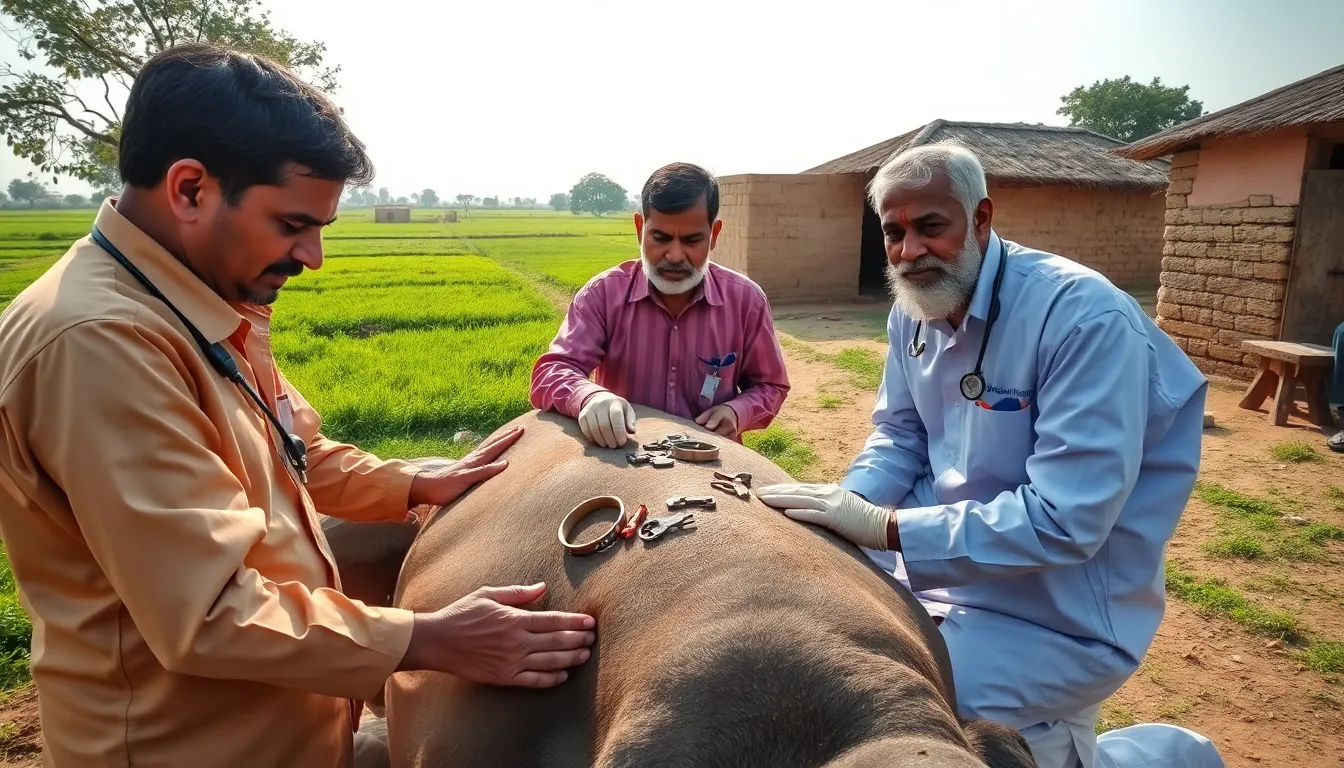
On May 17, 2024, a critical veterinary surgery was successfully performed in Tankara village, Morbi district, saving the life of a buffalo that had been suffering for over three months due to a severe internal complication. This case highlights the vital role of the Gujarat Animal Husbandry Department and its veterinary officers in rural livestock healthcare, a crucial aspect for the agrarian economy of Gujarat.
What Procedure Was Undertaken to Save the Buffalo?
The buffalo, owned by local farmer Maheshbhai Mundhva, was diagnosed with a foreign metallic body lodged inside its rumen (stomach). The veterinary team led by Dr. Vijay Bhoraniya, Tankara’s veterinary officer, identified the need for a rumenotomy—a surgical incision into the rumen to remove the obstructing objects. This operation is complex and rarely performed in field conditions due to the skill and resources required.
The surgery lasted approximately two to three hours, involving Dr. Bhoraniya, Dr. Nilesh Bhadaja, and supporting staff from the Morbi veterinary unit. Multiple metallic objects including a ring, broken key parts, and metal wires were carefully extracted. Post-surgery, the buffalo was administered antibiotics and supportive care to ensure full recovery.
Who Benefits from Such Veterinary Interventions in Gujarat?
This successful intervention directly benefits farmers who rely heavily on livestock for income and agricultural productivity. In districts like Morbi, Rajkot, and Kutch, buffaloes are essential for milk production, draught power, and manure. The Animal Husbandry Department of Gujarat, under the Ministry of Fisheries, Animal Husbandry and Dairying, actively supports rural farmers by providing timely veterinary services, including surgeries, vaccinations, and disease control.
According to official data from the Gujarat Animal Husbandry Department, the state has over 14 million bovine animals, including buffaloes. With breeds such as the high-yielding Banni buffalo from Kutch gaining significant economic importance—highlighted by recent sales reaching ₹14 lakhs per animal—maintaining animal health is paramount.
Why Did the Gujarat Government Emphasize Veterinary Care in Rural Areas?
The Gujarat government recognizes that livestock health is directly linked to the rural economy’s strength. The Animal Husbandry Department launched several initiatives to strengthen veterinary infrastructure, including mobile veterinary units and training programs for veterinary officers to perform advanced procedures like rumenotomy.
This focus stems from the need to reduce livestock mortality rates and improve productivity. For example, diseases and internal injuries in buffaloes can lead to milk yield drops, impacting farmers’ livelihoods. The government also encourages farmers to promptly seek veterinary assistance to prevent complications, as demonstrated in Maheshbhai’s case where a delayed diagnosis had prolonged the animal’s suffering.
What Are Stakeholders Saying About Rural Veterinary Services?
Farmers in Morbi and surrounding areas have expressed gratitude for the veterinary team’s commitment. Maheshbhai Mundhva stated, “The veterinary officers saved my buffalo’s life, which means everything to me and my family.” Veterinary professionals emphasize the challenges they face, including limited resources and the need for increased awareness among farmers about early intervention.
Experts from the Gujarat Veterinary Council have advocated for enhanced investment in rural veterinary clinics and advanced training to handle emergency surgeries. They highlight that such interventions not only save individual animals but also sustain the agrarian economy by protecting the backbone of dairy farming.
What Does This Mean for Farmers and Livestock Owners in Gujarat?
For farmers in districts like Morbi, Rajkot, Banaskantha, and Kutch, the key takeaway is the importance of early detection and treatment of animal health issues. The Animal Husbandry Department advises farmers to follow these steps:
- Immediately report unusual symptoms or behavioral changes in livestock to the nearest veterinary officer.
- Utilize the free or subsidized veterinary services offered by the Gujarat government, including mobile units.
- Maintain hygienic animal shelters to prevent injuries and infections.
- Participate in government vaccination programs to reduce disease outbreaks.
- Attend farmer awareness camps organized by the Animal Husbandry Department.
Such proactive measures can prevent emergencies like the one faced by Maheshbhai’s buffalo and improve overall livestock productivity.
This incident also underscores the importance of modern veterinary practices in rural Gujarat. As the state’s livestock sector grows in economic value, including record prices for breeds like the Banni buffalo in Kutch, veterinary care will remain a critical pillar supporting farmers’ livelihoods.
Moreover, the Gujarat Animal Husbandry Department continues to upgrade its veterinary infrastructure, aiming to reduce livestock mortality. Local veterinary units in districts such as Morbi and Rajkot are equipped with better surgical facilities, and veterinary officers receive ongoing training in advanced procedures like rumenotomy.
For more information on livestock health and veterinary services, farmers are encouraged to contact the Gujarat Animal Husbandry Department or visit their local veterinary office promptly at the first sign of animal distress.
Additionally, recent adverse weather events, such as heavy rains causing damage to crops near Dhuwa village in Disa and damage to farmers in Banaskantha, further emphasize the need for resilient agricultural practices, including safeguarding livestock health.
Bottom Line: The successful rumenotomy surgery in Tankara village exemplifies the critical role of veterinary care in supporting Gujarat’s rural economy; farmers should promptly seek veterinary help for livestock health issues to ensure sustained agricultural productivity.