
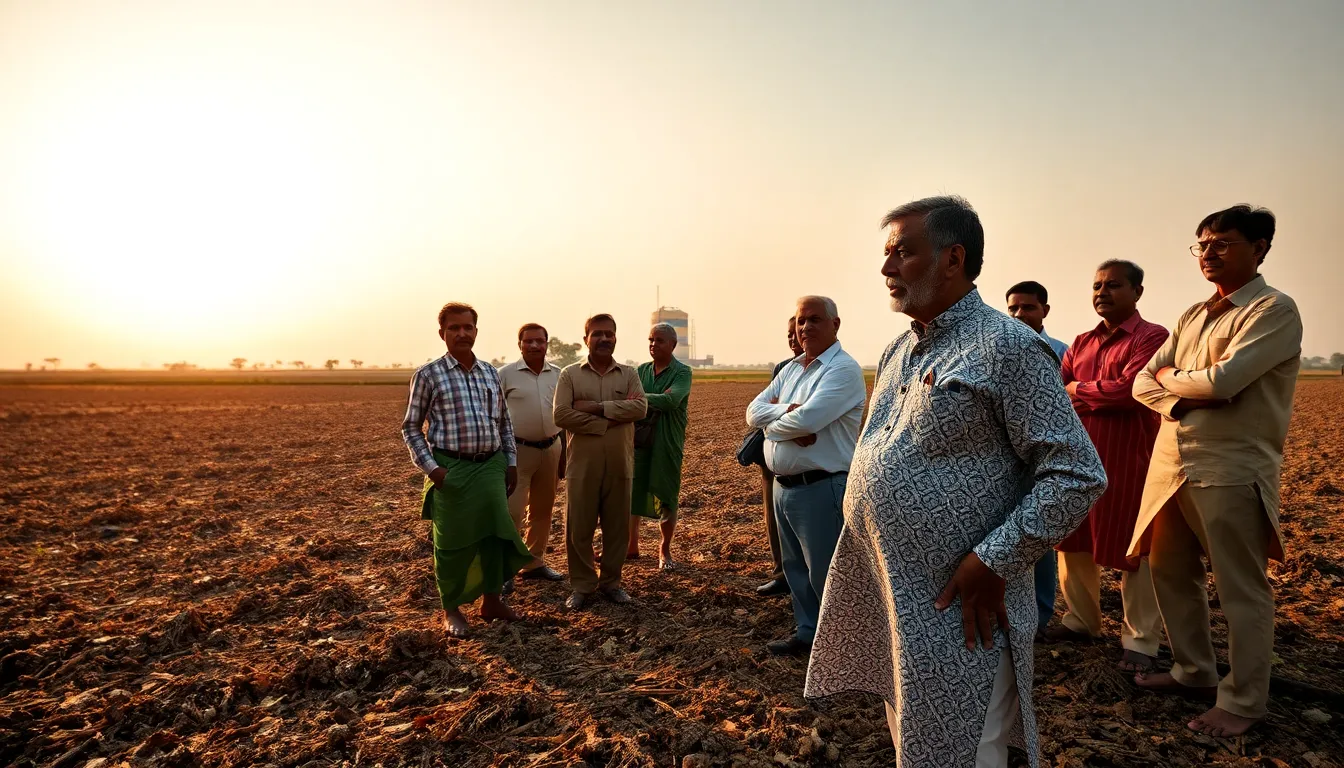
The broken drinking water pipeline in Paldi, Ahmedabad district, has severely disrupted irrigation for local farmers for over four months. This malfunction affects water supply from the main Narmada pipeline to the Ramvas area, impacting agriculture and livelihoods in one of Gujarat’s key farming regions. Farmers like Amratbhai Desai report complete cessation of irrigation water, threatening crop yields and local food security.
5 Key Facts About the Pipeline Breakdown in Paldi
The pipeline in question draws water from the Narmada River via a large storage tank at the Mohit channel, intended to serve drinking and irrigation needs of villages in Ahmedabad district, including Ramvas and surrounding areas. Problems began in January 2024 when the feeder pipeline developed leaks and subsequently broke down.
- The pipeline serves approximately 15 villages in Ahmedabad district, supporting over 500 farming families.
- The Mohit channel tank has a capacity of 2 million litres, critical for consistent water supply.
- Complaints have been lodged with the Ahmedabad Municipal Corporation and the Gujarat Water Supply and Sewerage Board (GWSSB) since February 2024.
- There are allegations of corruption during the pipeline’s installation and maintenance phases, possibly contributing to poor construction quality.
- Similar pipeline failures have been reported in other Gujarat districts, such as Kalol, highlighting systemic issues (Water Wastage in Kalol Due to Pipeline Leak).
3 Historical and Cultural Contexts of Water Infrastructure in Ahmedabad District
Ahmedabad district has historically depended on the Narmada canal system for irrigation and drinking water. The Narmada project, operational since the 1980s, transformed agriculture and urban water access across Gujarat. However, infrastructure maintenance remains a challenge, especially in peri-urban areas like Paldi, which straddle rural and expanding city limits.
Water management in Gujarat is deeply intertwined with community practices and local governance. Traditionally, village panchayats played a role in managing water resources, but increasing population pressure and urban expansion have complicated this. The current pipeline issues reflect long-standing governance gaps and the need for improved transparency.
4 Current Status of Repairs and Official Responses
Despite repeated requests from farmers, officials from Ahmedabad Municipal Corporation and GWSSB have yet to initiate comprehensive repairs as of late May 2024. Local MLA Rameshbhai Patel acknowledged the problem in April during a public meeting but cited budgetary constraints and procurement delays.
Engineering teams have conducted preliminary assessments but have not started restoration work. The farmers’ union in Paldi has petitioned the Gujarat State Water Resources Department to expedite repairs and investigate corruption allegations.
Water scarcity during this period has forced many farmers to rely on costly tanker water or groundwater wells, increasing their production costs and environmental strain. The Gujarat Pollution Control Board has also raised concerns about potential over-extraction of groundwater in the area.
4 Community Impacts and Farmer Perspectives
Farmers like Amratbhai Desai and Hemantbhai Chauhan report that the lack of irrigation water has halted the cultivation of staple crops such as wheat, cotton, and vegetables. This disruption affects not only income but also food availability in local markets.
Women in the community have expressed additional burdens, as they must travel longer distances to fetch potable water. School attendance has reportedly declined due to these hardships.
The community has organized peaceful protests and awareness campaigns, urging the Ahmedabad district administration and Gujarat state government to prioritize water infrastructure repairs. They emphasize accountability and transparency in pipeline maintenance to prevent future breakdowns.
3 Ways Residents Can Get Involved or Seek Assistance
- Report Issues: Residents can directly report pipeline problems to the Ahmedabad Municipal Corporation helpline at 079-2290-1234 or via the GWSSB online portal.
- Participate in Local Meetings: Attend Gram Panchayat or ward meetings where water supply issues are discussed to stay informed and voice concerns.
- Support Farmer Groups: Engage with local farmer unions or NGOs campaigning for better water management policies in Ahmedabad district.
Additionally, residents can follow updates about water supply restoration efforts, similar to recent successful initiatives in Patan’s Moti Bhatia Wad area (Clean Water Finally Restored in Patan’s Moti Bhatia Wad Area).
Official Resources: For more information on water supply issues and pipeline repair status, contact the Gujarat Water Supply and Sewerage Board (GWSSB) at 1800-233-4567 or visit gwssb.gujarat.gov.in. The Ahmedabad Municipal Corporation’s water department can be reached at 079-2290-5678. Local residents are encouraged to monitor announcements from these bodies for timely updates.