
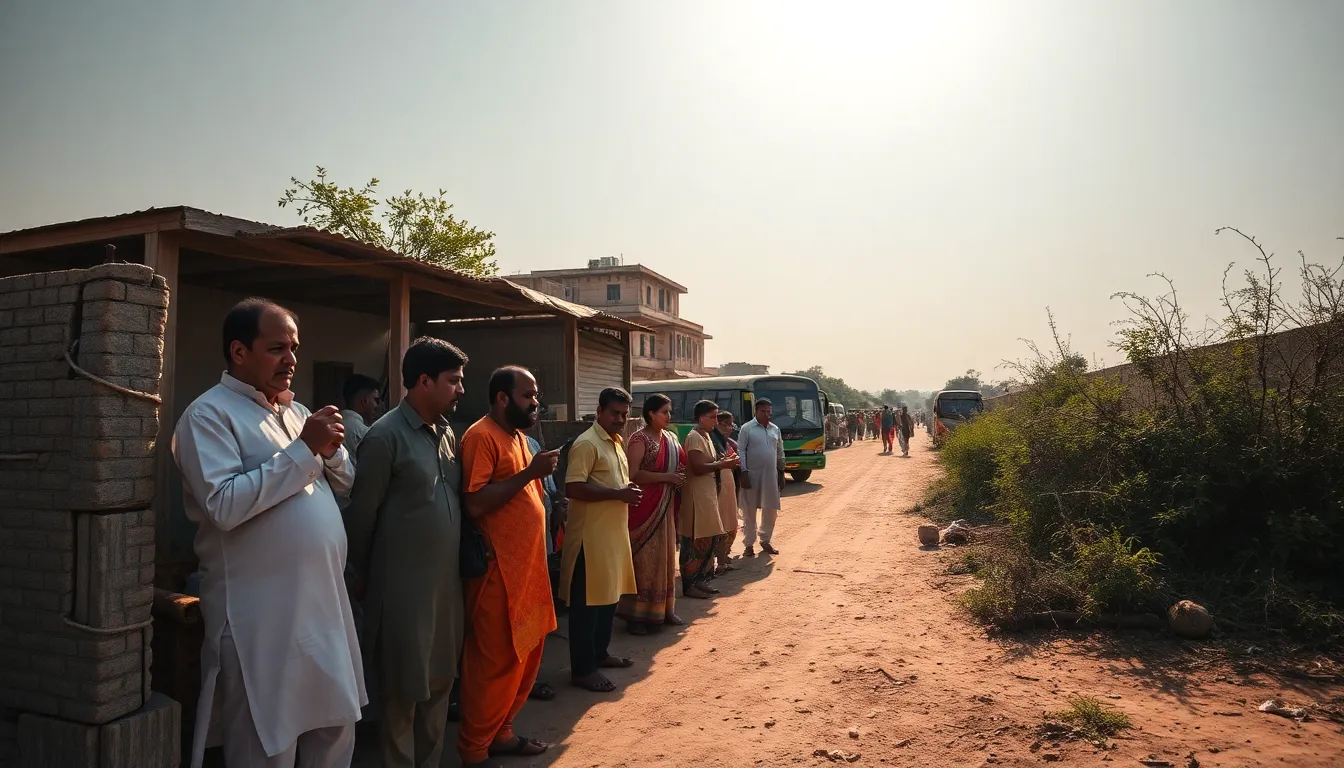
Why does Danta Taluka, a crucial administrative and commercial hub in Banaskantha district, still lack a proper ST bus station despite its significance? The answer lies in a combination of historic neglect and administrative delays, leaving passengers and traders to face daily hardships.
What Is the Full Story Behind Danta’s Missing ST Bus Station?
Danta Taluka, situated in northern Banaskantha district, is an important center for 186 villages in the region. Despite its role as a commercial and administrative headquarters, it does not have a fully functional State Transport (ST) bus station. Instead, commuters must use a small pick-up stand located in the middle of the village market area, which offers no shelter or basic amenities such as toilets, especially problematic for women passengers. This stand is exposed to the intense heat of Gujarat summers, causing discomfort and health risks.
Buses currently navigate through congested market streets, creating traffic hazards and raising safety concerns. Moreover, express buses bypass this pick-up point altogether by continuing on the highway, making access difficult for local residents who depend on public transport for education and trade. The old bus station, constructed in 1996 at considerable expense and inaugurated by the then Transport Minister, has fallen into disrepair and is now overgrown with thorny bushes, rendering it unusable.
According to KP Chauhan, the manager of the Ambaji ST depot, a formal request has been submitted to identify a new suitable location for building a modern bus station. This move aims to alleviate the transportation difficulties faced by Danta’s residents.
What Is the Historical and Cultural Context of Danta Taluka?
Danta Taluka carries a rich legacy, historically known as Danta State during the princely era. Its predominantly Adivasi population contributes to the unique cultural fabric of the region, which is also classified as a backward area by government standards. The taluka’s strategic position connecting numerous villages has traditionally made it a focal point for trade and governance in northern Banaskantha.
This background has unfortunately not translated into adequate infrastructural development. Unlike other parts of Gujarat, such as Surat, which recently unveiled India’s first solar-powered smart bus station, Danta continues to lag behind in transportation facilities. The neglect of Danta’s bus infrastructure stands in contrast to Gujarat’s general progress in rural connectivity and public transport modernization.
What Is the Current Status of the Bus Station and Transport Services?
Currently, the ST bus services in Danta operate without a proper terminus. The old station’s dilapidated condition means it cannot safely accommodate buses or passengers. The temporary pick-up stand in the village center is ill-equipped, lacking shade, seating, or sanitation facilities. This situation forces passengers to wait in unsafe conditions, particularly during peak hours and extreme weather.
The operational challenges are compounded by the fact that express and long-distance buses avoid stopping here, reducing access to faster transport options. This has forced local traders, students, and daily commuters to rely solely on slower or irregular services, affecting their livelihoods and education. The Ambaji ST depot, which manages Danta routes, acknowledges the issue and has requested the state transport department to approve a new bus station site.
The government’s delay in responding to this request continues to impact the community negatively. For comparison, nearby talukas such as Singvad have recently experienced bus service disruptions, further emphasizing the need for robust transport infrastructure in rural Banaskantha.
How Does the Lack of a Proper Bus Station Affect the Danta Community?
The absence of a reliable bus station creates multiple adverse effects on Danta’s residents. Traders face difficulties transporting goods as there is no designated area for loading and unloading buses, leading to traffic jams in the marketplace. Students commuting to schools and colleges in Banaskantha and neighboring districts struggle with irregular and inconvenient bus schedules.
Women passengers are particularly disadvantaged due to the lack of toilet facilities and security at the bus stand. The unsafe conditions in the crowded market area where buses stop increase the risk of accidents and harassment. Furthermore, the inefficient public transport system hampers economic growth by limiting access to regional markets and services.
Local leaders and residents have voiced these concerns repeatedly, urging the Banaskantha district administration and Gujarat State Road Transport Corporation (GSRTC) to prioritize the construction of a new bus station. Until then, daily travel remains a challenge for thousands in Danta Taluka.
How Can Residents Advocate for a New Bus Station and Improve Travel?
- Visit the Banaskantha District Collector’s office in Palanpur to submit formal petitions highlighting the need for a new bus station in Danta Taluka.
- Contact KP Chauhan, Manager of the Ambaji ST Depot, who is actively involved in the relocation request process. The depot office is located near Ambaji town, and residents can seek updates or support through official channels.
- Engage with local elected representatives, including the Danta Taluka Panchayat and Banaskantha MLA, to raise the issue in Gujarat Legislative Assembly sessions.
- Use the Gujarat State Road Transport Corporation’s official website (https://gsrtc.in) to file complaints or track progress related to bus station infrastructure.
- Raise awareness through community groups and social media platforms to gather broader support for improved transport facilities.
For further context on regional transport challenges, readers may refer to related reports such as Bus Service Disrupted in Singvad Taluka: Students and Farmers Affected and innovations like Surat’s Solar-Powered Smart Bus Station.