
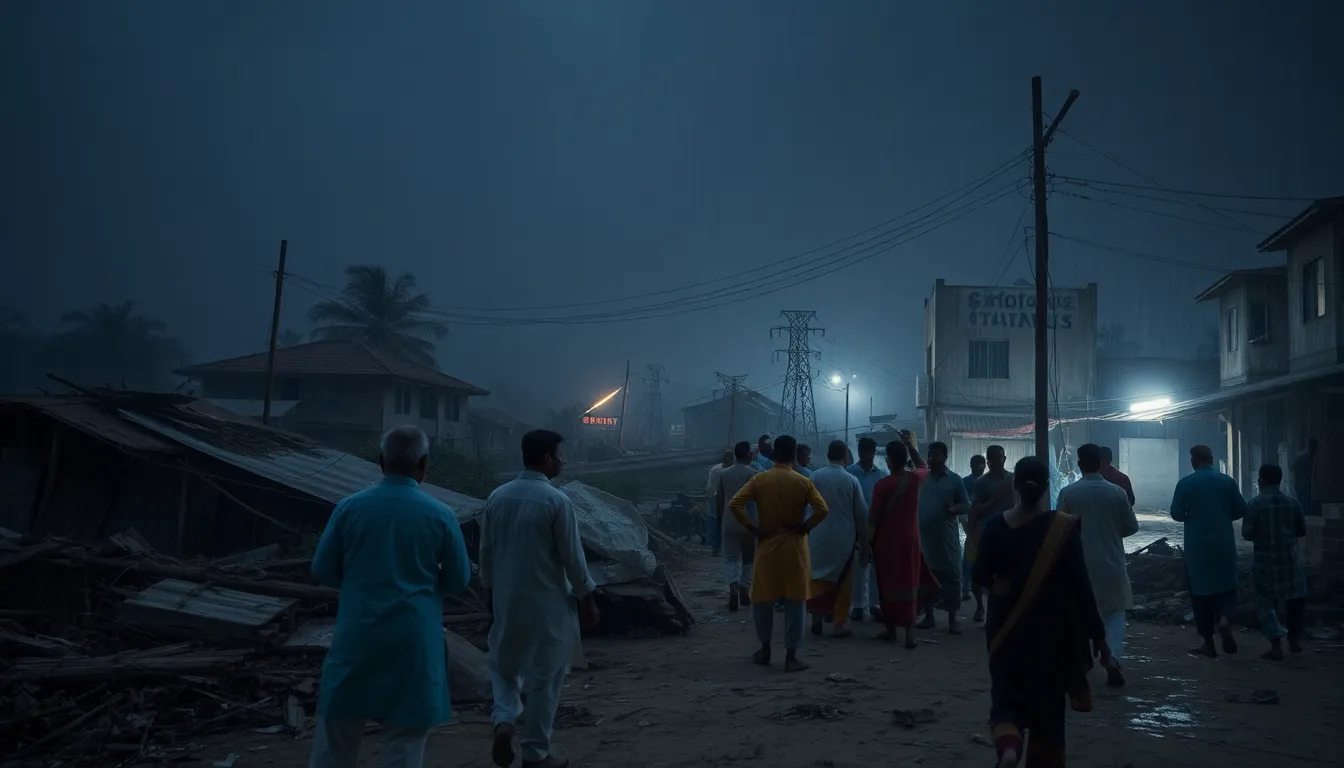
Over 200 electric poles and dozens of homes suffered damage as a severe cyclone struck the Sabarkantha and Aravalli districts of Gujarat on the night of Sunday, April 14, 2024. This unexpected weather event brought intense winds and dust storms that disrupted daily life and caused significant infrastructural damage across multiple talukas.
What Happened During the Cyclone
The cyclone made landfall late Sunday night, primarily affecting the northern districts of Sabarkantha and Aravalli. Villages including Vijaynagar, Poshina, Khedbrahma, Vadali, Idar, Himatnagar, Prantij, and Talod experienced sustained winds exceeding 80 km/h, accompanied by severe dust storms.
The Gujarat State Electricity Corporation Limited (GSECL) reported that approximately 210 electric poles were uprooted or damaged, leading to widespread power outages that persisted into Monday afternoon. Many of these poles fell along major roads and residential areas, particularly in Prantij taluka, where the villages of Vadra, Pogalu, Pallachar, and Raslod faced the brunt of the cyclone’s force.
In Prantij, more than 50 rooftops of both permanent brick houses and temporary structures were dislodged or blown away. Kishangadh saw the collapse of a residential wall, scattering roofing materials across streets, while in Bhiloda taluka, trees were uprooted along the Leelcha-Dholvani road. Tragically, a cow died when a large tree fell on it near Leelcha village.
Temporary shelters and animal sheds in Sakariya and surrounding villages were heavily damaged, raising concerns about the safety of livestock and displaced families. Light rainfall followed the cyclone in several areas, including Himatnagar. However, the rainfall was insufficient to alleviate the heat or dust accumulated during the storm.
Why the Cyclone’s Impact Matters for Gujarat
Sabarkantha and Aravalli districts are primarily agrarian with significant rural populations dependent on farming and animal husbandry. The destruction of rooftops and animal sheds has immediate economic implications for these communities, many of whom rely on livestock as a primary source of income.
The cyclone’s disruption of power supply affected not only residential life but also agricultural irrigation systems that depend on electricity. The Gujarat State Disaster Management Authority (GSDMA) has warned that such severe weather events can exacerbate vulnerabilities in these districts, which already face challenges related to water scarcity and infrastructure development.
This cyclone follows recent weather disturbances in the region, such as the severe storm impacting Sabarkantha’s summer crops and heavy rains affecting Panchmahal and Aravalli. These successive events highlight a need for stronger disaster preparedness and infrastructure resilience in this part of Gujarat.
Background and Context of Cyclonic Activity in Gujarat
Gujarat’s long coastline and topography make it vulnerable to cyclones and severe storms, especially during the pre-monsoon and post-monsoon seasons. Sabarkantha and Aravalli, although inland, can experience the peripheral effects of storms originating in the Arabian Sea.
The Gujarat Meteorological Department (Gujarat Met) had issued an orange alert for heavy rain in these districts only days before the cyclone, signaling the potential for adverse weather conditions. However, the intensity and suddenness of this cyclone caught many residents and local administrations by surprise.
Historically, Gujarat has seen cyclones causing damage to infrastructure and agriculture, with significant events recorded in the years 1998, 2017, and 2019. The current event underscores the increasing frequency and severity of such weather phenomena, possibly linked to climate change.
Key Numbers and Data on the Cyclone’s Aftermath
- Electricity infrastructure: 210+ electric poles damaged or fallen, causing outages in over 20 villages.
- Housing damage: 50+ rooftops blown off in Prantij taluka; multiple temporary shelters destroyed in Sakariya.
- Casualties: One animal fatality reported in Leelcha; no human casualties confirmed according to local authorities.
- Rainfall: Light showers recorded in Himatnagar and nearby areas post-cyclone, insufficient to mitigate dust and heat.
- Power restoration: GSECL teams deployed with priority to restore power, with partial restoration expected by April 15 evening.
What Comes Next for Sabarkantha and Aravalli Districts
The Sabarkantha and Aravalli district administrations, in coordination with the Gujarat State Disaster Management Authority, are conducting detailed damage assessments. Emergency relief teams have been mobilized to provide immediate assistance, including temporary shelters for displaced families and medical aid where necessary.
Electricity restoration efforts are underway, focusing first on critical infrastructure such as hospitals and water supply systems. Residents are advised to report downed power lines and structural damages to their local gram panchayats or call the Gujarat State Emergency Control Room at 1077.
Farmers affected by the cyclone-related damage are encouraged to register for government assistance through the Gujarat State Agriculture Department’s portal (agri.gujarat.gov.in). This includes compensation schemes for crop and property losses.
Given the recent weather patterns, local authorities are also urging communities to strengthen their cyclone preparedness, including securing loose materials and reinforcing rooftops ahead of forthcoming monsoon season challenges.
For ongoing updates and safety instructions, residents can visit the official Sabarkantha District Collectorate website (sabarkantha.gujarat.gov.in) or follow advisories from the Gujarat State Disaster Management Authority.