
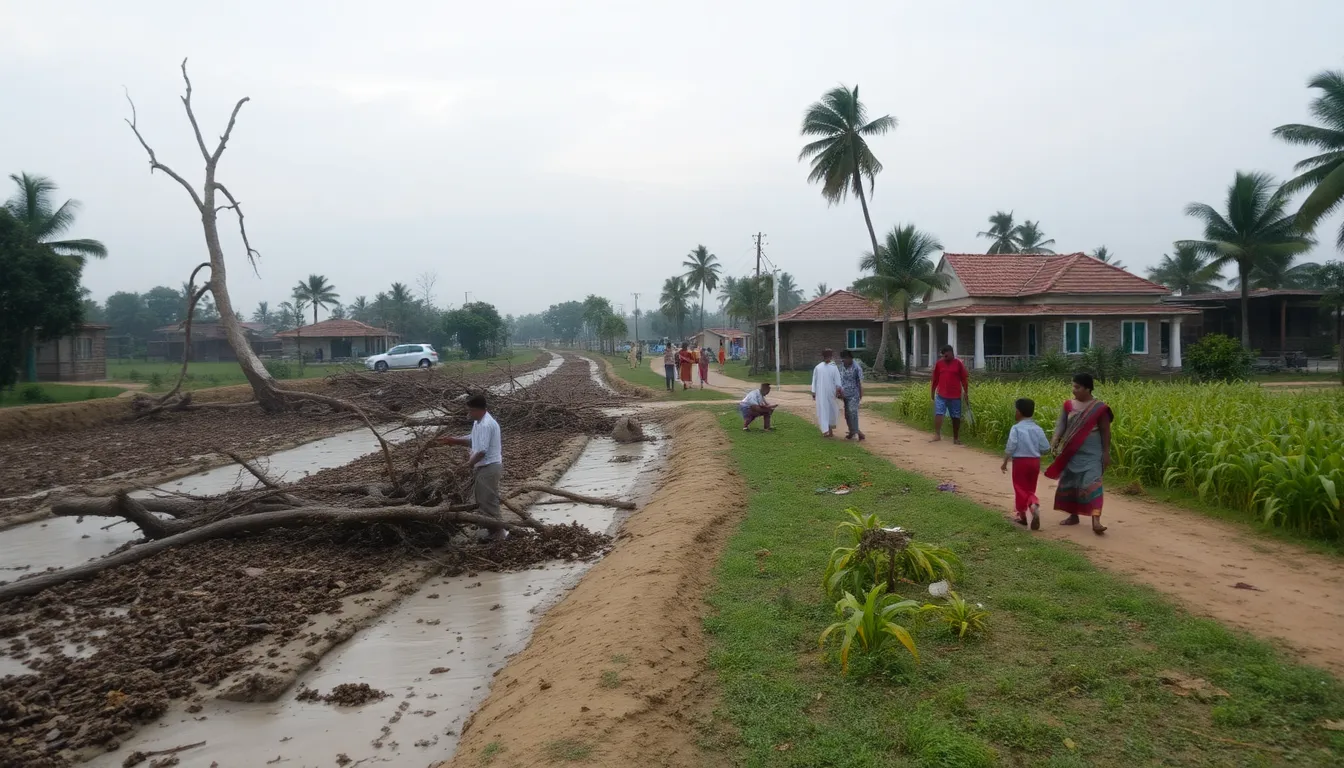
The severe storm that struck Sabarkantha district on the night of June 11, 2024, has left a trail of destruction, severely impacting the livelihoods of local farmers and residents. With strong winds reaching up to 70 km/h and heavy rainfall recorded at 85 mm over a few hours, the storm devastated summer crops, particularly pearl millet, and damaged infrastructure in several talukas. The immediate fallout has raised concerns among agricultural communities in Sabarkantha and surrounding areas, prompting urgent relief responses from district authorities.
What Exactly Happened During the Storm in Sabarkantha?
According to the Sabarkantha District Collector’s office, the storm began abruptly in the late evening of June 11 and continued through the night, accompanied by intense lightning and thunder. The worst-hit areas include Sarso village in Vijaynagar taluka, where two buffaloes were killed by lightning strikes, and Himmatnagar, where several fields of pearl millet, maize, and cotton were flattened by high-velocity winds. The Indian Meteorological Department (IMD) recorded sudden spikes in wind speed and rainfall intensity, which caught many residents and farmers off guard.
Additional damage included uprooted trees blocking key roads such as the Himmatnagar-Vadali highway, causing disruptions in transportation and emergency services. In Takhtgarh village of Himmatnagar taluka, fallen trees crushed three vehicles, with villagers collaborating to clear the wreckage promptly.
Many traditional mud houses in the district suffered structural damage, with roofs blown away or walls collapsing due to the storm’s force. Electricity supply was interrupted in at least 15 villages across Idar, Khedbrahma, and Vadali talukas, leaving thousands without power overnight. Local power utility company Dakshin Gujarat Vij Company Limited (DGVCL) has deployed repair teams to restore electricity as quickly as possible.
Why Does This Matter to Gujarat Residents and Farmers?
Sabarkantha is a predominantly agrarian district, with over 65% of its population engaged in agriculture. The summer crop season, critical for food security and farmers’ income, is now at risk due to this unseasonal and severe weather event. Pearl millet, a staple summer crop grown extensively here, has suffered damage estimated to affect 40-50% of the planted area based on initial agricultural department surveys.
This loss threatens the economic stability of thousands of small and marginal farmers in Sabarkantha, many of whom rely on timely harvests to repay loans and invest in the next cropping cycle. Additionally, damaged infrastructure and power outages disrupt supply chains and local markets, further exacerbating the economic impact.
Residents affected by home damage face unsafe living conditions while awaiting government assistance. The disruption to electricity and transport also complicates emergency responses and daily activities.
What Is the Background and Context of Weather in Sabarkantha?
Sabarkantha district, located in northeastern Gujarat bordering Rajasthan, frequently experiences variable monsoon patterns. However, the intensity of storms in recent years has increased, correlating with broader climate change trends documented by the Gujarat State Climate Change Department. This year, the monsoon onset was delayed, but recent weeks have seen erratic heavy rainfalls, saturating soil and increasing vulnerability to storm damage.
Similar severe weather events have affected nearby districts, as reported in Aravalli district and Halol taluka. These incidents indicate a pattern of increasingly intense thunderstorms and cyclonic disturbances affecting northern Gujarat.
Local authorities have been working to improve disaster preparedness, but sudden storms like this challenge response capabilities and highlight the need for enhanced early warning systems.
What Are the Key Numbers and Data on the Storm’s Impact?
- Wind Speeds: Up to 70 km/h recorded near Sarso village
- Rainfall: 85 mm rainfall in under 6 hours, as per IMD station at Himmatnagar
- Crop Damage: Estimated 40-50% of pearl millet crop area affected in Sabarkantha
- Power Outages: 15+ villages experienced electricity cuts for 12+ hours
- Property Damage: 50+ mud houses damaged or partially destroyed in Vijaynagar and Khedbrahma talukas
- Animal Loss: 2 buffaloes killed by lightning in Sarso village
- Transportation Disruption: 3 vehicles damaged by fallen trees on Himmatnagar roads
What Comes Next for Sabarkantha and Its Residents?
The district administration, led by District Collector Rajesh Patel, has initiated damage assessments and coordinated with the Gujarat State Disaster Management Authority (GSDMA) to mobilize relief efforts. Agricultural officers from the Krishi Vigyan Kendra (KVK) in Himmatnagar are advising farmers on crop salvage techniques and alternative cropping options.
Financial assistance schemes under the state government’s crop insurance and disaster relief funds are being expedited to provide support to affected farmers. The Gujarat State Electricity Corporation Limited (GSEC) has prioritized restoring power and clearing roads in coordination with local panchayats.
Residents are urged to remain cautious as unstable weather conditions may continue. The IMD forecasts scattered rains over the next 3 days but no severe storms presently. Early warnings are now being disseminated through local radio, SMS alerts, and community centers to improve preparedness.
Next Steps for Residents and Farmers:
- Contact local agricultural extension officers at the Sabarkantha Krishi Bhavan for crop damage evaluation and insurance claim assistance.
- Report any infrastructure damage or power outages to the Sabarkantha District Emergency Control Room at 02772-123456 for prompt response.
- Follow weather updates issued by the Indian Meteorological Department and stay indoors during severe weather advisories.
For related updates on regional weather impacts, see reports on Vadgam and Chhapi as well as Palanpur areas.