
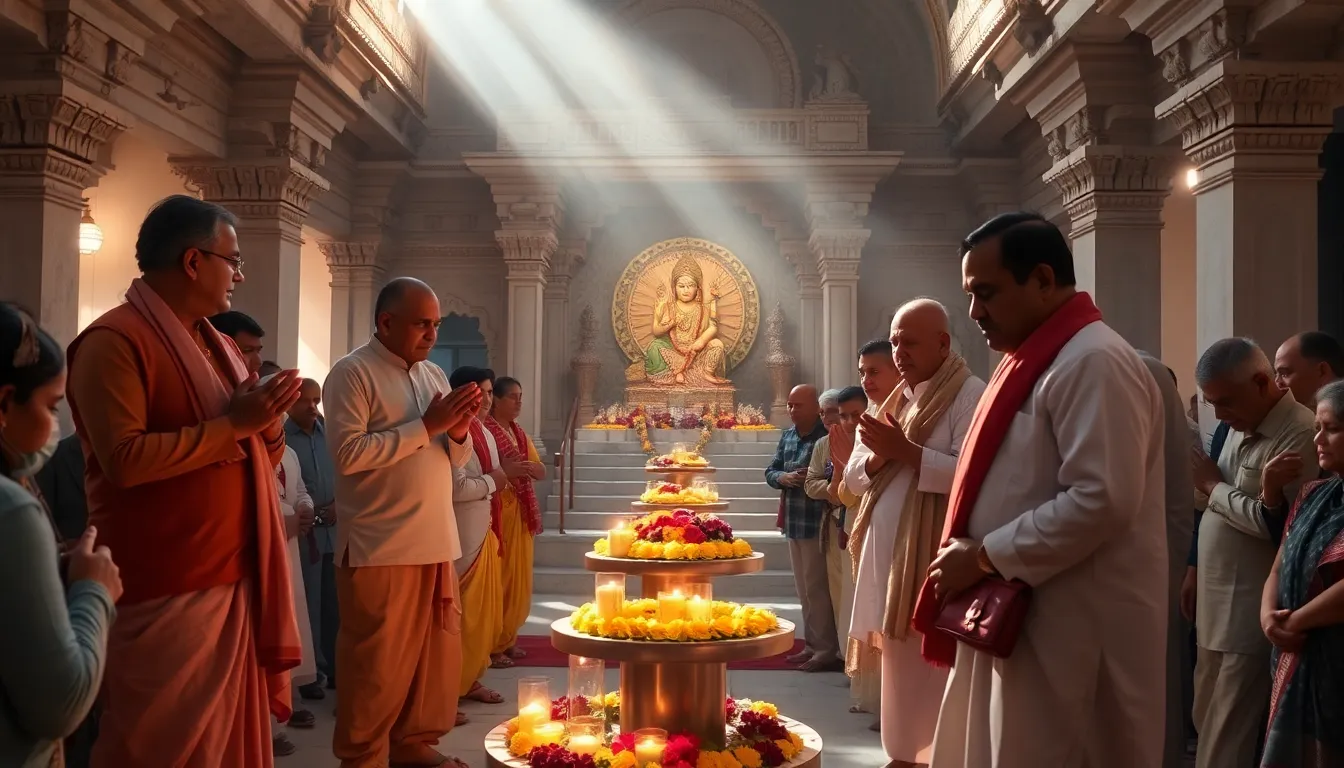
Ahmedabad witnessed a somber moment on April 21, 2024, following the tragic plane crash that claimed the lives of 241 passengers, including Vijay Rupani, former Chief Minister of Gujarat. Rupani, known for his deep devotion to Goddess Ambaji and frequent pilgrimages to the Ambaji Temple in Banaskantha district, was among those mourned by communities across the state. This catastrophe has profoundly affected multiple districts including Banaskantha, with many victims hailing from Danta taluka. The Ambaji Temple priests performed special rituals and prayers to honour the deceased and offer solace to the grieving families.
What Rituals Were Performed at Ambaji Temple to Honour Victims?
In response to the tragedy, the temple priests at Ambaji—located in Danta taluka of Banaskantha district—organized several sacred ceremonies. These included chanting of Vedic mantras, lighting of traditional lamps, and offering of ‘abhishekam’ to the Shri Visayendra, the sacred diagram revered in the temple in absence of an idol. The rituals specifically invoked peace for the departed souls and healing for the injured, as confirmed by the temple management committee. On April 22, the temple held a special ‘Shanti Pooja’ attended by local dignitaries and devotees, emphasizing community solidarity in grief.
What Is the Political Context Surrounding This Tragedy?
Vijay Rupani’s untimely demise has sent ripples through Gujarat’s political landscape. Rupani, a senior leader of the Bharatiya Janata Party (BJP), served as Chief Minister from 2016 to 2021 and was widely respected across party lines. His association with the Ambaji Temple was well-known, symbolizing the intersection of politics and religion in Gujarat. The BJP and opposition parties collectively expressed condolences, with the Gujarat government announcing a state mourning period of three days. This plane crash thus emerges not only as a humanitarian tragedy but also a pivotal moment for political unity and reflection in the state’s governance.
How Have Different Groups Reacted to the Plane Crash and the Temple Tribute?
The Gujarat government, led by Chief Minister Bhupendra Patel, promptly announced relief measures for victims’ families, including ₹5 lakh compensation and medical aid for the injured. The BJP emphasized Rupani’s legacy and his spiritual connection to the Ambaji Temple. Opposition parties like the Indian National Congress and Aam Aadmi Party extended condolences and called for improved aviation safety standards.
Local communities in Banaskantha and Sabarkantha districts have organized memorials; for instance, the Palanpur Home Guard held a tribute ceremony (source). Environmental groups in Ahmedabad planted 290 Gulmohar trees in memory of the victims to symbolize hope and regeneration (source). Additionally, DNA matches have confirmed 32 victims from the crash, aiding in prompt identification and support for families (source).
What Could This Incident Mean for Gujarat Voters and the Political Climate?
The death of a prominent leader like Rupani may influence voter sentiments, especially in Banaskantha and surrounding districts where he had strong support. Political analysts suggest that the BJP could garner sympathy votes, but the tragedy also raises questions about infrastructural safety and crisis management, potentially influencing voter expectations. The government’s relief response and engagement with affected communities will be closely watched ahead of upcoming local elections. Devotees and residents still visiting the Ambaji Temple for solace may see increased political attention toward the region’s welfare and development.
What Is the Historical and Cultural Significance of Ambaji Temple in Gujarat?
The Ambaji Temple, one of Gujarat’s most revered pilgrimage sites, is situated in Danta taluka of Banaskantha district. It attracts over 2.5 million devotees annually, particularly during the Ambaji fair held on Bhadravi Purnima (September-October). Unlike many temples, Ambaji does not house an idol but worships the Shri Visayendra, a sacred yantra symbolizing the Goddess. The temple’s unique rituals and large-scale festivals contribute significantly to Gujarat’s cultural fabric and religious tourism economy. The local government and welfare organizations provide essential services such as food, sanitation, and medical aid during peak pilgrimages, highlighting its importance beyond spirituality.
In the wake of the recent tragedy, the temple’s role as a community anchor has been underscored. Despite the somber mood, the faithful continue to visit, reflecting resilience and faith in times of crisis. This incident also spotlights the intersection of religion, politics, and community welfare in Gujarat’s social landscape.
Residents and devotees seeking to pay respects or participate in ongoing rituals at Ambaji Temple can visit the temple complex located on the Ambaji Road, Danta taluka, Banaskantha district. For official information, schedules of rituals, and support services, contact the Ambaji Temple Trust office at +91 2764 252222 or visit www.ambajitemple.in.