
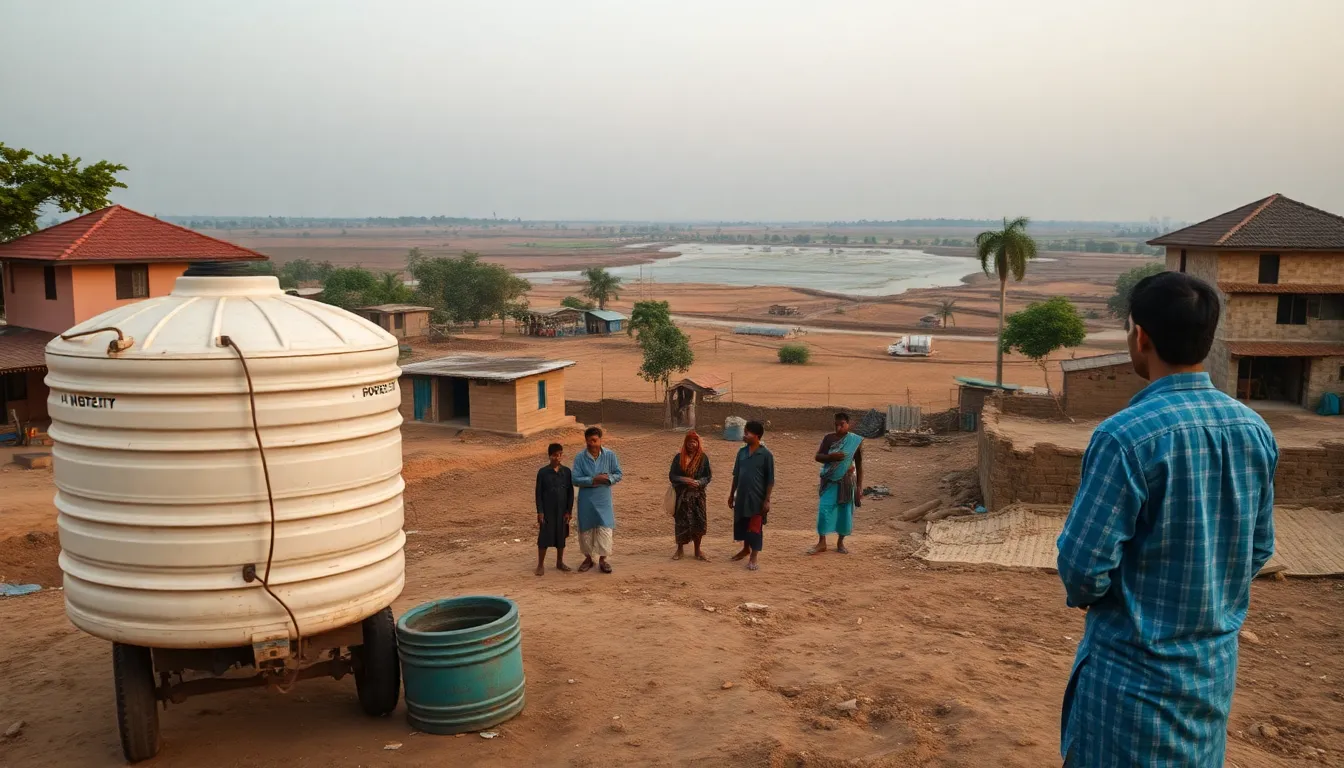
The water scarcity situation in Gujarat has become a critical concern for residents, farmers, and policymakers alike as reservoir levels across the state have plummeted below 10% in 54 reservoirs. This shortage directly impacts water availability for drinking, agriculture, and industries, especially in rural districts like Kutch, Banaskantha, and Morbi. With six reservoirs completely dry, many villages now rely heavily on water tankers to meet daily needs, signaling urgent action is needed to manage and conserve water resources effectively.
Understand the Full Story
According to the Gujarat Water Resources Department’s latest report dated May 15, 2024, the current overall storage in the state’s 185 major reservoirs stands at approximately 32.5% of total capacity, down significantly from last year’s 43% on May 17, 2023. The drought-like conditions are exacerbated by a prolonged dry spell and intense summer heat waves, particularly in districts such as Kutch, Morbi, and parts of Saurashtra.
Specifically, the Kutch region shows the lowest reservoir levels in the state at 30.08%, with key reservoirs like Kaila and Rudramata almost dry – below 10% capacity. This marks a worrying 8% decline since April 17, 2024, when the levels were at 38%. In Saurashtra, 141 reservoirs collectively hold just 31.46% water, with critical reservoirs such as Siphu in Banaskantha and Machhu-2 in Morbi also below 50%. Meanwhile, pockets of Rajkot district, including reservoirs like Aji-2 and Bhadar-2, maintain more than 70% capacity, providing some relief.
Explore Historical and Cultural Context
Gujarat’s water management has long been shaped by its semi-arid climate, with traditional rainwater harvesting and tank systems playing a historical role. The state’s extensive coastline and arid regions have necessitated innovative water conservation methods for centuries. Ancient sites such as Lothal and Dholavira on the Kathiawar peninsula reveal early water management techniques from the Indus Valley Civilization era.
Modern challenges, however, stem from rapid urbanization, agricultural expansion, and climate change impacts. The government of Gujarat, through institutions like the Gujarat Water Resources Development Corporation (GWRDC) and the Irrigation Department, has implemented large dam projects and canal systems to address water distribution. Yet, the current drought-like scenario underscores the need for renewed focus on sustainable water practices integrated with cultural knowledge of the land.
Assess the Current Status in Gujarat
As per official data, six reservoirs across Gujarat are completely dry, with many others at critical lows under 10%. District-wise, the most affected areas include:
- Kutch: Reservoirs at 30.08%, with Kaila and Rudramata below 10%
- Saurashtra: 31.46% water levels in 141 reservoirs, including Siphu and Machhu-2
- Rajkot and Morbi: Some reservoirs like Aji-2 and Machhu-2 holding over 70%
Despite this, the Gujarat Water Resources Department projects that the state will avoid a full-scale water crisis, citing optimistic meteorological forecasts. The India Meteorological Department (IMD) predicts an early monsoon onset with rainfall expected to be normal to above normal across Gujarat this year. Officials emphasize that effective water resource management and timely monsoon rains should stabilize reservoir levels by mid-July.
Evaluate Community Impact Across Districts
Communities in drought-prone districts are facing severe hardship. In rural Kutch and Banaskantha, farmers report crop losses due to insufficient irrigation water, raising concerns about agricultural output and livelihoods. The Gujarat State Disaster Management Authority (GSDMA) has deployed water tankers to over 200 villages in these districts to meet drinking water needs.
Urban areas like Ahmedabad and Rajkot have witnessed water rationing and increased reliance on groundwater, further stressing aquifers. The government is promoting water conservation campaigns, encouraging rainwater harvesting, and regulating groundwater extraction to mitigate long-term water scarcity.
Environmental groups highlight the ecological risks, noting that declining reservoir levels threaten wetland habitats and local biodiversity. This situation coincides with conservation efforts such as the Asiatic lion population growth in Gir National Park, where water availability is crucial for sustaining wildlife.
Support Action: How to Prepare and Help
The Government of Gujarat is actively preparing for the upcoming monsoon season. The Irrigation Department advises farmers to adopt water-efficient irrigation methods like drip and sprinkler systems. Additionally, the state promotes afforestation projects, such as the recent Green Pavagadh Project, which uses drone technology to expand forest cover and improve groundwater recharge.
Residents can contribute by:
- Implementing household rainwater harvesting systems to reduce dependence on groundwater.
- Using water-saving appliances and fixing leaks to minimize wastage.
- Participating in local water conservation initiatives organized by municipal corporations or NGOs.
Government authorities also encourage reporting illegal water extraction and support the use of cloth bags and sustainable products, aligning with environmental goals highlighted during recent initiatives like the World Environment Day vending machine launch.
Next Steps:
- Monitor official water level updates from the Gujarat Water Resources Department website.
- Prepare for monsoon water storage by maintaining and cleaning household tanks.
- Support local water conservation drives and adopt sustainable water use practices.