
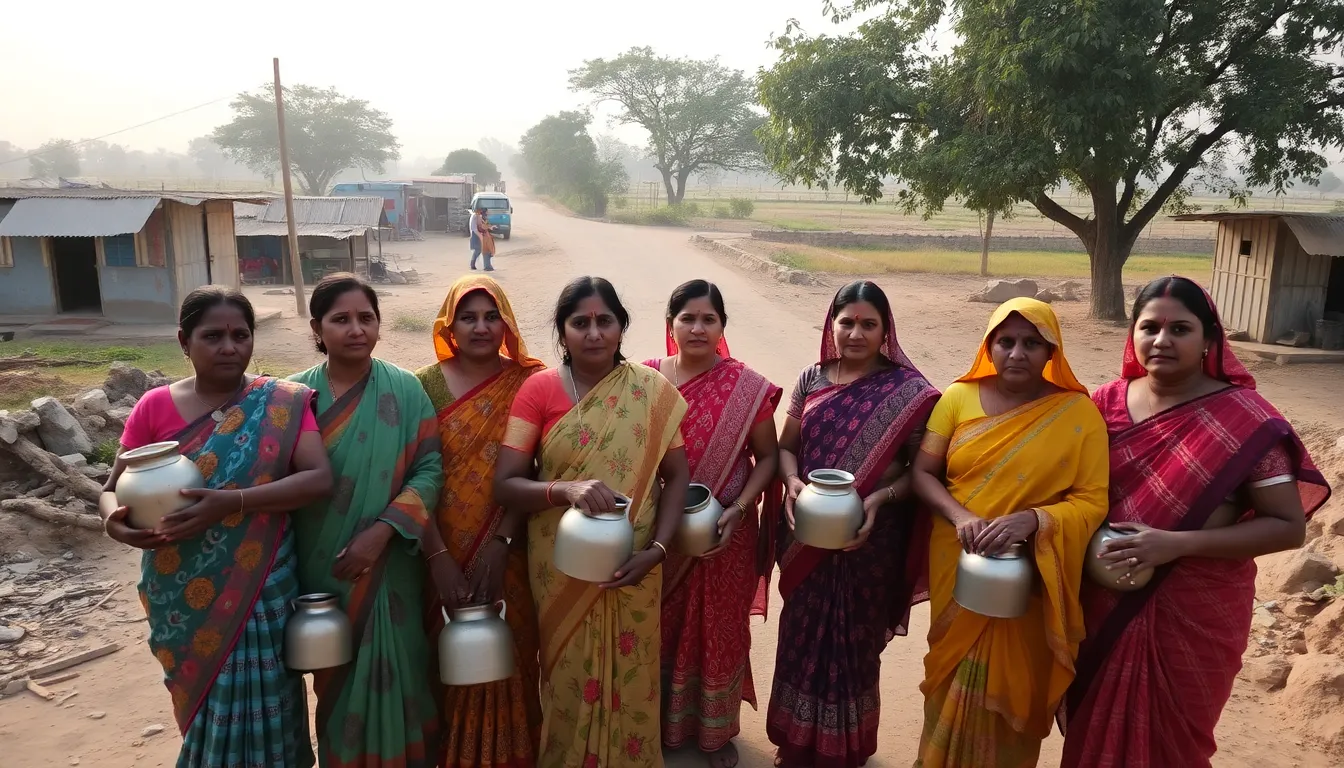
Over 500 residents of Sandhkuva village in Sankheda Taluka, Chhota Udaipur district, have faced a severe water shortage for more than five consecutive days as of June 2024. This ongoing crisis has disrupted daily life, affecting drinking water availability and sanitation, with a disproportionate impact on the village’s women, who bear the primary responsibility for water collection.
What Is the Full Story Behind Sandhkuva’s Water Crisis?
Sandhkuva, a small tribal village in the eastern region of Gujarat, has been grappling with acute water scarcity since late May 2024. According to statements from the Gram Panchayat office and local residents, the village’s main water sources, including a community well and borewells, have dried up due to an extended dry spell and inadequate groundwater recharge. Despite multiple complaints lodged with the Sankheda Taluka Panchayat and Chhota Udaipur District Water Supply Department, no remedial action has been taken to date.
Women of Sandhkuva, who typically spend up to four hours daily fetching water from distant sources, have publicly protested, demanding urgent intervention. They have criticized the village sarpanch, Mr. Bharat Patel, and other local officials for their lack of response. The villagers have appealed to the District Collector, Mr. Rajesh Joshi, and the Gujarat Water Supply and Sewerage Board (GWSSB) for emergency water supply and sustainable infrastructure development.
What Historical and Cultural Factors Affect Water Access in Sandhkuva?
Sandhkuva is located in the Chhota Udaipur district, a predominantly tribal region known for its rich cultural heritage and traditional crafts such as bamboo weaving and tribal art. Historically, the village has depended on monsoon rains and surface water bodies like ponds and small dams for water needs. However, recurring droughts and deforestation have diminished these natural resources over the last two decades.
The region’s socio-economic challenges, including limited government investment and infrastructural neglect, have compounded the water scarcity. Tribal communities in Chhota Udaipur often face marginalization, resulting in inadequate access to basic services. During election periods, political representatives visit promising development projects but frequently fail to follow up on commitments, leading to recurring dissatisfaction among villagers.
What Is the Current Status of Water Supply and Government Response?
As of June 10, 2024, no permanent solution has been implemented in Sandhkuva. Temporary water tanker deliveries arranged by the district administration have been irregular and insufficient to meet the village’s daily requirements, which average 10,000 liters. According to a statement from the Chhota Udaipur District Collectorate, plans are underway to install a new pipeline linked to the nearest GWSSB water treatment plant in Sankheda, but the project is expected to take at least two months due to budget approvals and technical assessments.
Local NGOs such as the Tribal Development Society have offered to assist in rainwater harvesting and water conservation initiatives but require government collaboration and funding. The Gujarat Water Supply Minister, Mr. Kiritsinh Rana, recently visited Banaskantha district to oversee water supply improvements, highlighting the state’s broader water management challenges (source), yet similar interventions have not reached Sandhkuva.
How Does the Water Crisis Impact Sandhkuva’s Community?
The lack of adequate water supply has severe implications for health, hygiene, and livelihoods in Sandhkuva. Women and girls spend excessive time fetching water, which affects their ability to attend school or engage in income-generating activities. The scarcity also endangers traditional crafts that require water for processing, thereby threatening the village’s cultural economy.
Sanitation is compromised, increasing the risk of waterborne diseases such as diarrhea and cholera. According to the District Health Office, Chhota Udaipur, there has been a 15% rise in reported water-related illnesses since the start of the dry season. The community fears that prolonged neglect could lead to migration or further socio-economic decline.
How Can Readers Visit or Support Efforts in Sandhkuva?
Sandhkuva is accessible via road from Sankheda town, approximately 25 kilometers away, with public transport options limited. Visitors interested in supporting the village’s water initiatives can coordinate with local NGOs such as the Tribal Development Society or contact the Chhota Udaipur District Collectorate for guidance on approved volunteer programs.
Residents and activists encourage awareness campaigns and donations toward sustainable water infrastructure, such as borewell installations and rainwater harvesting systems. They also urge government authorities to expedite pipeline projects and improve emergency water supply protocols, following models from other districts like Kapadvanj (source).
Next Steps for Readers:
- Contact the Chhota Udaipur District Collectorate to inquire about ongoing water supply projects in Sandhkuva.
- Support local NGOs engaged in water conservation and tribal welfare initiatives.
- Stay informed about Gujarat government water supply updates, including related development efforts in nearby districts.