
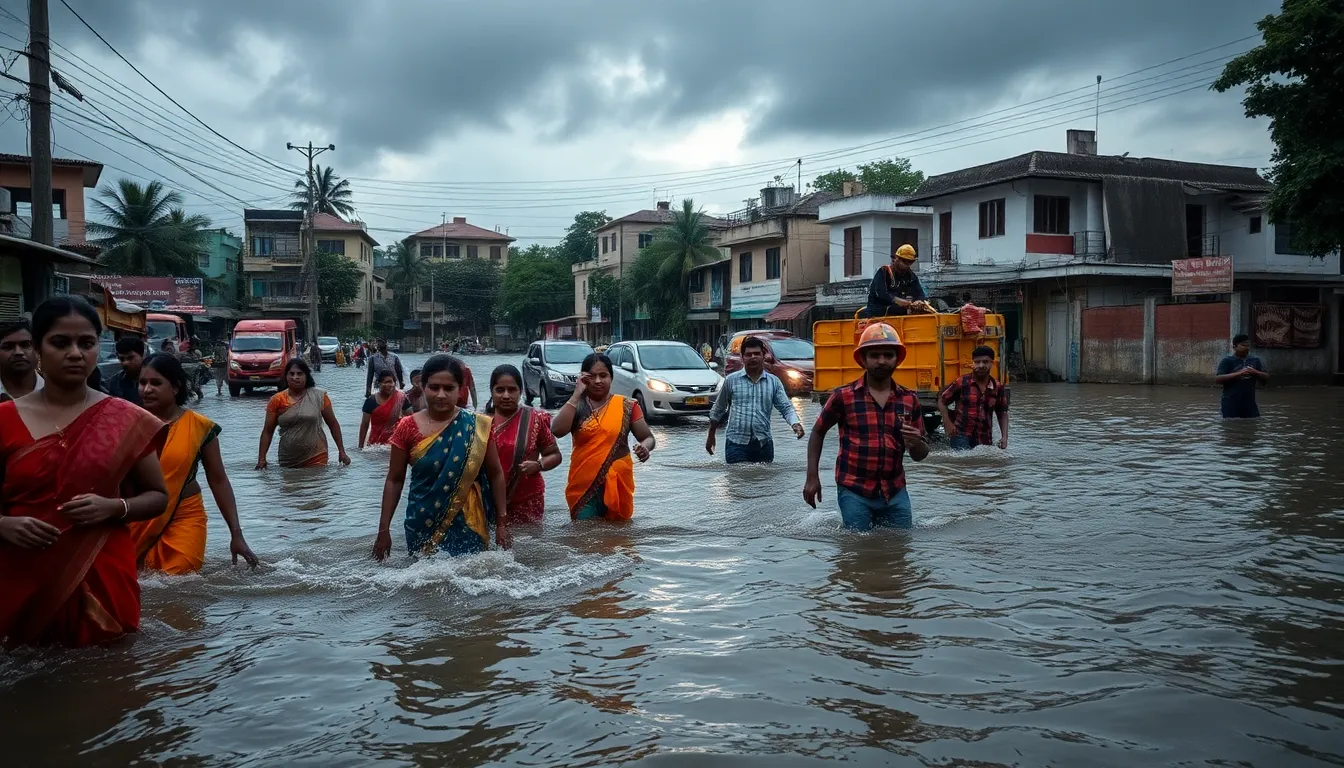
What caused the severe flooding in Surat on Monday? Intense rainfall exceeding 7 inches within six hours triggered widespread waterlogging and disruptions across Surat and surrounding districts.
Detail the Flooding Events
Surat city and nearby areas experienced unusually heavy rainfall beginning early Monday morning, with official readings showing over 7 inches (approximately 178 mm) of precipitation between 6 AM and 12 PM. This sudden downpour overwhelmed drainage systems, leading to flooding in multiple low-lying localities including Udhna Darwaja, Begampura, Sahara Darwaja, and Lal Darwaja. Notably, bank employees near Lal Darwaja were trapped in rising waters and required rescue by the Surat Municipal Corporation Fire Department, which evacuated 12 individuals safely.
The flooding extended beyond Surat city limits. Significant rainfall was recorded in districts such as Kamrej (1.81 inches), Mandvi, Mangrol, Palsana, Chorasi, Umarpada, Bardoli, and Olpad. Talala and Vyar also reported 1.34 inches and 1.1 inches of rain respectively. Areas like Vapim, Maliyahat, and Dediya saw varying levels of precipitation contributing to widespread inundation. The Rander-Singanpor causeway was closed to traffic due to unsafe water levels impacting connectivity.
In response, local authorities declared a holiday for schools across Surat district to ensure safety. The Surat Municipal Corporation (SMC) swiftly initiated efforts to clear blocked drains and open roads as water levels began to recede later in the day.
Explain the Impact on Gujarat
The flooding has severely disrupted daily life and economic activity in Surat, Gujarat’s commercial hub. Transportation faced major interruptions, especially on key arterial routes like the Rander-Singanpor causeway, affecting commuters and goods movement. Local businesses, particularly those in low-lying market areas, reported losses due to water damage and closures.
Residents are advised by the Surat District Administration to avoid unnecessary travel and stay indoors until conditions improve. Emergency services remain on high alert, with the Fire Department, Disaster Management Authority, and municipal workers coordinating relief and rescue operations. The administration has declared a state of emergency to mobilize resources efficiently.
Flooding in Surat also has implications for regional agriculture and supply chains, given the city’s role as a trade center. Additionally, the continuous wet conditions raise concerns over waterborne diseases, prompting health departments to issue advisories and prepare medical support.
Provide Historical and Regional Context
Surat’s vulnerability to flooding is compounded by its geographic location near the Tapi River and the Arabian Sea coast, combined with rapid urbanization that strains drainage infrastructure. Monsoon rains typically peak between June and September, but this early-season intense downpour is unusual. Similar flooding incidents have occurred in other parts of Gujarat this monsoon season, such as Dantiwada, Sankheda, and Tharad, highlighting a pattern of heavy rainfall events impacting multiple districts.
Surat Municipal Corporation has been investing in flood mitigation infrastructure, including improved drainage systems and rainwater harvesting, but extreme weather events continue to challenge city planners. The state government’s Gujarat State Disaster Management Authority (GSDMA) monitors such situations closely to coordinate preparedness and response.
Present Key Numbers and Statistics
- Rainfall recorded: Over 7 inches (178 mm) in Surat city between 6 AM and 12 PM on Monday
- Kamrej recorded 1.81 inches (46 mm)
- Talala recorded 1.34 inches (34 mm)
- Vyar recorded 1.1 inches (28 mm)
- 12 people rescued from floodwaters near Lal Darwaja
- Multiple low-lying areas including Udhna Darwaja, Begampura, and Sahara Darwaja affected by waterlogging
- Rander-Singanpor causeway closed to traffic
- Schools in Surat district closed for the day
Advise on What Comes Next
The India Meteorological Department (IMD) forecasts continued heavy rainfall over Surat and nearby districts for the coming days, requiring residents and authorities to remain vigilant. The Surat District Collector’s office has urged citizens to follow safety advisories, avoid flood-prone areas, and report emergencies promptly.
Relief measures include:
- Enhanced patrolling by disaster response teams in vulnerable areas
- Continuous monitoring of water levels in Tapi River and drainage channels
- Deployment of additional pumps to expedite water drainage
- Coordination with Gujarat State Emergency Operations Centre (GSEOC) for resource mobilization
- Public awareness campaigns on flood safety and hygiene
Municipal authorities are focusing on restoring normal traffic flow and repairing infrastructure damage as soon as water recedes. Residents should prepare for possible power outages and water supply interruptions.
Official Resources for Surat Residents
For updated information and assistance, residents can contact the Surat Municipal Corporation helpline at 1800-233-0505 or visit their official website suratmunicipal.gov.in. The Gujarat State Disaster Management Authority can be reached through their emergency number 108. The India Meteorological Department’s regional office in Ahmedabad provides regular weather bulletins at mausam.imd.gov.in/ahmedabad.
Stay informed through these channels to respond quickly to any new developments related to flooding and heavy rains.