
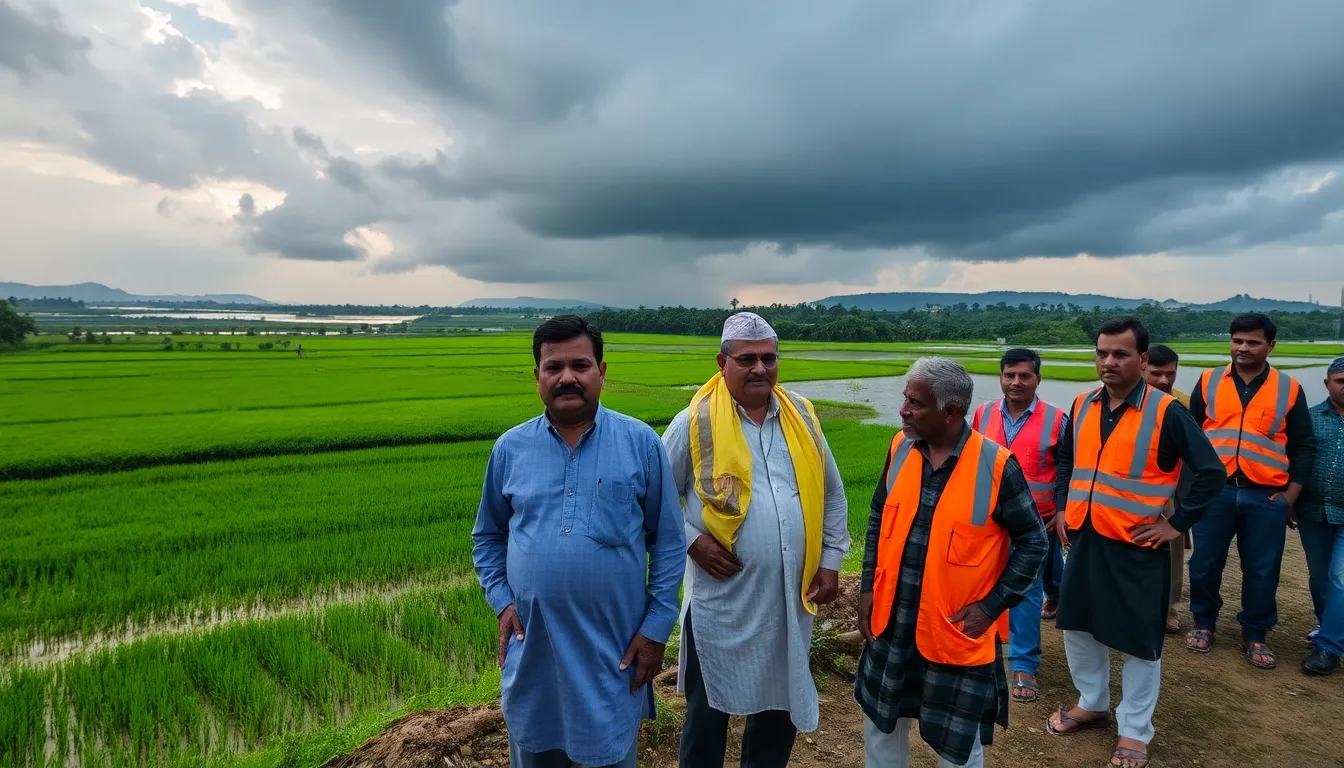
Jamnagar district in Saurashtra, Gujarat, witnessed a critical water management situation as the Ranjitsagar Dam overflowed late on the night of June 18, 2024, leading to a high alert issued by the Gujarat Water Resources Department. This alert affects multiple districts across Saurashtra, including Jamnagar, Gir Somnath, Amreli, Bhavnagar, Rajkot, and Kutch. Authorities have urged residents of low-lying and flood-prone areas to remain vigilant and prepared for possible evacuations.
Understand the Advisory Details
The Gujarat Water Resources Department has officially declared a high alert following the overflow of ten key reservoirs in the Saurashtra region. Among these, the Ranjitsagar Dam in Jamnagar and the Bhadar-2 Dam near Dhoraji in Rajkot are critical, with the latter’s gates opened by 0.3 meters to manage excess water flow. Other reservoirs at Dhatarwadi and Surajwadi in Amreli, Vaghadiya in Jamnagar, and Kalagoda in Kutch have also reached 100% capacity. The advisory instructs local authorities to monitor water levels and alerts residents to anticipate further rainfall over the next 48 hours, as forecasted by the India Meteorological Department (IMD) Ahmedabad office.
Explain Why the Advisory Was Issued
Heavy monsoon rains have swept across Saurashtra since June 17, 2024, with Jamnagar district receiving between 2 and 6.5 inches of rainfall within 24 hours. Una taluka in Gir Somnath recorded consistent rain exceeding one inch on June 18 morning. Bhavnagar district witnessed light to moderate rainfall in six of its ten talukas, with Vallabhipur receiving the highest at 0.28 inches. This intense precipitation has rapidly filled reservoirs to their maximum capacities, with spillover creating risks of flooding in adjacent villages such as Jamwala near the Gir forest and areas surrounding Dhoraji. The overflow of the Bhadar-2 Dam has raised particular concern due to its proximity to densely populated settlements.
Follow Steps to Stay Safe
- Stay updated with official weather alerts broadcasted by the Gujarat State Disaster Management Authority (GSDMA) and local administration.
- Avoid traveling to low-lying or flood-prone areas, especially near dam spillways and riverbanks.
- Prepare an emergency kit with essential documents, medicines, water, and food supplies.
- Follow evacuation orders promptly if issued by district authorities in Jamnagar, Rajkot, Amreli, or Gir Somnath.
- Keep emergency contact numbers handy and inform family members of your whereabouts.
- Do not attempt to cross flooded roads or streams; water levels can rise rapidly.
Contact Authorities in Emergencies
Residents in affected districts should contact the following for immediate assistance:
- Gujarat State Disaster Management Authority (GSDMA): 1800-233-5500
- District Emergency Control Room, Jamnagar: +91 288 255 5555
- District Emergency Control Room, Rajkot: +91 281 222 2222
- Local police helpline: 100
- Fire and Rescue Services: 101
Local government offices and municipal authorities are coordinating relief efforts and monitoring dam water releases to prevent sudden flooding.
Recall Historical Context
Saurashtra has a history of monsoon-induced flooding, with significant events recorded in 2017 and 2019 when heavy rains caused reservoir overflow and displacement in Jamnagar and Amreli districts. The 2017 floods led to the evacuation of over 5,000 people across Saurashtra. Since then, the Gujarat Water Resources Department has enhanced dam monitoring systems and early warning mechanisms. Continuous improvements have helped mitigate risks, but the current situation remains critical due to the intensity of this year’s monsoon.
For ongoing updates, residents can refer to Saurashtra’s Dams on High Alert After Heavy Rainfall and Gujarat’s Reservoirs on High Alert as Rainfall Increases.
Official Resources: For further information and assistance, visit the Gujarat State Disaster Management Authority (GSDMA) website at gsdma.gujarat.gov.in or call the helpline number 1800-233-5500. The Gujarat Water Resources Department also provides real-time dam water levels and safety advisories.