
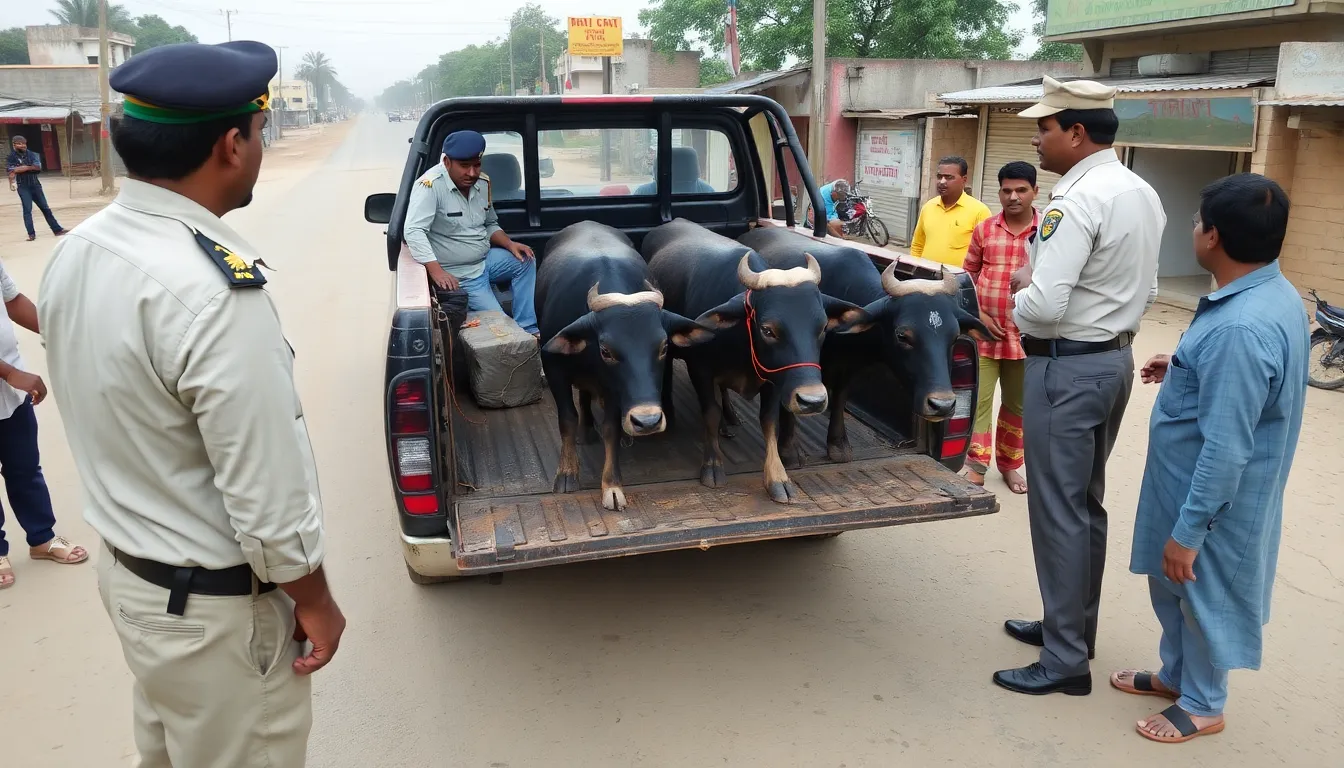
On Friday, March 1, 2024, the Sukhsar police in Tapi district successfully intercepted a pickup truck carrying three buffaloes intended for illegal slaughter. The vehicle was stopped at Asapur Chowk after a tip-off from local informants. The rescued animals were found tied without access to food or water, and the driver, identified as Yogeshbhai Praveenbhai Katara, failed to produce valid transport permits. This operation underscores the ongoing crackdown on illegal animal slaughter practices in Gujarat, carried out by local authorities in collaboration with animal welfare organizations.
5 Key Facts About the Police Action in Sukhsar
- The buffaloes were being transported from Santarampur village to a slaughterhouse in Sukhsar without proper documentation.
- The total estimated value of the animals and the pickup truck is approximately ₹230,000.
- The driver confessed that the animals belonged to local resident Faruk Sikandar Madari and were destined for a slaughterhouse operated by Iqbal Majid Sita.
- A case has been registered against the driver under the Prevention of Cruelty to Animals Act, 1960, and related Gujarat state laws.
- Authorities are actively investigating to identify and apprehend other individuals involved in this illegal operation.
3 Background Details on Illegal Animal Slaughter in Gujarat
Illegal animal slaughter is a persistent issue in rural Gujarat, especially in districts like Tapi, where livestock farming is common. While Gujarat’s laws regulate animal transport and slaughter, enforcement challenges remain. The Prevention of Cruelty to Animals Act and the Gujarat Animal Preservation Act prohibit unauthorized slaughter of cattle and other animals. Despite this, unlicensed slaughterhouses operate covertly, often ignoring animal welfare norms. Local police periodically conduct raids to curb these activities. For instance, similar crackdowns have been reported in Palanpur and Kheda districts, where police seized illegal medical stores and ₹6 lakh worth of illicit liquor, respectively, showing a broader push against unlawful trade and practices.
4 What This Police Action Means for Residents and Farmers
This successful rescue reinforces the government’s commitment to upholding animal welfare laws. For residents of Sukhsar and surrounding villages such as Santarampur and Asapur, it signifies increased vigilance and stricter enforcement against illegal activities harming animals. Farmers who rear livestock can expect better protection for their animals from unlawful seizure or slaughter. The case also highlights the importance of proper documentation and permits when transporting animals, aligning with Gujarat’s regulatory framework. Community members are encouraged to report suspicious activities to local police stations or animal welfare groups to prevent cruelty and illegal slaughter.
3 Groups Most Affected by Illegal Slaughterhouse Operations
- Livestock Owners: Farmers and villagers who rely on cattle and buffaloes for dairy and agricultural work face economic losses when animals are stolen or slaughtered illegally.
- Animal Welfare Advocates: NGOs and activists focused on humane treatment of animals are directly impacted by enforcement success or failure.
- Local Law Enforcement: Police and veterinary officials must balance resource allocation to investigate and prosecute offenders while maintaining public order.
5 Wider Implications and Legal Precedents in Gujarat
This incident adds to a growing number of legal actions in Gujarat targeting illegal slaughterhouses and animal cruelty. Courts in districts like Junagadh have supported demolitions of illegal structures linked to criminal activities, emphasizing zero tolerance. The Sukhsar police’s approach aligns with state government policies to preserve Gujarat’s agricultural heritage and protect animal rights. This enforcement trend may lead to stricter licensing requirements and enhanced monitoring of animal transport routes. It also sends a clear message to those involved in illicit trades that authorities are equipped and motivated to act decisively.
Additionally, the collaboration between police and animal welfare organizations in providing rehabilitation for rescued animals sets a positive example for other districts. Similar initiatives have been reported in Deesa, where police returned stolen gas cylinders to owners, showing the effectiveness of community cooperation with enforcement agencies.
Next Steps for Residents and Stakeholders:
- Report any suspicious animal transport or slaughter activities promptly to Sukhsar police or the Tapi District Animal Husbandry Department.
- Ensure all livestock transport has valid permits as mandated by Gujarat’s Animal Preservation laws.
- Support local animal welfare groups working to rescue and rehabilitate animals affected by illegal trade.
By staying informed and cooperative, residents of Sukhsar and neighboring districts can contribute significantly to curbing illegal slaughter and promoting humane treatment of animals in Gujarat.