
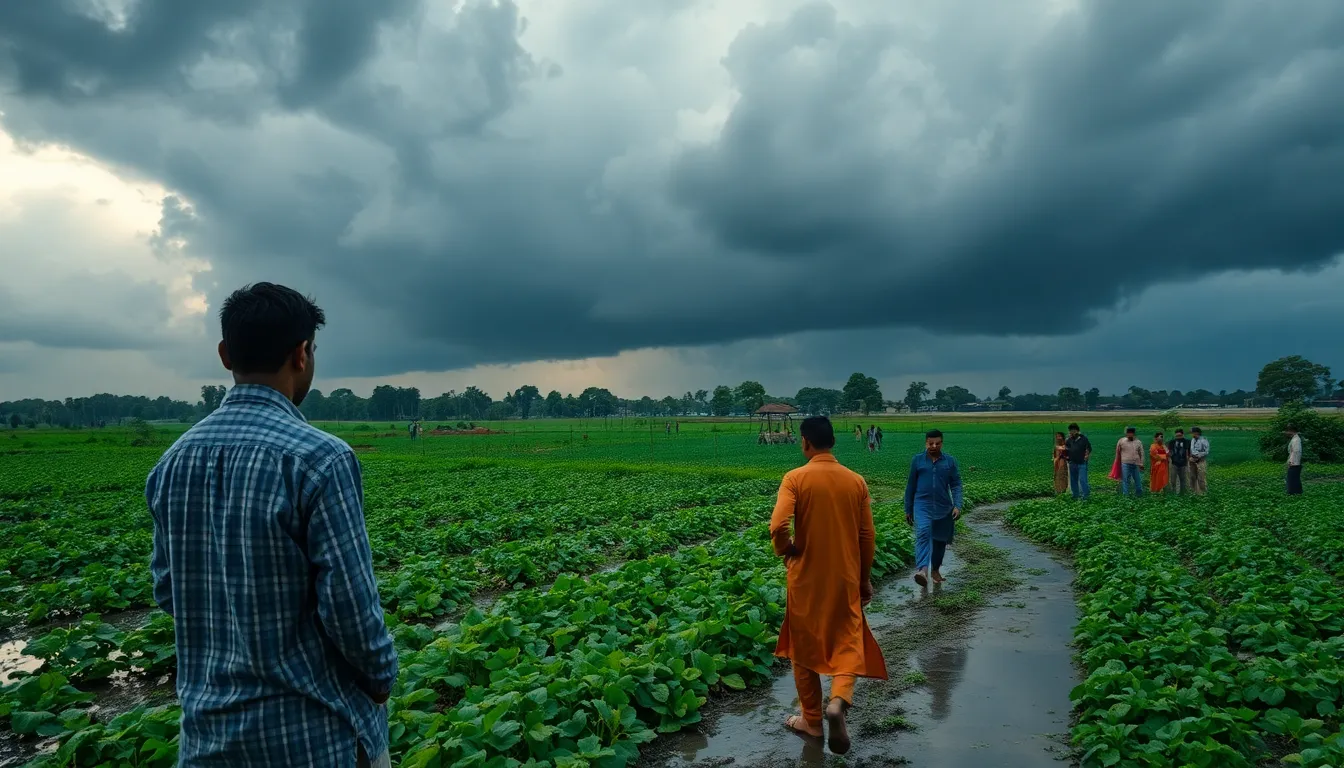
The ongoing rainy weather in Banaskantha district is providing much-needed respite from the recent heatwave, but it is also raising concerns among the agricultural community due to its potential impact on crop yields. According to the India Meteorological Department (IMD) and the Gujarat State Disaster Management Authority (GSDMA), the district has experienced a significant dip in temperature and persistent rainfall over the past week, linked to a low-pressure system over the Arabian Sea. This weather pattern is expected to continue for several days, affecting both daily life and farming activities in the region.
What Is Causing the Continued Rain in Banaskantha District
The current rainfall in Banaskantha is primarily due to a cyclonic circulation developing over the Arabian Sea, which is influencing the western parts of Gujarat, including Banaskantha. The IMD has reported that this system has triggered scattered to widespread rainfall across the district since last weekend, with some areas such as Dhanera, Deodar, and Lakhni experiencing heavy showers. On Tuesday, the temperature dropped sharply by 4.4 degrees Celsius, bringing relief from the heat that persisted earlier in the month.
Weather officials from the Gujarat State Meteorological Department have forecast that scattered rains will continue over the next 3-5 days, with the possibility of intermittent heavy rainfall in certain pockets. This unsettled weather is expected to keep temperatures below average for this time of year.
Impact of Rain on Banaskantha’s Agriculture and Economy
Banaskantha is a key agricultural district in Gujarat, known for its production of vegetables, pulses, and particularly potatoes. As per the Gujarat Agricultural University (GAU) and the local office of the Directorate of Agriculture, over 80,000 hectares in Banaskantha are under summer crop cultivation at this time. Farmers had been harvesting summer crops like onions, potatoes, and various pulses when the recent rains began.
The continuous rainfall poses risks such as waterlogging, delayed harvesting, and fungal diseases in crops, which could potentially reduce the overall yield and quality. Many farmers in Dhanera and Deodar blocks have reported that excess moisture has damaged some potato crops, affecting tuber formation and increasing susceptibility to rot.
Local agricultural officers have advised farmers to take preventive measures like proper drainage and timely use of fungicides. The Gujarat State Department of Agriculture has also issued advisories to monitor crop health closely and seek support from agricultural extension services.
How Residents and Authorities Are Responding
The district administration of Banaskantha, led by the Deputy Collector’s office in Palanpur, has activated disaster management protocols to handle any potential flood or waterlogging situations. Relief teams are on standby to assist affected areas, especially in low-lying zones prone to water accumulation.
Schools in certain rain-affected areas have adjusted their schedules, and local transport services have made contingency plans to manage travel disruptions. The public is advised to stay updated on weather alerts issued by the IMD and the Banaskantha District Collectorate.
Residents are also encouraged to follow health precautions during the humid and rainy conditions to prevent waterborne diseases, as advised by the Banaskantha Health Department.
Weather Data and Statistics for Banaskantha District
- Temperature drop recorded on Tuesday: 4.4°C lower than previous day
- Rainfall: 20-60 mm recorded in Dhanera, Deodar, and Lakhni from last Saturday to Wednesday
- Average temperature range during this period: 22°C to 28°C
- Forecast: Continued scattered rainfall for next 3-5 days with sporadic heavy showers
- Crop area affected: Approximately 80,000 hectares under summer crops including potatoes, onions, and pulses
Relation to Recent Events and Regional Context
The rainy spell follows a period of scorching heat in Banaskantha, which was reported in recent news coverage (Scorching Heat Continues in Banaskantha District). The shift to cooler and wetter conditions has been welcomed by many residents but remains a mixed blessing for farmers who depend on timely harvesting.
Additionally, the rainfall has not deterred local democratic processes, as the district witnessed high voter enthusiasm amid rainy weather during recent elections, demonstrating the resilience of the community.
Bottom Line
The continued rains in Banaskantha district bring both relief from the recent heat and challenges for the agricultural sector. Farmers should remain vigilant and employ recommended crop protection measures to mitigate damage. Residents must stay informed through official weather updates and follow safety advisories to navigate the ongoing unsettled weather conditions.
For detailed weather alerts and agricultural advisories, readers can visit the Gujarat State Disaster Management Authority website and the Banaskantha District Collectorate portal.