
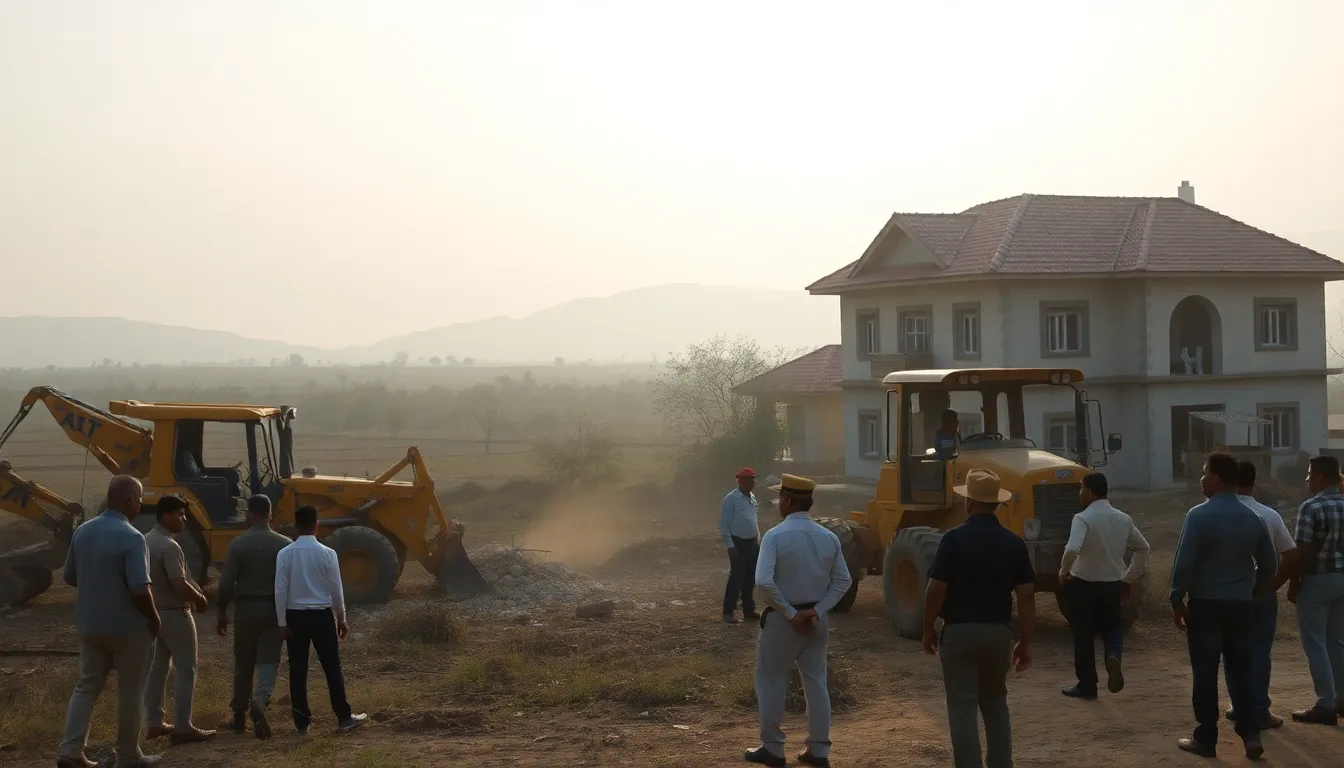
The Junagadh police demolished over 35,750 square meters of illegal structures linked to Kara Rabari, a notorious criminal with a record of 107 cases including murder, robbery, and attempted murder. The demolition occurred on March 15, 2024, targeting a 750 square meter bungalow and a sprawling 35,000 square meter farm house illegally constructed on government land in Junagadh district. This decisive action is part of the Gujarat government’s intensified crackdown on illegal land encroachments and anti-social elements across the state.
5 Key Provisions of the Demolition Action Policy
The demolition falls under the Gujarat Land Encroachment Prevention Act, 2023, enacted by the Revenue Department of Gujarat. Official government notifications dated February 1, 2024, authorize district collectors and police commissioners to identify and clear illegal encroachments on government land promptly. Key provisions include:
- Identification and Survey: Government land suspected of illegal occupation must be surveyed within 30 days by the District Revenue Office.
- Notice to Occupants: Illegal occupants receive a 15-day notice to vacate.
- Demolition Authorization: Post-notice, authorities can demolish unauthorized constructions using machinery like bulldozers.
- Asset Seizure: Confiscation of materials used in illegal construction is permitted.
- Public Welfare Utilization: Cleared land is to be redeveloped for community infrastructure, public parks, or government projects.
The Junagadh police acted under the supervision of the district collector and the Police Department led by Superintendent of Police Dr. Mehul Patel. The Home Ministry, under Minister Harsh Sanghavi, has prioritized this policy for stringent enforcement.
3 Groups Most Affected by the Demolition Drive
The demolition directly impacts:
- Criminal Syndicates: Individuals like Kara Rabari and their gangs who illegally occupy government land to establish hideouts or luxury properties face asset loss and legal action.
- Illegal Land Grabbers: Farmers or businesspersons encroaching on government agricultural or forest land risk eviction.
- Local Communities: Residents near such encroachments often suffer from increased crime and safety concerns, which the demolition aims to alleviate.
Junagadh’s local administration reports that over 150 illegal encroachments have been identified in the district since January 2024. This includes structures ranging from small huts to large farmhouses similar to Rabari’s case.
4 Reasons Behind the Gujarat Government’s Tough Stance
Home Minister Harsh Sanghavi stated that illegal occupation of government land undermines law and order, fuels criminal activities, and deprives the public of land meant for development. The key reasons for this policy focus include:
- Restoring Rule of Law: Many criminal elements misuse public land to evade police action or conduct illegal activities.
- Protecting Public Assets: Gujarat’s Revenue Department estimates that illegal land occupation costs the state over ₹200 crore annually in lost revenue and development opportunities.
- Enhancing Public Safety: Clearing encroachments improves neighborhood safety, as supported by local police data showing a 30% crime reduction in cleared areas.
- Supporting Urban Planning: In Junagadh and other districts like Kheda and Palanpur, cleared lands are earmarked for parks, schools, and healthcare facilities.
This demolition aligns with other recent police actions, such as the arrest of a criminal with an illegal pistol in Palanpur and the rescue of cattle from illegal slaughter in Sukhsar, reflecting a broader law enforcement push.
3 Perspectives From Critics and Stakeholders
While the government and local residents largely support the initiative, some stakeholders have voiced concerns:
- Human Rights Groups: They caution against potential misuse of demolition powers without adequate rehabilitation or legal recourse for occupants who may claim legitimate rights.
- Local Politicians: Some opposition leaders argue that the demolitions target political rivals under the guise of law enforcement.
- Urban Planners: Professionals welcome the move but urge the government to implement long-term land use planning and affordable housing to prevent future encroachments.
The Junagadh Collector’s Office has assured transparent processes, proper notices, and grievance redressal mechanisms under the state’s Public Grievance Redress Portal (https://gujarat.gov.in/grievance).
5 Practical Steps for Residents and Landowners in Junagadh
Residents and landowners should take note of the following to ensure compliance and protect their rights:
- Verify Land Ownership: Check land titles and records at the District Revenue Office or online via the Gujarat Land Records Portal.
- Report Illegal Encroachments: Citizens can report suspected illegal occupation to Junagadh Police’s Anti-Land Mafia Cell at 0285-2678900.
- Respond to Notices Promptly: If you receive eviction or demolition notices, contact the Collector’s Office to understand legal options.
- Utilize Official Portals: Access government schemes for land regularization or rehabilitation if eligible.
- Stay Informed: Follow updates from the Junagadh Collectorate and Gujarat Home Department websites for ongoing actions and guidelines.
The demolition of Kara Rabari’s illegal properties marks a significant step in Gujarat’s fight against crime and unlawful land occupation. Residents in Junagadh and surrounding districts can expect improved law enforcement and better utilization of public land for community development.